Carnosine gel sounds almost too neat: rub a compound your muscles already use onto your skin and skip weeks of supplement loading. So does it work?
Most pages answering that question are written by brands selling a gel, or by skeptics who've read one study. We read all of them. Below, every human trial of a carnosine gel we could find is graded on design, size, blinding and funding, with the animal and lab studies labeled for what they are.

The Short Answer
What Carnosine Gel Is Supposed to Do
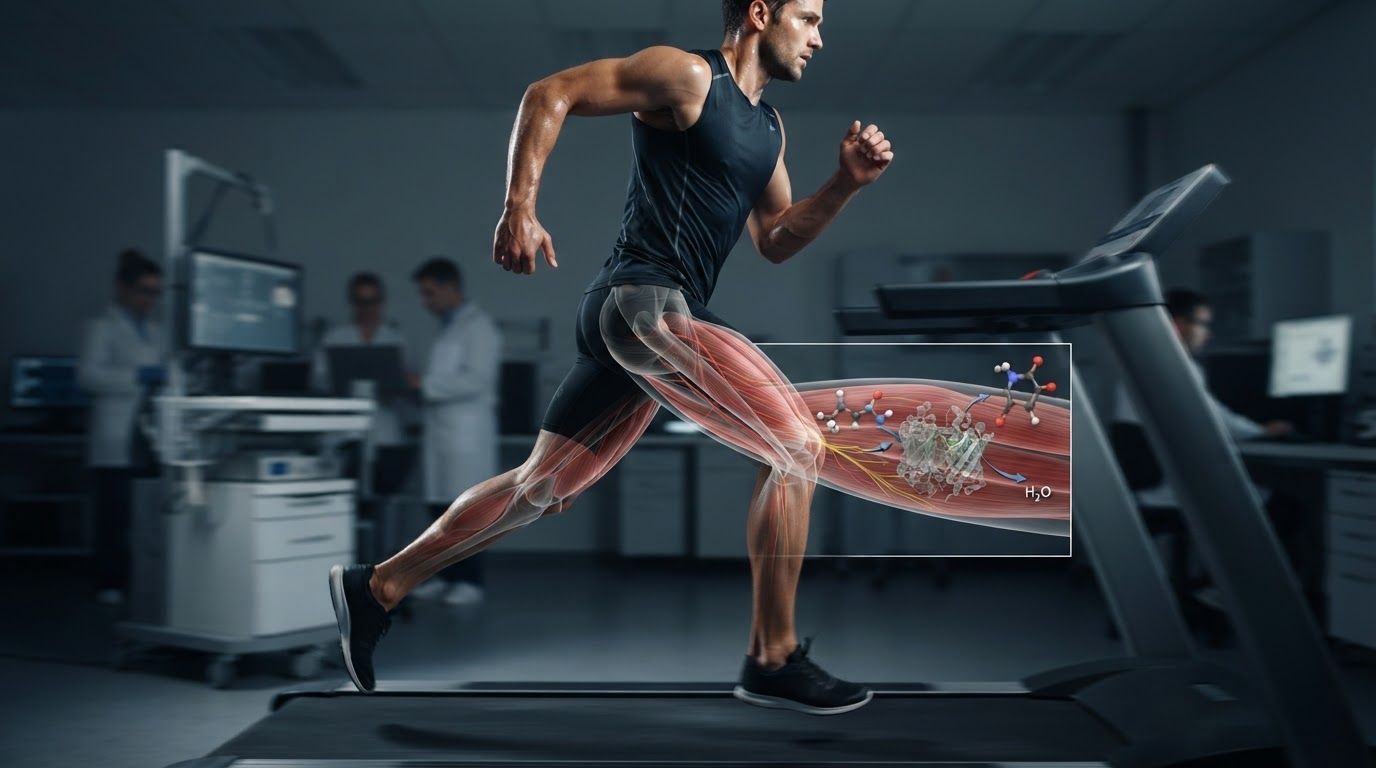
Carnosine is a small molecule made from beta-alanine and histidine, stored mainly in skeletal muscle. During hard, fast efforts, muscle produces acid, and carnosine helps buffer it. Raise muscle carnosine with oral beta-alanine for several weeks and performance in efforts of about 1 to 4 minutes improves, according to the International Society of Sports Nutrition (Trexler et al., 2015). More: what carnosine is and how it buffers acid.
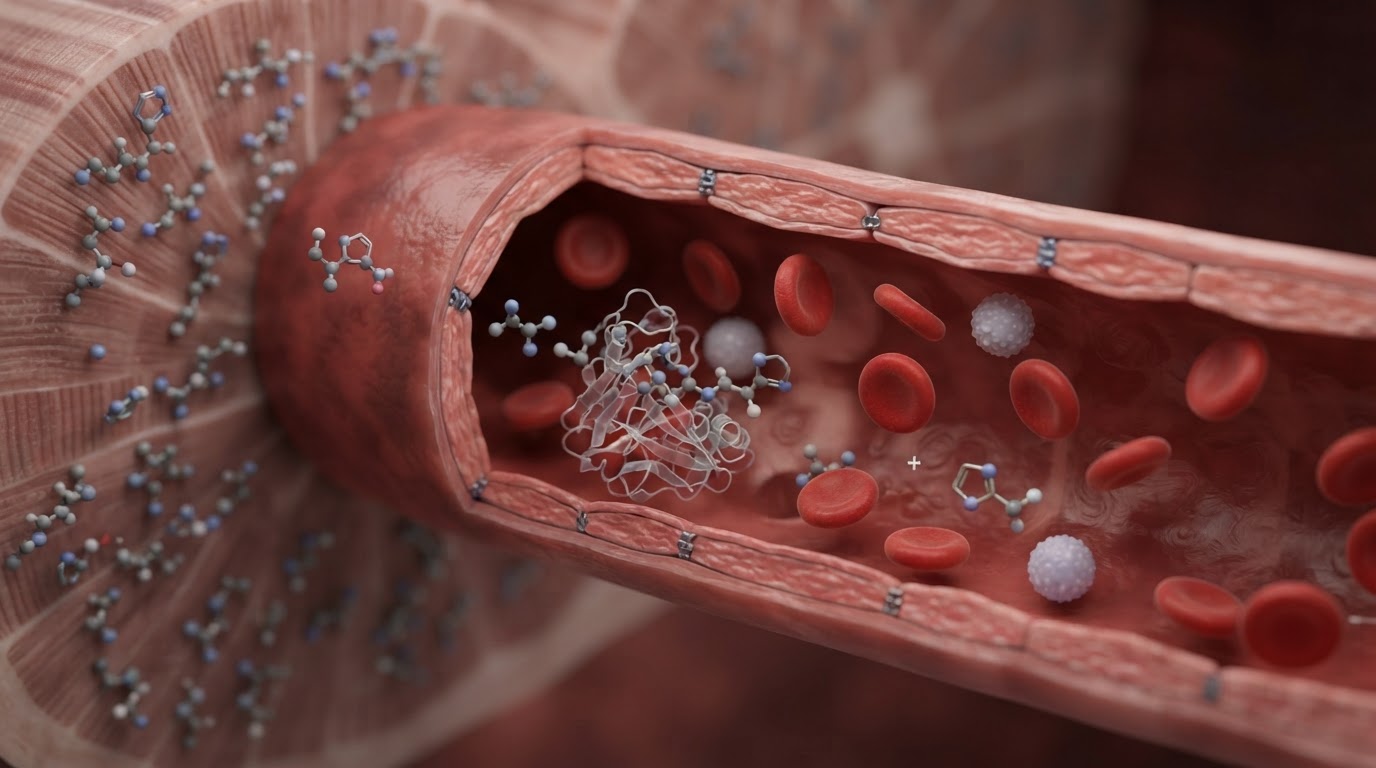
So why not just swallow carnosine? Because your blood is full of an enzyme called carnosinase that breaks it down. After a large oral dose, only 8 of 25 people showed any measurable rise in blood carnosine (Everaert et al., 2012). Our guide to carnosinase explains why.
The idea behind carnosine gel is to deliver carnosine through the skin over the working muscle, avoiding digestion and blood carnosinase, and without waiting weeks for the body to convert beta-alanine into carnosine. Whether enough gets to human muscle to matter is exactly what the studies below try to answer.
How We Graded the Studies
We gave each study one of four grades, using the questions any sports scientist would ask:
| Grade | What it means |
|---|---|
| B (moderate-low) | Randomized, placebo-controlled and blinded, but small (under 20 people) |
| C (low) | No placebo, no blinding, or a fixed test order; or authors with a financial stake |
| Thesis | Not peer-reviewed; useful context, but not independent of the paper it fed |
| Animal / lab | Tells you about absorption or mechanism, not about human performance |
How many people were in each human trial?
participants
Rugby sevens 2025
Rugby sevens thesis 2024
Soccer 2016
Cycling 2023
Cycling 2025
| Row | Participants |
|---|---|
| Rugby sevens 2025 | 7 |
| Rugby sevens thesis 2024 | 8 |
| Soccer 2016 | 11 |
| Cycling 2023 | 15 |
| Cycling 2025 | 15 |
No carnosine gel study earns an A (large, independent, randomized, blinded, with muscle measurements in people). That study hasn't been done yet.
Every Human Study, Graded
All four human trials tested the same kind of commercial carnosine–magnesium gel; each paper names its product and funding.
| Study | Who | Design and placebo | Dose and timing | What was measured | Result | Grade |
|---|---|---|---|---|---|---|
| Sharpe & Macias, 2016 (JEPonline) | 11 elite male soccer players | No placebo; unblinded; gel session always last. Two authors are inventors on the gel's patent | 10 mL on arms, legs and torso, 45 min before | Yo-Yo test distance; 3 × 1000 m run time | Positive: 3 × 1000 m 4.13% faster (P = 0.036); Yo-Yo +5.41%, not significant | C |
| Harnish & Miller, 2023 (J Sports Sci Nutr) | 15 trained male cyclists | Randomized crossover, single-blind; placebo without menthol. Funded by the patent holder | 10 mL on legs, at least 60 min before | 5 × 30 s Wingate power; blood lactate | Null: no improvement vs placebo | B |
| Brockelbank, 2024 (University of Waikato thesis) | 8 Olympic-level rugby sevens players | Crossover vs ultrasound placebo gel (same protocol as the 2025 paper) | 10 mL | 12 × 6 s cycle sprints | Positive: higher peak power in sprints 2, 4 and 7; no effect on mean power | Thesis |
| Beaven et al., 2025 (JISSN) | 7 world-class rugby sevens players | Triple-blind crossover; placebo ultrasound gel with 1.25% menthol added. No conflicts reported | 10 mL on the legs, about 40–45 min before | 12 × 6 s cycle sprints: peak and mean power, heart rate, effort | Positive (partial): peak power higher in sprints 2, 4 and 7; no difference in mean power, heart rate or effort | B |
| Harnish, Holman & Bruneau, 2025 (Physiologia) | 15 trained cyclists, tested remotely | Randomized single-blind crossover vs a menthol placebo lotion | 15 g, at least 1 h before | Hill-climb and sprint power; 9.1 km time trial | Null: no difference vs placebo | B |
Click to enlarge
What the positive results actually show
The rugby trial is the strongest result in favor of carnosine gel. Peak power was higher with the gel in three sprints: 1,433 vs 1,332 W in sprint 2, 1,347 vs 1,244 W in sprint 4 and 1,426 vs 1,270 W in sprint 7. The authors note the effect showed up early, in sprint 2, which suggests it isn't only about buffering acid late in a session.
Click to enlarge
But keep it in proportion: seven players, one session each, and no change in average power. The 2016 soccer study is positive too, but it had no placebo and always tested the gel last, so a learning effect can't be ruled out.
What the null results show
Both cycling trials used trained riders, randomized the order and used a placebo. Neither found any difference in Wingate power, blood lactate, hill climbs, sprints or a 9.1 km time trial. The 2023 trial was funded by the gel's patent holder, which makes its null result harder to dismiss as bias against the product.
Possible explanations people raise: cycling tests that load the legs differently, a different dose (15 g in the 2025 trial), remote testing in the 2025 trial, or simply no real effect. Nobody knows yet.
[See the carnosine gel used in most of these studies on the official store →](https://shop.lactigo.com/category/shop-all/0ZGan0000002eNxGAI?refcode=lactigogel)
Is It Just the Menthol?
This is the sharpest skeptic argument. The best-known carnosine gel, LactiGo with Menthol, lists menthol 1.25% as its only active ingredient on its Drug Facts label, with L-carnosine as an inactive ingredient. And menthol on its own has a small performance effect: a 2026 meta-analysis of 16 studies found topical menthol improved exercise performance slightly (effect size 0.27) and lowered perceived effort (Wang et al., 2026).
Here's how the trials handled menthol:
| Trial | Did the placebo contain menthol? | Result |
|---|---|---|
| Rugby sevens, 2025 | Yes, 1.25% added to match | Carnosine gel higher peak power in 3 sprints |
| Cycling, 2025 | Yes, menthol placebo lotion | No difference |
| Cycling, 2023 | No | No difference |
| Soccer, 2016 | No placebo | Faster 3 × 1000 m |
So the one positive trial that matched menthol in the placebo still found an effect, and one menthol-matched trial didn't. That's genuinely unresolved. It's also why our verdict stays at "promising," not "proven." There's more on menthol in LactiGo Regular vs Menthol.
Does Carnosine Get Through the Skin?
This is the question every skeptic asks, and the answer has three layers.
1. In horses, yes, muscle carnosine rose. The only study so far to measure muscle carnosine after a carnosine gel was applied to the skin was done in horses. In 10 Thoroughbreds, muscle carnosine rose about 35% at 30 minutes and about 46% at 60 minutes from baseline, compared with −3% and +11% after a placebo gel (Dieter et al., 2021). This was an animal study funded by an equine-products company, and it hasn't been repeated in people. Draw your own conclusions.
Muscle carnosine after one gel application (horse study, n = 10)
% change from baseline
30 minutes
60 minutes
| Row | Carnosine gel | Placebo gel |
|---|---|---|
| 30 minutes | 35% | −3% |
| 60 minutes | 46% | 11% |
The study's limits matter: 10 horses, one 60 mL application on a small shaved and numbed patch of skin, repeated biopsies through one incision, and two co-authors who are inventors on the gel's patent. Some horses barely responded.
2. In lab skin models, carnosine can pass into skin layers. In a 3D human skin model, carnosine in a carnosine–magnesium gel reached the fluid beneath the tissue in higher amounts than free carnosine (Dissette et al., 2018). In donated human skin, a penetration enhancer increased carnosine in the skin's layers about six-fold (Goebel et al., 2012). These were lab tests, not studies of muscle.
3. In people, nobody has measured it. No published study has measured muscle carnosine in people after using a carnosine gel. The rugby authors say so themselves and call for exactly that study. Until it exists, human trials can only tell us about performance.
Our deep dive on routes, carnosine gel vs beta-alanine vs oral carnosine, compares this with the other two ways to raise carnosine.
Does Carnosine Gel Work Immediately?
The studies tested a single application shortly before exercise: about 40 to 45 minutes in the rugby trial, 45 minutes in the soccer study and at least an hour in the cycling trials. None used a loading phase, which is the main practical difference from beta-alanine (4 to 6 g a day for at least 2 to 4 weeks).
Don't expect to "feel" it the way you feel caffeine. LactiGo's own FAQ says it "can be difficult to 'feel'" and is most noticeable when you're going hard. The menthol version gives an immediate cooling sensation, but that's the menthol.
Is Carnosine Gel Safe?
The 2016 soccer and 2025 rugby studies reported no adverse events. That's reassuring but limited, because the studies were small and short.
For menthol versions, follow the Drug Facts label: external use only, avoid eyes and mucous membranes, don't apply to wounds or damaged skin, don't bandage tightly, and stop and ask a doctor if symptoms get worse or last more than 7 days. Patch-test any new topical, and ask a professional first if you're pregnant, breastfeeding or under medical care.
Who It's Worth Trying For
Worth a try if you:
- Do sports built on repeated hard efforts (rugby, football, hockey, track, criteriums, CrossFit-style sessions)
- Already like using a gel or cooling rub before training
- Want to try carnosine without beta-alanine's loading phase or tingling
- Compete in tested sport and want a gel listed on Informed Sport (check your batch)
Probably skip it if you:
- Need a guaranteed, measurable gain; no study can promise that
- Mainly do long, steady endurance work, where carnosine research is weakest
- Are on a tight budget; at study doses it's about $5.50 per 10 mL application in the US
Still unsure if the company is trustworthy? Read Is LactiGo a scam? and our LactiGo reviews.
The Bottom Line
Does carnosine gel work? The best answer today: it might, in short, repeated, all-out efforts, and the evidence is still small. One well-blinded trial in elite rugby players found higher peak power, two cycling trials found nothing, and the only uptake study was in horses.
That's an honest "promising, not proven." If you train hard and like the idea of carnosine without weeks of loading, the low-risk way to find out is to test it in your own sessions. Try carnosine gel for yourself →
Curious about carnosine gel?
LactiGo is the topical carnosine gel we write about most on this site. See the ingredients, sizes and current prices on the official LactiGo shop.
Get LactiGoAffiliate disclosure: CarnosineGel.com is an independent LactiGo affiliate and earns a commission if you buy through links on this page, at no extra cost to you.
More on the science: carnosine and repeated-sprint performance, the Wingate test and our 2025 rugby study summary.
Frequently Asked Questions
Does carnosine gel work?
The evidence is promising but small. Four human trials of 7 to 15 people split two positive, two null. The best blinded study, in world-class rugby sevens players, found higher peak power in 3 of 12 sprints against a menthol-matched placebo, while two cycling trials found no difference.
Does carnosine gel work immediately?
Studies applied it once, about 40 to 60 minutes before exercise, with no loading phase, and the positive trials saw effects in that same session. You may not feel it, though. Any immediate cooling from a menthol version comes from the menthol.
Does carnosine absorb through the skin?
In a study of 10 horses, muscle carnosine rose about 35% at 30 minutes and 46% at 60 minutes from baseline after a carnosine gel, compared with −3% and +11% after placebo. Lab skin models show carnosine can enter skin layers. No study has measured muscle carnosine in people after a gel.
Is carnosine gel just menthol?
Not entirely, as far as the research shows. In the rugby trial, the placebo contained the same 1.25% menthol, and the carnosine gel still produced higher peak power in some sprints. But another menthol-matched cycling trial found no difference, so the question isn't settled.
Is carnosine gel a scam?
No. Carnosine is a real compound in muscle, and carnosine gels have been tested in published, peer-reviewed trials, including independent ones with null results. The fair criticism is that the research is still small and mixed, not that the product is fake.
Is carnosine gel safe?
The 2016 and 2025 trials reported no adverse events, but they were small. Menthol versions carry standard topical analgesic warnings: external use only, not on wounds or damaged skin, no tight bandages, and stop if symptoms worsen or last more than 7 days.
What is carnosine gel?
Carnosine gel is a topical gel containing L-carnosine, often with magnesium sulfate, applied to the skin over working muscles before exercise. Some versions add menthol for a cooling feel. The aim is to raise carnosine near the muscle without swallowing it or loading beta-alanine for weeks.
References
1. Sharpe TM, Macias CJ. Evaluation of the efficacy of Lactigo topical gel as an ergogenic aid. JEPonline. 2016;19(3):15–23: https://www.asep.org/asep/asep/JEPonlineJUNE2016_Sharpe.pdf
2. Harnish CR, Miller B. Transdermal carnosine gel fails to improve repeated Wingate performance in trained male cyclists. J Sports Sci Nutr. 2023;4(2):106–111: https://www.allsportsjournal.com/article/193/4-2-10-951.pdf
3. Brockelbank NG. The application of a topical carnosine gel and its effects on intermittent high-intensity exercise performance in Olympic-level rugby sevens players [Master's thesis]. University of Waikato; 2024: https://researchcommons.waikato.ac.nz/entities/publication/e5a1a581-edca-4f1f-8016-22b1b6089f67
4. Beaven CM, James C, McMaster DT, Brockelbank N. Topical carnosine gel improves intermittent high-intensity exercise performance in world-class rugby sevens players. J Int Soc Sports Nutr. 2025;22(1):2550311. PubMed 40859880
5. Harnish CR, Holman ME, Bruneau ML Jr. An inconvenient truth: transdermal buffering lotions appear to offer no significant performance improvement. Physiologia. 2025;5(3):35. doi:10.3390/physiologia5030035
6. Dieter BP, et al. Transdermal delivery of carnosine into equine skeletal muscle. Comp Exerc Physiol. 2021;17(5):429–434. doi:10.3920/CEP200077 (horse study)
7. Dissette V, et al. Evaluation of the transepidermal penetration of a carnosine complex in gel formulation by 3D skin models. Cosmetics. 2018;5(4):67. doi:10.3390/cosmetics5040067
8. Goebel AS, et al. Dermal peptide delivery using enhancer molecules and colloidal carrier systems, part I: carnosine. Skin Pharmacol Physiol. 2012;25(6):281–287. PubMed 22890441
9. Wang Y, et al. Acute topical menthol application and exercise performance: a systematic review and meta-analysis. J Therm Biol. 2026;140:104529. PubMed 42385298
10. Trexler ET, et al. International Society of Sports Nutrition position stand: beta-alanine. J Int Soc Sports Nutr. 2015;12:30. PubMed 26175657
11. Everaert I, et al. Low plasma carnosinase activity promotes carnosinemia after carnosine ingestion in humans. Am J Physiol Renal Physiol. 2012;302(12):F1537–F1544. PubMed 22496410
12. DailyMed. LACTIGO (menthol) gel 1.25%, NDC 72481-101: https://dailymed.nlm.nih.gov/dailymed/drugInfo.cfm?setid=849c3601-2bc8-0991-e053-2a91aa0a5e7f