Carnosine has long been studied in exercise physiology because it is concentrated inside skeletal muscle and contributes to the muscle's intracellular buffering system. More recently, researchers have begun testing whether carnosine applied topically can influence high-intensity athletic performance.
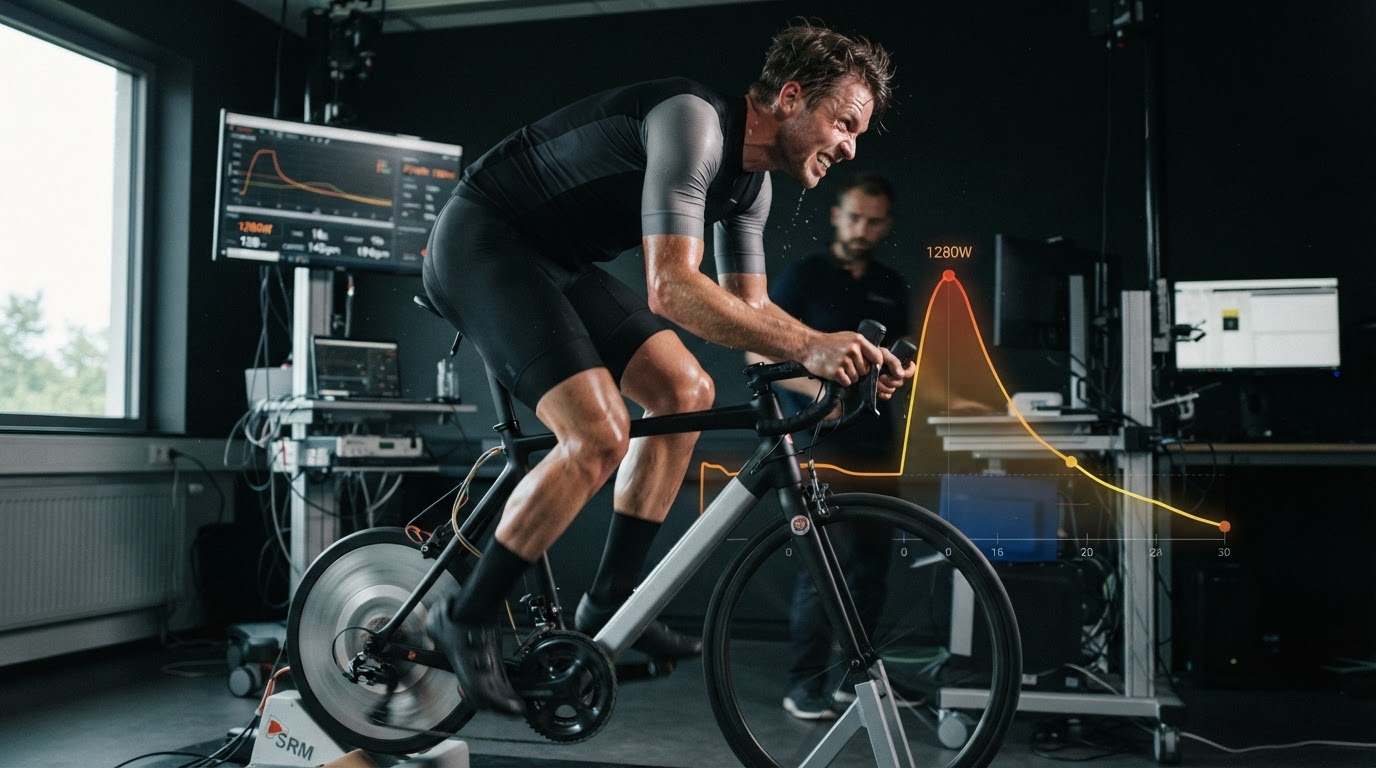
A 2025 randomized, crossover, triple-blind study published in the Journal of the International Society of Sports Nutrition tested a topical carnosine gel in seven world-class rugby sevens players. The athletes applied 10 mL of the gel 40 minutes before completing 12 repeated cycling sprints. Peak power was significantly higher with the carnosine gel during Sprints 2, 4, and 7 compared with placebo. Mean power, heart rate, and ratings of perceived exertion did not show a treatment effect.
Importantly, the formulation tested was LactiGo topical carnosine gel. The published paper describes the formulation as containing water, glycerin, magnesium sulfate, 1.25% menthol, and a proprietary carnosine complex.
The findings add direct human evidence to earlier research involving LactiGo in elite soccer players, while other topical carnosine protocols have produced different results in trained cyclists.
The most scientifically accurate conclusion is therefore not that carnosine automatically improves every sprint or every athlete.
It is that topical carnosine now has peer-reviewed human performance data showing higher peak power during specific repeated high-intensity efforts in world-class athletes—and the research gives scientists a clear reason to investigate the mechanism, athlete population, timing, and exercise conditions further.
Key Takeaways
- Carnosine is naturally concentrated in skeletal muscle and contributes to intracellular buffering during high-intensity exercise.
- Repeated sprint performance depends on several energy systems and fatigue mechanisms; muscle buffering is one part of that physiology.
- A 2025 randomized, crossover, triple-blind study tested LactiGo topical carnosine gel in world-class rugby sevens players.
- The athletes applied 10 mL 40 minutes before a 12-sprint cycling protocol.
- Peak power was significantly higher with the carnosine gel in Sprints 2, 4, and 7.
- Mean power, heart rate, and perceived exertion did not show a treatment effect.
- The authors' plain-language summary described acute positive performance effects of approximately 5–10%.
- The trial did not directly measure whether intramuscular carnosine concentrations increased, so the mechanism remains an important research question.
- Earlier LactiGo research in elite soccer players also reported performance improvements, while another topical carnosine protocol in trained cyclists did not improve repeated Wingate performance.
- Research involving topical carnosine should be evaluated separately from research involving oral beta-alanine.
Table of Contents
- What is repeated sprint performance?
- Why does carnosine matter during high-intensity exercise?
- Carnosine vs. beta-alanine
- What did the 2025 topical carnosine study test?
- What did the researchers find?
- Why peak power matters
- What happened to mean power, heart rate, and exertion?
- How quickly were the effects observed?
- Does intracellular buffering explain the results?
- What did earlier LactiGo research find?
- Why has other topical carnosine research produced different results?
- What does oral beta-alanine research tell us?
- Which athletes may find this research most relevant?
- What the research can—and cannot—tell us
- Where LactiGo fits
- Frequently asked questions
What Is Repeated Sprint Performance?
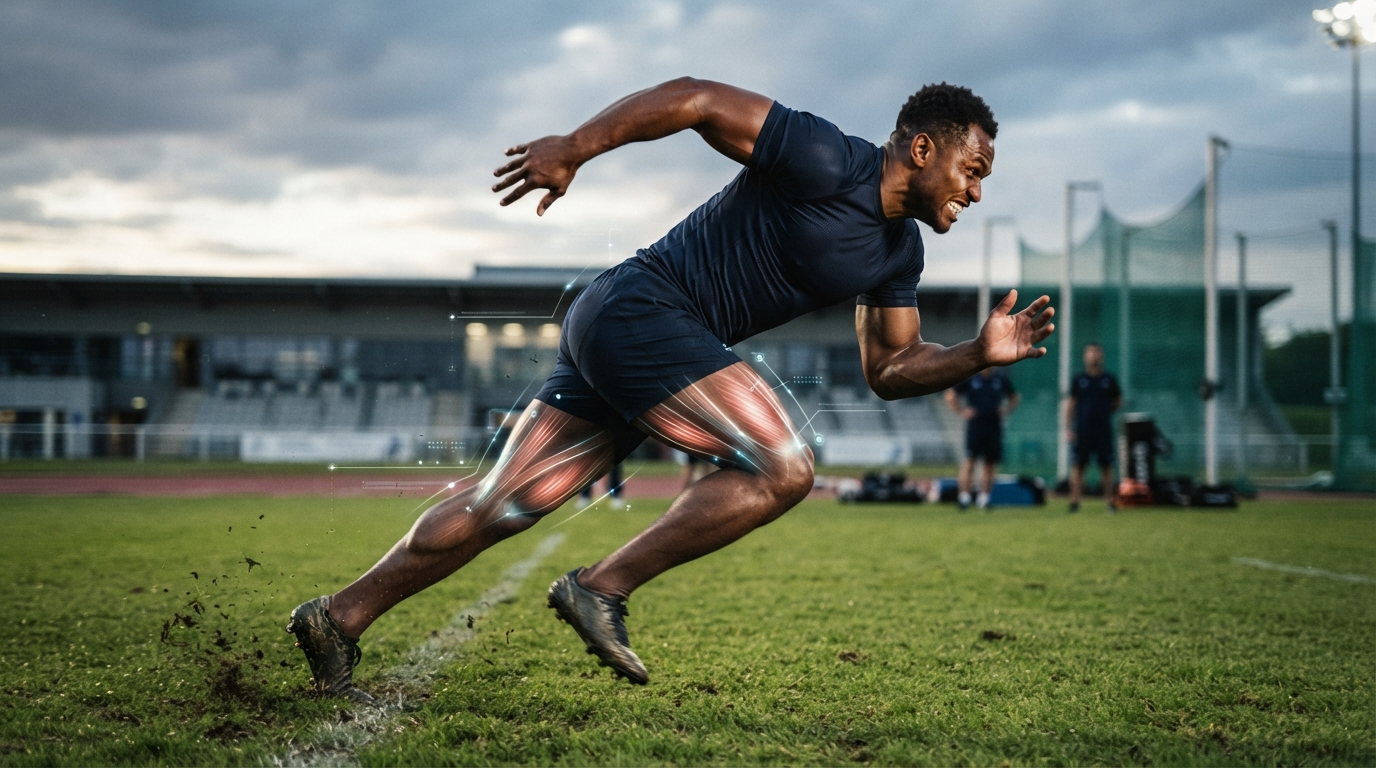
Repeated sprint performance describes the ability to produce very high power outputs again and again with relatively brief recovery periods between efforts.
It is a defining feature of many sports.
A rugby player accelerates, makes a tackle, recovers briefly, changes direction, and accelerates again.
A soccer player sprints onto a ball, recovers while play develops, and then makes another high-intensity run.
A hockey player repeatedly accelerates during a shift.
Basketball, football, lacrosse, combat sports, racket sports, and many forms of interval training contain similar patterns.
The physiological challenge is different from completing one isolated sprint.
During repeated efforts, the athlete must repeatedly generate ATP, restore phosphocreatine, manage changes in muscle metabolites, maintain neuromuscular output, and continue producing force as fatigue develops.
That makes repeated sprint performance a useful test of how well an athlete can maintain explosive output under accumulating physiological stress.
Why Does Carnosine Matter During High-Intensity Exercise?
Carnosine is a naturally occurring dipeptide composed of beta-alanine and histidine.
Skeletal muscle contains high concentrations of it.
One of its best-established functions is helping buffer hydrogen ions inside muscle cells as intracellular pH changes during intense muscular work.
That does not mean carnosine simply "removes lactic acid."
Lactate is an important metabolic intermediate and can be used as fuel. The physiology of fatigue is considerably more complex than the old idea that lactic acid simply accumulates until a muscle stops working.
Carnosine's established role is more precisely described as intracellular buffering.
During repeated high-intensity exercise, that buffering capacity is one of several physiological systems that may influence an athlete's ability to continue producing force and power.
Carnosine and Beta-Alanine Are Related—but They Are Not the Same Intervention
This distinction is crucial when reading sports-performance research.
Carnosine is the dipeptide present inside muscle.
Beta-alanine is one of the amino-acid building blocks the body uses to synthesize carnosine.
Many classic studies of "carnosine and performance" actually administer oral beta-alanine for several weeks and then measure whether muscle carnosine concentrations increase.
For example, research in trained sprinters has shown that beta-alanine supplementation can elevate muscle carnosine and attenuate fatigue during repeated isokinetic contractions.
But results depend on the exact activity being tested. Other trials have increased muscle carnosine without producing improvements in every repeated-sprint measure. In one trial involving soldiers, beta-alanine increased gastrocnemius carnosine but did not improve the repeated 30-meter sprint test.
That tells us something important:
Increasing muscle carnosine does not automatically guarantee that every form of repeated sprint performance will improve.
Exercise duration, recovery interval, training status, energy-system contribution, exercise mode, and the performance variable being measured all matter.
A Different Question: What Happens When Carnosine Is Applied Topically?
Oral beta-alanine research generally requires a loading period because the strategy depends on gradually increasing muscle carnosine.
Topical carnosine raises a different question:
Can a carnosine-containing gel applied before exercise influence performance acutely?
That is exactly what researchers investigated in the 2025 study published in the Journal of the International Society of Sports Nutrition.
And importantly for LactiGo customers, the paper identifies the tested carnosine formulation as LactiGo. The formulation described in the research contained water, glycerin, magnesium sulfate, 1.25% menthol, and a proprietary carnosine complex.
What Did the 2025 LactiGo Study Test?
Researchers C. Martyn Beaven, Carl James, Daniel T. McMaster, and Nic Brockelbank studied world-class rugby sevens players.
The research team included affiliations with the University of Waikato, Hong Kong Baptist University, and New Zealand Rugby's All Blacks Sevens program.
Seven world-class rugby sevens players completed both testing conditions in a counterbalanced, crossover, triple-blind design. Collectively, the athletes had accumulated 1,452 international caps.
Each player therefore completed the performance protocol after receiving:
- LactiGo topical carnosine gel
- Ultrasound placebo gel
The athletes applied 10 mL of the treatment 40 minutes before exercise.
They then performed 12 intermittent sprints on a cycle ergometer.
Each repetition consisted of:
- 24 seconds of cycling at 3 W/kg
- 6 seconds of maximal-intensity sprinting
- 30 seconds of recovery
After Sprint 6, the athletes received a two-minute break before completing the second half of the protocol.
Researchers recorded:
- Peak power
- Mean power
- Heart rate
- Rating of perceived exertion
This created a demanding test designed to repeatedly challenge high-intensity power production.
What Did the Researchers Find?
The central finding involved peak power.
Peak power was significantly higher after topical carnosine gel application during three of the repeated sprints.
| Sprint | Topical Carnosine Gel | Placebo | Statistical Result |
|---|---|---|---|
| -------- | --------------------: | ------: | ------------------ |
| Sprint 2 | 1,433 W | 1,332 W | p = 0.048 |
| Sprint 4 | 1,347 W | 1,244 W | p = 0.043 |
| Sprint 7 | 1,426 W | 1,270 W | p = 0.025 |
The reported effect size was large for Sprints 2 and 7 and moderate for Sprint 4.
The paper's plain-language summary characterized the acute positive performance effects as approximately 5–10%.
Those findings are consistent with the LactiGo study page's summary that athletes using the carnosine gel demonstrated measurable improvements in peak power during repeated sprints compared with placebo.
Why Is Peak Power Important?
Peak power is not the same as average power.
Peak power reflects an athlete's ability to reach a very high instantaneous output during an explosive effort.
That ability matters in situations such as:
- Explosive acceleration
- Sprint initiation
- Breaking away from an opponent
- Closing a gap
- Reaccelerating after a change of direction
- Producing a decisive burst late in a sequence of repeated efforts
For a rugby sevens player, the ability to produce another high-powered acceleration after previous high-intensity work can have obvious competitive relevance.
The 2025 findings therefore do not simply tell us that athletes pedaled differently.
They show that under the tested conditions, the topical carnosine condition was associated with higher peak power production during specific repeated efforts.
What Happened to Mean Power?
This is another important part of the study.
Although peak power showed a treatment effect, mean power did not.
Heart rate and rating of perceived exertion also did not show treatment effects.
That creates a more precise interpretation of the findings.
The topical carnosine gel did not simply improve every measured performance or physiological variable.
Instead, the clearest difference appeared in the ability to reach higher peak power during selected repeated sprints.
2025 Trial at a Glance
| Outcome | Result |
|---|---|
| Peak power | Treatment effect observed |
| Sprint 2 peak power | Higher with carnosine gel |
| Sprint 4 peak power | Higher with carnosine gel |
| Sprint 7 peak power | Higher with carnosine gel |
| Mean power | No treatment effect |
| Heart rate | No treatment effect |
| Perceived exertion | No treatment effect |
That pattern is more informative than simply saying "performance improved."
What Is Especially Interesting About the Timing?
The athletes applied the topical carnosine gel 40 minutes before exercise.
This is fundamentally different from the way oral beta-alanine is generally studied.
Beta-alanine strategies typically depend on repeated supplementation over time to increase skeletal-muscle carnosine.
The topical study instead examined an acute pre-exercise application.
The researchers' plain-language summary specifically highlighted that the performance effects occurred without the loading phase normally associated with beta-alanine supplementation.
That distinction makes topical carnosine particularly interesting from a performance-research perspective.
It also raises an important mechanistic question.
Is Intracellular Buffering Responsible for the Acute Effect?
We do not yet know.
The researchers proposed that topical carnosine may increase intramuscular carnosine concentrations, but the 2025 trial did not directly measure muscle carnosine concentrations.
The authors therefore concluded that future research should determine whether carnosine gels increase intramuscular carnosine sufficiently to explain the observed improvements in anaerobic performance.
This is scientifically important.
Carnosine is well established as an intracellular buffer, but an acute performance effect after topical application does not automatically prove that intracellular buffering is the mechanism.
Other proposed actions of carnosine in muscle physiology include relationships with:
- Calcium handling
- Myofilament sensitivity
- Muscle contractile processes
- Reactive compounds
- Cellular homeostasis
The exact mechanism behind the acute topical performance results remains a research question.
That makes the 2025 trial more interesting, not less: it provides a performance signal that researchers can now investigate mechanistically.
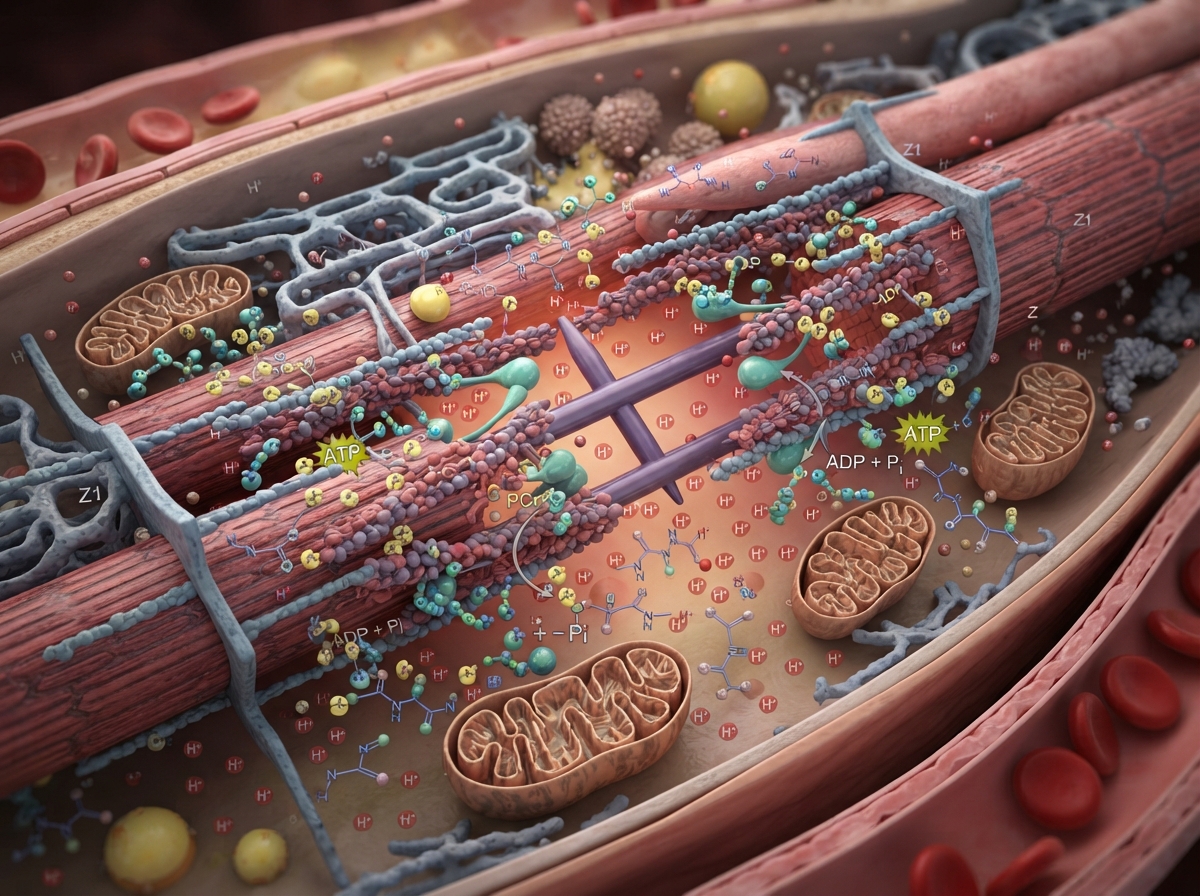
Scientific illustration of carnosine inside skeletal muscle during repeated high-intensity exercise.
What Did Earlier LactiGo Research Find?
The 2025 rugby findings are not the first human performance data involving LactiGo.
A 2016 study by Tim M. Sharpe and Chad J. Macias evaluated LactiGo topical gel in 11 elite male soccer players.
The athletes performed:
- A Level 1 Yo-Yo intermittent recovery test
- A series of three all-out 1,000-meter runs
After LactiGo application, the investigators reported a 5.41% improvement in distance traveled during the Yo-Yo test, with p = 0.069, and a 4.13% reduction in time required to complete the three 1,000-meter runs, with p = 0.036.
The authors reported that the results occurred following the initial application rather than after a prolonged loading phase.
That earlier research and the 2025 rugby study used different performance protocols, but they share an important feature:
Both examined highly trained team-sport athletes performing exercise with substantial high-intensity demands.
Has Every Topical Carnosine Study Produced the Same Result?
No.
A 2023 randomized crossover study tested a mentholated topical carnosine gel in 15 trained male cyclists.
Participants performed five 30-second Wingate sprints with approximately four to five minutes of recovery.
The researchers found no statistically significant improvement in the performance measures after the topical carnosine condition.
That result differs from the 2025 rugby findings.
The 2025 researchers discussed several possible reasons different protocols could produce different outcomes, including:
- Athlete training background
- Exercise specificity
- Performance-test design
- Sprint duration
- Recovery duration
- Measurement methodology
That is exactly why sports-performance research should be interpreted according to the activity actually studied.
Five 30-second Wingate tests separated by several minutes are not physiologically identical to repeated six-second maximal efforts embedded in the intermittent activity pattern used with world-class rugby sevens players.
Different tests can answer different questions.
What Does Oral Beta-Alanine Research Tell Us About Repeated Sprinting?
Beta-alanine research provides useful background because beta-alanine can increase skeletal-muscle carnosine.
But again, it should not be treated as direct topical carnosine evidence.
Research in trained sprinters found that beta-alanine supplementation increased muscle carnosine and reduced fatigue during repeated isokinetic contraction bouts.
Another study of trained cyclists found improvements in Sprints 3 and 4 of a four-by-1-kilometer sprint protocol after beta-alanine loading.
Yet other trials have found no improvement in specific repeated-sprint outcomes despite increasing muscle carnosine. For example, a study of soldiers reported increased gastrocnemius carnosine after beta-alanine supplementation but no improvement in repeated 30-meter sprint performance.
That reinforces a fundamental lesson:
"Repeated sprint performance" is not one single physiological task.
A six-second sprint, a 30-second Wingate, a one-kilometer cycling effort, and repeated field sprints can place very different demands on:
- Phosphocreatine
- Glycolysis
- Oxidative metabolism
- Intracellular buffering
- Neuromuscular function
- Recovery kinetics
The relevance of carnosine may therefore change depending on the exact performance demand.
Why Rugby Sevens Is an Interesting Model
Rugby sevens places exceptional demands on repeated high-intensity performance.
Players must repeatedly:
- Accelerate
- Sprint
- Decelerate
- Tackle
- Change direction
- Contest possession
- Recover while play continues
- Produce another explosive effort
That makes world-class rugby sevens athletes a particularly relevant population for investigating interventions intended to support repeated high-intensity power.
The athletes in the 2025 trial had accumulated 1,452 international caps collectively, providing a population with extensive exposure to elite competitive demands.
The results cannot automatically be transferred to every sport, but they are directly relevant to the type of repeated explosive work that characterizes many team sports.
Which Athletes May Find This Research Most Relevant?
The direct evidence is most relevant to sports and activities involving repeated explosive efforts.
Examples include:
- Rugby
- Soccer
- Hockey
- Basketball
- Football
- Lacrosse
- Combat sports
- Tennis
- Pickleball
- Repeated-sprint cycling
- Sprint interval training
- CrossFit-style conditioning
The more closely an athlete's performance demands resemble repeated bouts of high-intensity power with incomplete recovery, the more relevant this research becomes conceptually.
That does not guarantee the same response in another sport.
It means the physiology and performance question are closely aligned.
Peak Power vs. "Feeling Less Tired"
One particularly interesting part of the 2025 trial is what did not change.
Ratings of perceived exertion did not show a treatment effect.
In other words, athletes were able to reach higher peak power during selected sprints without a corresponding treatment effect in perceived exertion.
That distinction is useful because performance products are often judged subjectively:
"Did I feel better?"
"Did the workout feel easier?"
But performance is not always the same thing as perception.
An athlete can potentially produce more power without perceiving the session as easier.
Objective performance measures therefore matter.
What Does the Research Actually Allow Us to Conclude?
Supported by the 2025 human trial
We can accurately say that:
- LactiGo topical carnosine gel was tested in world-class rugby sevens players.
- Athletes applied 10 mL 40 minutes before the repeated-sprint protocol.
- Peak power showed a treatment effect.
- Peak power was significantly higher during Sprints 2, 4, and 7 compared with placebo.
- Mean power, heart rate, and perceived exertion did not show treatment effects.
- The authors concluded that topical carnosine gel improved power production in the tested world-class rugby sevens players.
Still being investigated
The trial does not establish:
- Exactly how much carnosine entered skeletal muscle
- Whether muscle carnosine concentrations changed
- Whether intracellular buffering caused the acute performance effect
- Whether every athlete will respond similarly
- Whether every repeated-sprint protocol will produce the same result
- Whether the effect applies equally across all sports and populations
Those questions are opportunities for the next generation of topical-carnosine research.
What Makes the 2025 Study Important for Topical Carnosine?
For years, much of the performance discussion around carnosine relied on an indirect pathway:
Take beta-alanine → increase muscle carnosine → study exercise performance
The 2025 paper investigated something different:
Apply a carnosine-containing topical formulation → test acute repeated high-intensity performance
And it did so using:
- A placebo condition
- Crossover testing
- Triple blinding
- World-class athletes
- Objective power measurements
- A repeated high-intensity protocol
That makes the study highly relevant to the question consumers frequently ask about topical carnosine:
Has it actually been tested in athletes?
For LactiGo, the answer is yes.
Where Does LactiGo Fit?
The carnosine gel evaluated in the 2025 peer-reviewed study was LactiGo. The published formulation description includes a proprietary carnosine complex, magnesium sulfate, and menthol within a topical gel base.
The LactiGo research page summarizes the study around the finding that athletes using the carnosine gel demonstrated measurable improvements in peak power during repeated sprints compared with placebo.
This gives LactiGo something far more useful than a generic statement about carnosine physiology:
direct performance research involving the topical formulation itself.
That does not mean every athlete is guaranteed a specific percentage improvement.
It means athletes evaluating LactiGo can look at an actual controlled human study involving a highly trained population and decide whether those performance demands resemble their own.
For Athletes Whose Sport Depends on Repeated Power
If your training or competition repeatedly asks you to sprint, accelerate, attack, surge, or produce explosive efforts with brief recovery, the LactiGo carnosine-gel research is directly relevant to that performance question.
Explore LactiGo and review the research behind the topical carnosine formulation.
The Bottom Line
Carnosine has a legitimate place in high-intensity exercise physiology.
Its role inside skeletal muscle has been studied for decades, particularly in relation to intracellular buffering. Research involving beta-alanine has also demonstrated that increasing muscle carnosine can influence certain high-intensity performance outcomes—although effects depend heavily on the exercise protocol being tested.
The newer development is direct topical carnosine research.
In the 2025 randomized, crossover, triple-blind study, world-class rugby sevens players produced significantly higher peak power with LactiGo topical carnosine gel than placebo during Sprints 2, 4, and 7 of a repeated high-intensity cycling protocol.
The authors' plain-language summary characterized the acute positive performance effects at approximately 5–10%.
At the same time, mean power, heart rate, and perceived exertion did not show treatment effects, and intramuscular carnosine was not directly measured.
Those details matter.
They allow us to say something much more useful than "carnosine works" or "carnosine doesn't work."
The current evidence indicates that LactiGo topical carnosine gel can influence peak power under specific repeated high-intensity conditions in world-class athletes, while the mechanism and broader applications remain important subjects for continuing research.
For athletes whose success depends on producing another powerful effort when the previous effort is already behind them, that is a compelling area of performance science to watch.
Frequently Asked Questions
Does carnosine improve repeated sprint performance?
Research indicates that carnosine-related interventions can influence certain forms of high-intensity performance, but results depend on the exercise protocol. A 2025 controlled trial found higher peak power during selected repeated sprints after application of LactiGo topical carnosine gel in world-class rugby sevens players.
Was LactiGo actually used in the 2025 rugby study?
Yes. The published paper identifies the tested formulation as LactiGo carnosine gel and describes it as containing water, glycerin, magnesium sulfate, 1.25% menthol, and a proprietary carnosine complex.
How much LactiGo was used in the study?
The athletes applied 10 mL of the topical carnosine gel 40 minutes before completing the exercise test. This describes the research protocol and should not be interpreted as replacing current product-label directions.
How much did peak power improve?
The study reported significantly higher peak power in Sprint 2 at 1,433 vs. 1,332 W, Sprint 4 at 1,347 vs. 1,244 W, and Sprint 7 at 1,426 vs. 1,270 W. The paper's plain-language summary characterized acute positive performance effects at approximately 5–10%.
Did LactiGo improve every sprint?
The study found an overall treatment effect for peak power, with statistically significant sprint-level differences in Sprints 2, 4, and 7. Mean power did not show a treatment effect.
Did athletes feel that exercise was easier?
Ratings of perceived exertion did not show a treatment effect. Heart rate also did not show a treatment effect.
Does the study prove that topical carnosine enters skeletal muscle?
The study did not directly measure intramuscular carnosine concentration. The researchers specifically recommended future studies to determine whether topical carnosine increases muscle carnosine sufficiently to explain the performance findings.
Is topical carnosine the same as taking beta-alanine?
No. Beta-alanine is consumed orally and used by the body to synthesize carnosine. Topical carnosine applies carnosine-containing material directly to the skin. These are different delivery strategies and require their own evidence.
Has LactiGo been studied before?
Yes. A 2016 study in elite male soccer players reported improved performance in a three-by-1,000-meter running protocol after LactiGo application, along with a 5.41% increase in Yo-Yo test distance that did not meet the conventional p < 0.05 threshold.
Has topical carnosine always improved repeated sprint performance?
No. A 2023 crossover trial in trained male cyclists did not find improved repeated Wingate performance after a topical carnosine treatment. Different athlete populations, sprint durations, recovery intervals, exercise protocols, and measurement methods can produce different outcomes.
Which sports are most relevant to this research?
The research is particularly relevant to activities involving repeated explosive efforts, such as rugby, soccer, hockey, basketball, football, combat sports, racket sports, repeated-sprint cycling, and high-intensity interval training. The 2025 direct evidence comes specifically from world-class rugby sevens players.
References
- Beaven CM, James C, McMaster DT, Brockelbank N. Topical carnosine gel improves intermittent high-intensity exercise performance in world-class rugby sevens players. Journal of the International Society of Sports Nutrition. 2025;22(1):2550311. PMID: 40859880. DOI: 10.1080/15502783.2025.2550311. PubMed
- Sharpe TM, Macias CJ. Evaluation of the Efficacy of Lactigo™ Topical Gel as an Ergogenic Aid. Journal of Exercise Physiology Online. 2016;19(3):15–23. ResearchGate
- Derave W, Özdemir MS, Harris RC, et al. β-Alanine supplementation augments muscle carnosine content and attenuates fatigue during repeated isokinetic contraction bouts in trained sprinters. Journal of Applied Physiology. 2007;103(5):1736–1743. DOI: 10.1152/japplphysiol.00397.2007. PubMed
- Hoffman JR, Landau G, Stout JR, et al. β-Alanine ingestion increases muscle carnosine content and combat specific performance in soldiers. Amino Acids. 2015;47(3):627–636. PMID: 25510839. DOI: 10.1007/s00726-014-1896-7. PubMed
- Bellinger PM, Minahan CL. Additive Benefits of β-Alanine Supplementation and Sprint-Interval Training. Medicine & Science in Sports & Exercise. 2016;48(12):2417–2425. DOI: 10.1249/MSS.0000000000001050. PubMed
- Harnish CR, Miller B. Transdermal carnosine gel fails to improve repeated Wingate performance in trained male cyclists: A randomized controlled cross-over trial. Journal of Sports Science and Nutrition. 2023;4(2):106–111. DOI: 10.33545/27077012.2023.v4.i2b.193.
Get evidence-based performance and recovery guidance
Join CarnosineGel.com for practical articles that separate exercise myths, plausible mechanisms, preliminary findings, and proven outcomes—without hype.