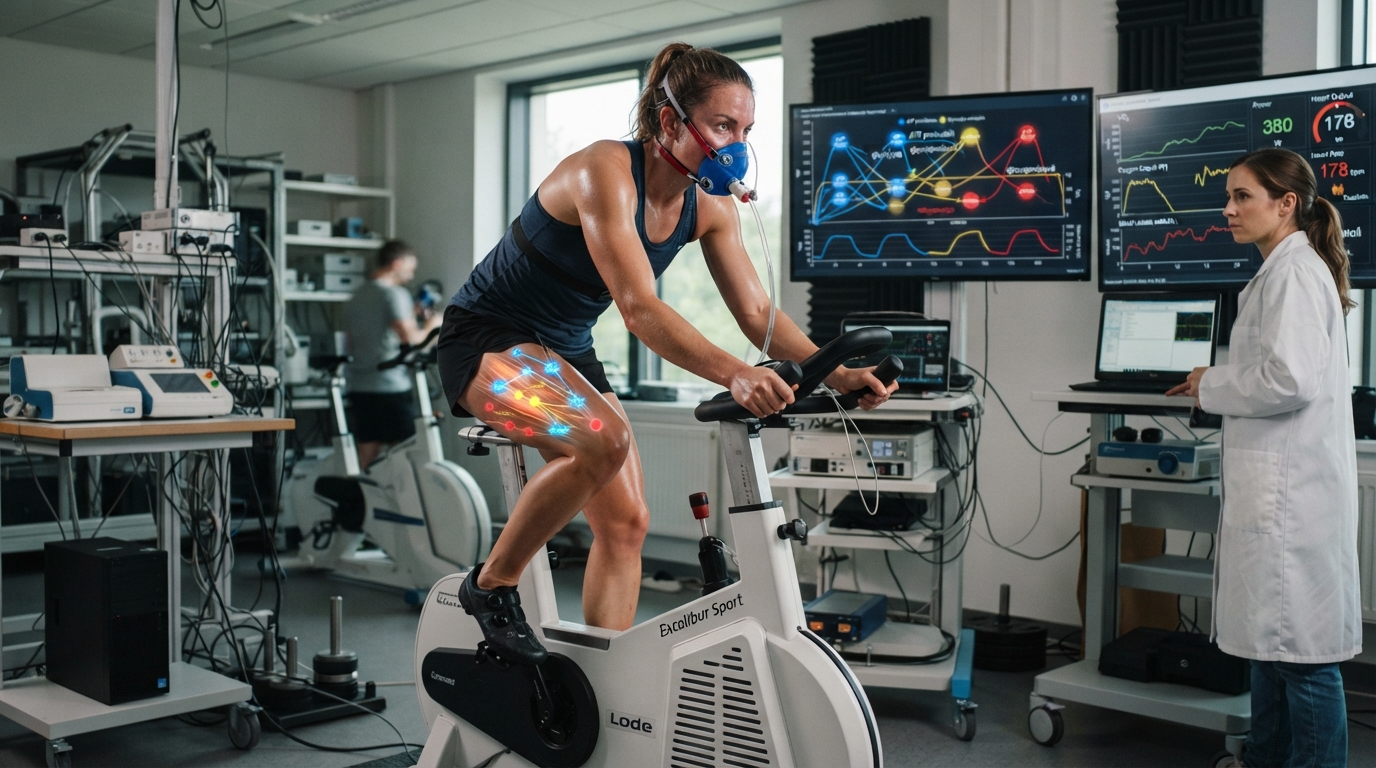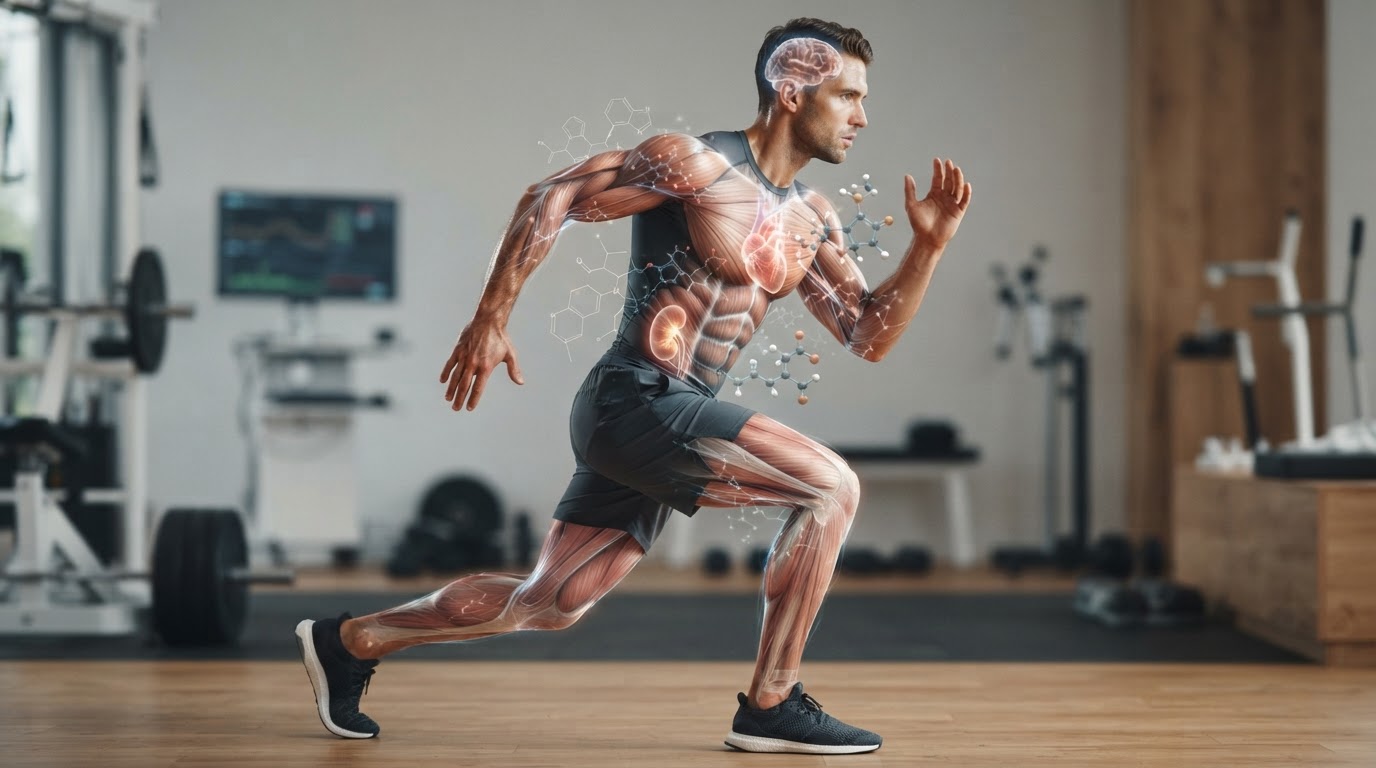
Quick answer: Carnosine helps muscle manage exercise-related acidity by reversibly accepting hydrogen ions inside the muscle cell. This contributes to intracellular buffering and can slow the fall in pH when ATP is being used extremely quickly. But carnosine does not literally remove "lactic acid," erase lactate, or stop fatigue. At physiological pH, the molecule measured in blood and muscle is primarily lactate, and fatigue reflects many processes beyond acidity.[1–7]
That distinction matters because three ideas are often blended together: lactate rises during hard exercise, muscle can become more acidic, and performance eventually drops. These events are related, but they are not the same event and one does not fully explain the others.
Carnosine is part of the muscle's built-in chemical defense against rapid pH change. It is useful—not magical. Understanding that middle ground makes the science clearer and prevents a plausible mechanism from turning into a claim that a food, supplement, or topical gel can instantly "flush lactic acid."
Bottom line: Carnosine is one of several intracellular buffers. It can accept some hydrogen ions during intense exercise, but it does not eliminate lactate, guarantee better performance, or make fatigue disappear.
Table of Contents
- What carnosine is
- Why muscle pH falls during hard exercise
- How carnosine buffers hydrogen ions
- Why "buffering lactic acid" is imprecise
- When muscle buffering matters most
- Why buffering cannot prevent all fatigue
- Does more muscle carnosine improve performance?
- Carnosine, beta-alanine, and food
- Where topical LactiGo fits
- Final takeaway
What Is Carnosine?
Carnosine is a naturally occurring dipeptide—two amino-acid building blocks joined together—made from beta-alanine and histidine. Human skeletal muscle stores it at much higher concentrations than most other tissues, positioning it close to the chemical changes that occur during contraction.[4–7]
The molecule's histidine-containing imidazole group is especially relevant. Its acid-base behavior allows it to bind and release hydrogen ions across the pH range that working muscle may experience. That makes carnosine a meaningful part of the muscle's non-bicarbonate buffering capacity.[4–7]
Chemists describe this behavior partly with a value called pKa—the pH range around which a compound can readily switch between protonated and unprotonated forms. Carnosine's imidazole group has a pKa close to the pH reached by hard-working human muscle. That chemical fit is why carnosine can contribute meaningfully in the exact compartment and range where rapid exercise-related acid-base change occurs.[4–7]
"Buffer" does not mean a chemical sponge that permanently traps acid. A buffer participates in a reversible reaction. When hydrogen-ion concentration rises, carnosine can accept some of those ions. As conditions recover, the reaction can move in the other direction. The practical effect is resistance to a rapid change in pH—not complete prevention of that change.
Carnosine may have other biological roles, and laboratory research has examined antioxidant, carbonyl-scavenging, and calcium-related effects. This article stays with the best-established exercise question: its contribution to intracellular proton buffering.[5–7]
Why Does Muscle pH Fall During Hard Exercise?
Muscle contraction requires adenosine triphosphate, or ATP. During high-intensity exercise, ATP turnover accelerates dramatically. The muscle replenishes ATP through several overlapping systems, including phosphocreatine breakdown, glycolysis, and oxidative metabolism.
ATP hydrolysis and the reactions that support repeated contraction alter the balance of hydrogen ions inside the cell. When the rate of proton production and release exceeds the combined capacity of buffering, transport, and metabolic consumption, intracellular pH falls.[1–3,19]
This is most noticeable when power demand is high enough that ATP must be regenerated very quickly. Think of a hard rowing interval, a 400- to 800-meter run, repeated combat-sport exchanges, or a demanding set that lasts long enough to produce substantial metabolic stress.
The burning sensation that accompanies a hard effort is not a perfect measurement of muscle pH. Sensory nerves respond to multiple chemical and mechanical signals, and the brain integrates those signals with effort, temperature, breathing, threat, and motivation. A person can feel intense burning without being able to identify which metabolite caused it.

Buffering is most relevant when power demand is high and the effort lasts long enough for substantial metabolic disturbance to develop.
Terminology check: Exercise-related acidosis describes a rise in hydrogen-ion concentration and a fall in pH. Lactate often rises at the same time, but "more lactate" and "more acid" are not interchangeable measurements.
How Does Carnosine Buffer Hydrogen Ions?
The pH scale reflects hydrogen-ion activity. A falling pH means the environment has become more acidic. Because enzyme activity, ion movement, calcium handling, and contractile proteins operate within chemical limits, the muscle uses several systems to resist rapid pH change.
Carnosine contributes inside the muscle cell. Its imidazole group can accept a hydrogen ion:
Carnosine + H⁺ ⇌ protonated carnosine
That reversible reaction temporarily reduces the number of freely active hydrogen ions. It helps keep pH from falling as quickly as it would with less buffering capacity.[4–7]
The word "temporarily" is important. Carnosine does not destroy hydrogen ions or make the metabolic demand vanish. The muscle still needs blood flow, transport proteins, bicarbonate outside the cell, ventilation, oxidation, and recovery reactions to restore acid-base balance.
Buffering capacity is also finite. Once more buffering sites are occupied and the exercise continues, pH can keep falling. Carnosine therefore acts more like one part of a delay system than an on/off switch for fatigue.
Other intracellular compounds—including phosphates and proteins—also buffer hydrogen ions. Outside the muscle cell, bicarbonate is an important extracellular buffer. Proton and lactate transport across cell membranes further shape the response. Carnosine matters within a network, not in isolation.[4–7,19]
Mechanism boundary: Carnosine can slow a pH change. It cannot make an all-out effort chemically effortless, and its buffering role should not be described as "detoxing" muscle.
Why Is "Buffering Lactic Acid" an Imprecise Phrase?
"Lactic acid buildup" remains common language because lactate concentrations and acidity often rise during the same hard effort. Modern exercise biochemistry separates them more carefully.
At the pH of blood and muscle, lactic acid is overwhelmingly dissociated into lactate and a hydrogen ion. More importantly, the reaction that converts pyruvate to lactate consumes a hydrogen ion. That means lactate formation is not simply an acid-producing waste reaction.[1,2]
Lactate is also useful. It can move between cells and tissues, be oxidized as fuel, or contribute carbon for glucose production. The lactate-shuttle model describes it as a transportable metabolic intermediate and signaling molecule, not dead-end waste.[2]
The full acid-base picture remains complex. Reviews continue to debate how best to assign proton production and consumption across tightly linked reactions during whole-body exercise. The responsible conclusion is not that acidity is imaginary. It is that lactate concentration should not be treated as the sole cause of acidosis or fatigue.[1–3,19]
For the broader myth-and-recovery explanation, read Lactic Acid Buildup: Causes, Symptoms, and Fast Relief. Cyclists can also see How to Flush Lactic Acid from Legs After Cycling, which explains why active recovery supports circulation without literally flushing a toxin.
| Common phrase | More accurate interpretation | What not to claim |
|---|---|---|
| "Lactic acid is burning my muscles" | Hard exercise produces several chemical and sensory signals while lactate and hydrogen-ion concentrations change | Lactate alone creates every burning sensation |
| "Carnosine removes lactic acid" | Carnosine accepts some hydrogen ions inside muscle and contributes to buffering | Carnosine clears lactate from blood or muscle |
| "More buffering prevents fatigue" | Greater buffering may support some high-intensity tasks, but fatigue has multiple causes | A buffer makes exercise unlimited |
| "A product worked because the burn changed" | Perceived effort and discomfort can change for many reasons | Sensation proves intramuscular carnosine changed |
When Does Muscle Buffering Matter Most?
Buffering is most likely to matter when three conditions overlap:
- Power demand is high. ATP must be regenerated rapidly.
- The effort lasts long enough. There is time for substantial metabolic disturbance to accumulate.
- Acid-base stress is one meaningful limiter. The task is not ending mainly because of technique, pain, heat, motivation, or depleted substrate.
Meta-analyses of oral beta-alanine research—used as an indirect way to raise muscle carnosine—have generally found the clearest average effects in high-intensity exercise-capacity tests lasting roughly 60 to 240 seconds. Some longer or intermittent tasks may also benefit, while very short single sprints and long steady endurance events show less consistent effects.[7,13,14]
Examples may include:
- rowing and cycling efforts lasting several minutes;
- middle-distance running;
- repeated high-output exchanges in combat or team sports;
- swimming events with sustained high glycolytic demand;
- high-repetition resistance sets performed near fatigue;
- repeated hard intervals with limited recovery.
This does not mean every athlete in those events will respond, or that buffering is the most important performance factor. Sport skill, pacing, aerobic fitness, strength, training status, nutrition, recovery, and psychology can easily outweigh a small biochemical advantage.
Why Can't Buffering Prevent All Fatigue?
Fatigue is a reduction in the ability or willingness to maintain force, power, speed, or task quality. It emerges from interactions across the muscle, nervous system, cardiovascular system, respiratory system, and brain.
During a hard effort, several contributors can change together:
- phosphocreatine falls;
- inorganic phosphate and other metabolites accumulate;
- potassium and other ions shift across membranes;
- calcium release and contractile sensitivity change;
- motor-unit behavior and central drive adjust;
- heat and breathing strain rise;
- glycogen availability, pacing, and prior fatigue influence output;
- local discomfort changes decision-making.
Acidosis can matter, but its influence depends on temperature, muscle fiber, task, and the other metabolites present. Some laboratory findings have even shown protective or context-dependent effects of lower pH, which is another reason to reject a one-cause story.[3,19]
Increasing one buffer cannot correct every limiting process. An athlete may have more muscle carnosine and still stop because phosphocreatine is low, technique breaks down, the cardiovascular demand is too high, or the chosen pace is unsustainable.
Performance reality: A plausible mechanism is not a guarantee. If an intervention raises muscle carnosine, that confirms a biochemical change—not automatically a faster race, more repetitions, or a meaningful advantage for every athlete.
Does More Muscle Carnosine Improve Performance?
Researchers usually study this question by supplementing beta-alanine over time. Beta-alanine is the rate-limiting precursor for muscle carnosine synthesis, and controlled studies show that repeated oral intake can increase intramuscular carnosine.[8–12,15]
Several trials have reported improvements in high-intensity cycling capacity, repeated contractions, or intermittent tests after muscle carnosine increased.[9–12,15–17] Meta-analyses also find a small average benefit across selected exercise outcomes, especially capacity tests in the one- to several-minute range.[13,14]
The size and meaning of the effect require context:
- Capacity tests are not the same as fixed performance. Time-to-exhaustion tests can show larger percentage changes than a race against a set distance or workload.
- Average effects conceal variation. Some participants improve, others change little, and study protocols differ.
- Training status matters. A small biochemical gain may be more or less visible depending on the athlete and event.
- Muscle carnosine response varies. Baseline concentration, total intake, duration, muscle sampled, and individual biology affect the change.
- Not every task is acid-base limited. A ten-second sprint, one maximal lift, or long easy session may be constrained mainly by other factors.
The most defensible summary is that increasing muscle carnosine can improve some forms of high-intensity exercise capacity by a small average amount. It should not be sold as a universal performance enhancer or a substitute for training.
How to read a carnosine or beta-alanine performance claim
Before treating a headline as evidence for your sport, ask four questions.
Was muscle carnosine actually measured? Some studies confirm the biochemical change with a muscle biopsy or magnetic-resonance method; others assume it from the supplementation protocol. A performance change without a muscle measurement cannot show how much the individual's carnosine changed.
Was the outcome capacity or performance? Lasting longer at a fixed severe workload is useful laboratory information, but it is different from completing a fixed race faster. Time-to-exhaustion results can be sensitive to motivation, familiarization, pacing instructions, and test design.
Did the task resemble the athlete's event? A benefit in a several-minute cycling test cannot automatically be transferred to a one-repetition maximum, a ten-second sprint, a marathon, or a stop-and-start field sport.
Was the change meaningful, not merely measurable? Statistical significance does not reveal whether the difference would change a placing, a training decision, or daily function. Look for the absolute change, uncertainty, participant experience, and whether the result has been repeated.
This framework does not dismiss the evidence. It puts a generally small average effect in the context needed for an honest performance decision.

Average study effects do not guarantee the same response for every athlete, event, or training task.
How Do Carnosine, Beta-Alanine, and Food Relate?
Carnosine is the compound stored in muscle. Beta-alanine is one of the amino acids used to synthesize it and appears to be the limiting precursor under ordinary conditions.[5–8]
Meat and fish contain carnosine and related histidine-containing dipeptides. Dietary patterns can influence baseline muscle carnosine, but eating a carnosine-containing meal is not the same as delivering intact carnosine directly to working muscle. Digestion, absorption, blood enzymes, tissue uptake, and synthesis all separate the food from the final intramuscular concentration.
Oral beta-alanine research involves repeated intake over weeks, not a single acute dose before exercise. The familiar tingling called paresthesia can occur with larger single doses. Tingling is a sensory side effect; it does not prove that muscle carnosine has increased or that the workout will improve.[7,18]
This article does not prescribe a supplement dose. Athletes subject to anti-doping rules should evaluate supplement certification and contamination risk, while people who are pregnant, nursing, under 18, managing a medical condition, or taking medication should discuss supplements with an appropriate clinician.
For a deeper product-versus-physiology explanation, see The Science Behind LactiGo and Carnosine Gel. Keep that educational link separate from any purchase CTA.
Where Does Topical LactiGo Fit?
Natural carnosine inside skeletal muscle and L-carnosine listed in a topical gel are not evidence-equivalent.
The current Drug Facts for LactiGo with Menthol identify menthol 1.5% as the active topical analgesic ingredient. The labeled use is temporary relief of minor aches and pains of muscles and joints associated with simple backache, arthritis, strains, bruises, and sprains. L-carnosine and magnesium sulfate appear as inactive ingredients.[20]
That labeling supports a temporary-comfort claim. It does not establish that topical L-carnosine crosses the skin in a quantity that raises intramuscular carnosine, buffers hydrogen ions during exercise, lowers lactate, delays fatigue, or improves performance.
A change in cooling, warmth, or discomfort after applying a menthol product is also not proof that muscle pH has changed. Sensory relief and intracellular exercise biochemistry are different outcomes.
Product boundary: LactiGo may be discussed as a topical analgesic for temporary relief of labeled minor aches and pains. Do not describe it as a way to load muscle carnosine, buffer an upcoming workout, clear lactate, prevent soreness, repair tissue, or make an injury safe to train through.
Review the Drug Facts and use the selected product only as directed. Do not use a topical analgesic to mask sharp, unexplained, worsening, or function-limiting pain so that you can continue exercising.
Final Takeaway
Carnosine earns its place in exercise physiology because its chemistry fits a real problem: when high-rate ATP turnover challenges acid-base balance, its imidazole group can accept hydrogen ions inside skeletal muscle and slow the fall in pH.
That is more precise than saying carnosine "removes lactic acid." Lactate is a reusable metabolite that often rises alongside exercise-related acidosis; it is not simply the acid, the waste, or the sole cause of fatigue.
Research that raises muscle carnosine through chronic oral beta-alanine supplementation suggests a small average benefit for some high-intensity exercise-capacity tasks. The benefit is not universal, fatigue remains multifactorial, and a biochemical response does not guarantee a meaningful performance outcome.
Topical LactiGo belongs in a separate evidence category. Its current menthol 1.5% Drug Facts support temporary relief of labeled minor muscle and joint aches—not intramuscular carnosine loading or exercise buffering.
General information only: This article explains exercise physiology and is not individualized medical, nutrition, or supplement advice. Persistent or unexplained exercise symptoms, chest pain, fainting, severe shortness of breath, neurologic symptoms, or loss of normal function warrant appropriate medical evaluation.
[[AUTHOR_BIO]]
Frequently Asked Questions
Does carnosine buffer lactic acid?
Carnosine more accurately buffers hydrogen ions inside skeletal muscle. The phrase "buffering lactic acid" is common, but at physiological pH the relevant metabolite is primarily lactate. Lactate and acidity often rise together during hard exercise, yet carnosine does not remove or neutralize lactate itself.
What does carnosine do during high-intensity exercise?
Carnosine can reversibly accept hydrogen ions as muscle pH falls. This adds to intracellular buffering capacity and may slow the pH change during hard efforts. It works alongside other buffers and transport systems and cannot prevent every cause of fatigue.
Why do muscles burn during intense exercise?
The burning sensation reflects several chemical and sensory signals generated during hard work. A fall in pH may contribute, but lactate alone is not the burn, and perceived burning is not a direct measurement of muscle acidity.
Is lactate bad for working muscle?
No. Lactate is a transportable and reusable metabolic intermediate. It can be oxidized as fuel, moved between tissues, and used in glucose production. High lactate signals high metabolic flux, but it should not automatically be labeled toxic waste.
Can carnosine prevent muscle fatigue?
No. Carnosine may delay one contributor to fatigue by supporting intracellular buffering, but fatigue also involves phosphocreatine availability, inorganic phosphate, ion shifts, calcium handling, neural drive, heat, pacing, and task demands.
Which exercises are most likely to benefit from greater buffering?
The clearest average beta-alanine research effects appear in high-intensity exercise-capacity tasks lasting roughly one to several minutes. Some intermittent or longer hard efforts may also benefit, while very short sprints and long steady exercise show less consistent results.
How can muscle carnosine be increased?
Controlled studies show that repeated oral beta-alanine supplementation over weeks can increase intramuscular carnosine. A single acute dose does not instantly load muscle carnosine, and the tingling sensation sometimes caused by beta-alanine does not prove effectiveness.
Is beta-alanine the same as carnosine?
No. Carnosine is the dipeptide stored in muscle, while beta-alanine is one of the amino acids the body uses to synthesize carnosine. Beta-alanine research is often used to test what happens when muscle carnosine increases.
Does topical LactiGo increase muscle carnosine or buffering?
There is no established evidence that applying LactiGo raises intramuscular carnosine, buffers hydrogen ions during exercise, lowers lactate, or improves performance. Topical product use should not be equated with the chronic oral beta-alanine protocols used in muscle-carnosine studies.
What is LactiGo with Menthol labeled to do?
Its current Drug Facts identify menthol 1.5% as a topical analgesic for temporary relief of minor aches and pains of muscles and joints associated with simple backache, arthritis, strains, bruises, and sprains. L-carnosine and magnesium sulfate are inactive ingredients.
References
- Robergs RA, Ghiasvand F, Parker D. "Biochemistry of Exercise-Induced Metabolic Acidosis." American Journal of Physiology-Regulatory, Integrative and Comparative Physiology. 2004;287(3):R502–R516. DOI: 10.1152/ajpregu.00114.2004. PubMed
- Brooks GA. "The Science and Translation of Lactate Shuttle Theory." Cell Metabolism. 2018;27(4):757–785. DOI: 10.1016/j.cmet.2018.03.008. PubMed
- Cairns SP. "Lactic Acid and Exercise Performance: Culprit or Friend?" Sports Medicine. 2006;36(4):279–291. DOI: 10.2165/00007256-200636040-00001. PubMed
- Abe H. "Role of Histidine-Related Compounds as Intracellular Proton Buffering Constituents in Vertebrate Muscle." Biochemistry (Moscow). 2000;65(7):757–765. PubMed
- Sale C, Artioli GG, Gualano B, Saunders B, Hobson RM, Harris RC. "Carnosine: From Exercise Performance to Health." Amino Acids. 2013;44(6):1477–1491. DOI: 10.1007/s00726-013-1476-2. PubMed
- Artioli GG, Gualano B, Smith A, Stout J, Lancha AH Jr. "Role of Beta-Alanine Supplementation on Muscle Carnosine and Exercise Performance." Medicine & Science in Sports & Exercise. 2010;42(6):1162–1173. DOI: 10.1249/MSS.0b013e3181c74e38. PubMed
- Trexler ET, Smith-Ryan AE, Stout JR, et al. "International Society of Sports Nutrition Position Stand: Beta-Alanine." Journal of the International Society of Sports Nutrition. 2015;12:30. DOI: 10.1186/s12970-015-0090-y. PubMed
- Harris RC, Tallon MJ, Dunnett M, et al. "The Absorption of Orally Supplied Beta-Alanine and Its Effect on Muscle Carnosine Synthesis in Human Vastus Lateralis." Amino Acids. 2006;30(3):279–289. DOI: 10.1007/s00726-006-0299-9. PubMed
- Hill CA, Harris RC, Kim HJ, et al. "Influence of Beta-Alanine Supplementation on Skeletal Muscle Carnosine Concentrations and High Intensity Cycling Capacity." Amino Acids. 2007;32(2):225–233. DOI: 10.1007/s00726-006-0364-4. PubMed
- Derave W, Ozdemir MS, Harris RC, et al. "Beta-Alanine Supplementation Augments Muscle Carnosine Content and Attenuates Fatigue During Repeated Isokinetic Contraction Bouts in Trained Sprinters." Journal of Applied Physiology. 2007;103(5):1736–1743. DOI: 10.1152/japplphysiol.00397.2007. PubMed
- Baguet A, Koppo K, Pottier A, Derave W. "Beta-Alanine Supplementation Reduces Acidosis but Not Oxygen Uptake Response During High-Intensity Cycling Exercise." European Journal of Applied Physiology. 2010;108(3):495–503. DOI: 10.1007/s00421-009-1225-0. PubMed
- Baguet A, Reyngoudt H, Pottier A, et al. "Carnosine Loading and Washout in Human Skeletal Muscles." Journal of Applied Physiology. 2009;106(3):837–842. DOI: 10.1152/japplphysiol.91357.2008. PubMed
- Hobson RM, Saunders B, Ball G, Harris RC, Sale C. "Effects of Beta-Alanine Supplementation on Exercise Performance: A Meta-Analysis." Amino Acids. 2012;43(1):25–37. DOI: 10.1007/s00726-011-1200-z. PubMed
- Saunders B, Elliott-Sale K, Artioli GG, et al. "Beta-Alanine Supplementation to Improve Exercise Capacity and Performance: A Systematic Review and Meta-Analysis." British Journal of Sports Medicine. 2017;51(8):658–669. DOI: 10.1136/bjsports-2016-096396. PubMed
- Saunders B, De Salles Painelli V, De Oliveira LF, et al. "Twenty-Four Weeks of Beta-Alanine Supplementation on Carnosine Content, Related Genes, and Exercise." Medicine & Science in Sports & Exercise. 2017;49(5):896–906. DOI: 10.1249/MSS.0000000000001173. PubMed
- Sale C, Saunders B, Hudson S, Wise JA, Harris RC, Sunderland CD. "Effect of Beta-Alanine Plus Sodium Bicarbonate on High-Intensity Cycling Capacity." Medicine & Science in Sports & Exercise. 2011;43(10):1972–1978. DOI: 10.1249/MSS.0b013e3182188501. PubMed
- Saunders B, Sunderland C, Harris RC, Sale C. "Beta-Alanine Supplementation Improves YoYo Intermittent Recovery Test Performance." Journal of the International Society of Sports Nutrition. 2012;9:39. DOI: 10.1186/1550-2783-9-39. PubMed
- Dolan E, Swinton PA, Painelli VS, et al. "A Systematic Risk Assessment and Meta-Analysis on the Use of Oral Beta-Alanine Supplementation." Advances in Nutrition. 2019;10(3):452–463. DOI: 10.1093/advances/nmy115. PubMed
- Cairns SP, Lindinger MI. "Lactic Acidosis: Implications for Human Exercise Performance." European Journal of Applied Physiology. 2025;125(7):1761–1795. DOI: 10.1007/s00421-025-05750-0. PubMed
- National Library of Medicine. "Label: LACTIGO—Menthol Gel." DailyMed. Active ingredient: menthol 1.5%; label updated March 2026. DailyMed
Get evidence-based performance and recovery guidance
Join CarnosineGel.com for practical articles that separate exercise myths, plausible mechanisms, preliminary findings, and proven outcomes—without hype.