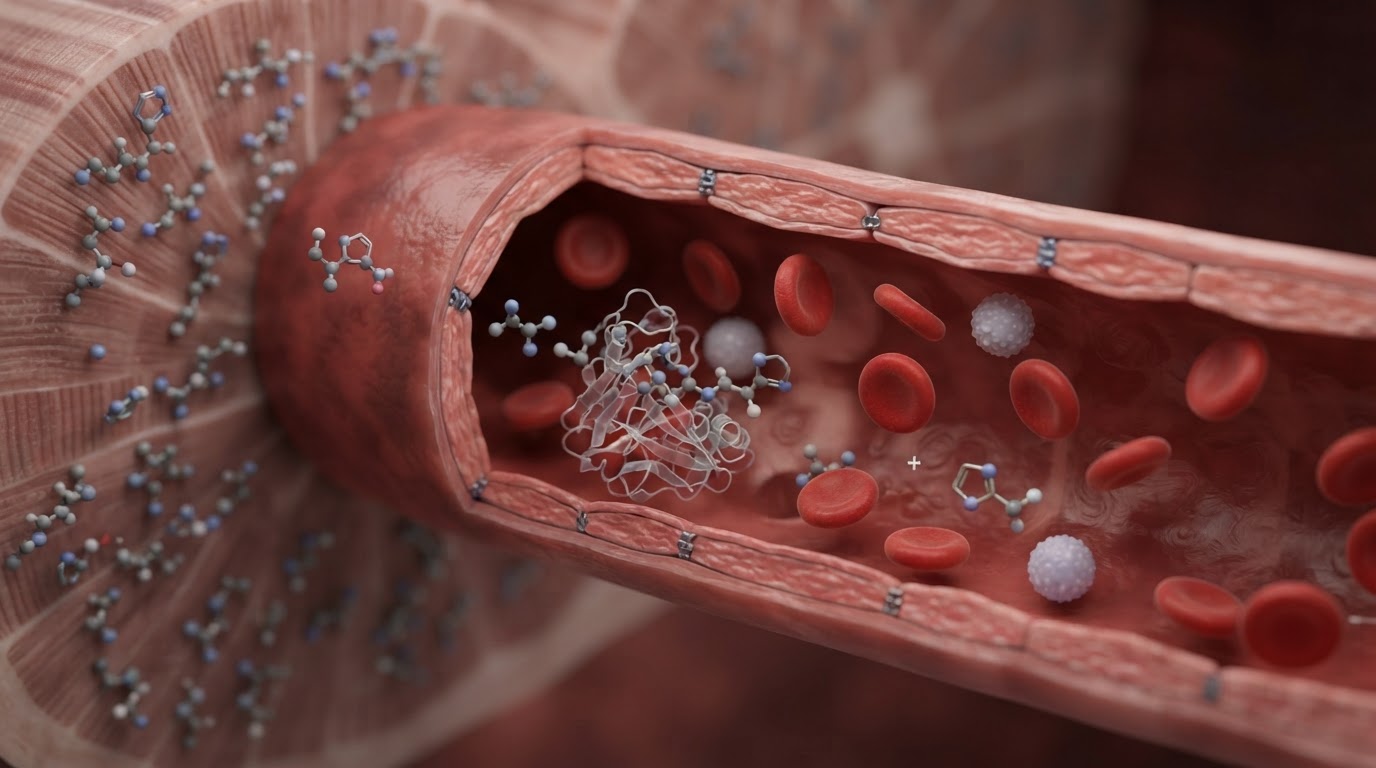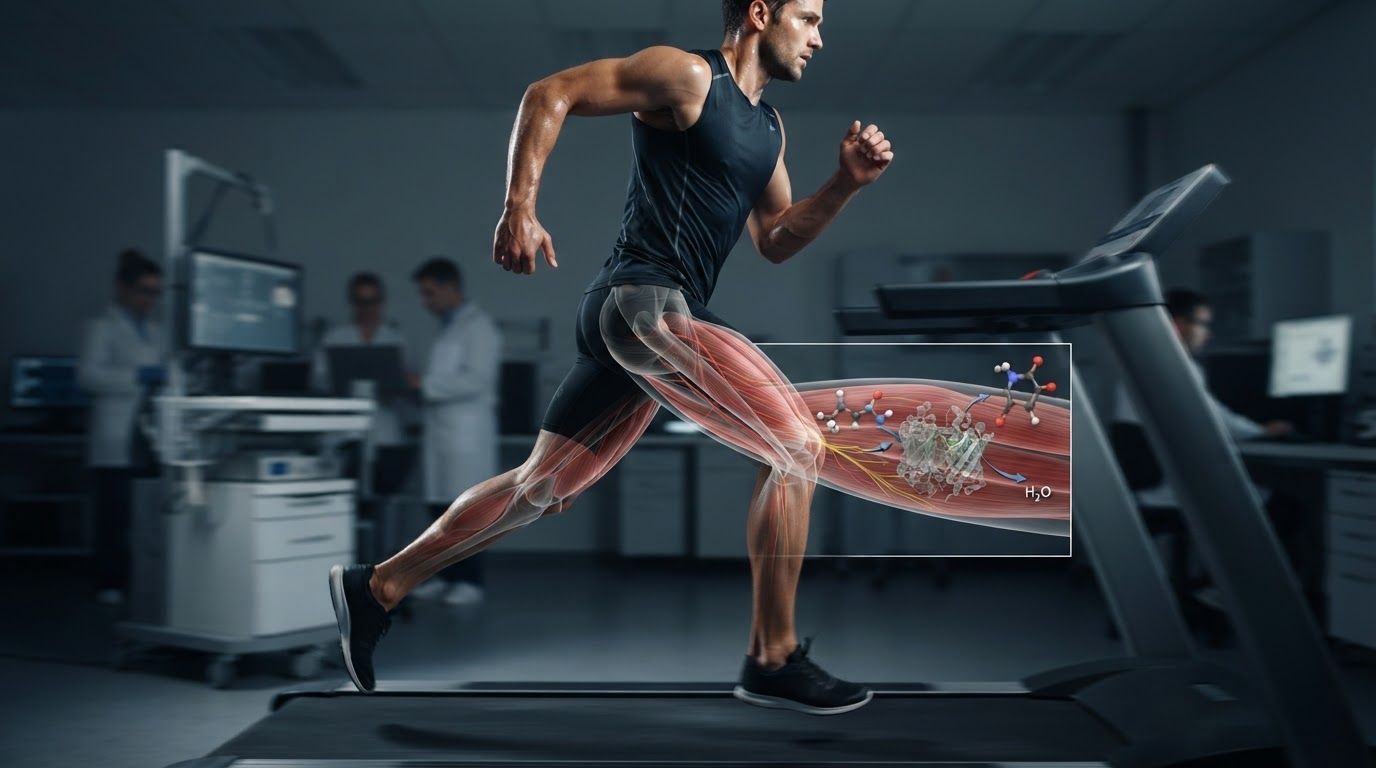
Quick answer: Your body makes carnosine by joining two smaller molecules—beta-alanine and L-histidine—inside cells. The reaction is catalyzed by an enzyme called carnosine synthase 1, or CARNS1, and requires cellular energy from ATP. In human skeletal muscle, beta-alanine availability is usually the main bottleneck, which is why beta-alanine supplementation can raise muscle carnosine while adding histidine by itself generally does not. [1–4]
Carnosine is often discussed as though it were simply something you get from food or supplements.
That misses an important part of the biology.
Your skeletal muscles have their own machinery for making carnosine.
They take two building blocks, bring them together inside the cell, and use a specific enzyme to form the dipeptide that can then accumulate in relatively high concentrations within muscle tissue.
That process helps explain several otherwise confusing questions.
Why does beta-alanine supplementation raise muscle carnosine?
Why doesn't histidine supplementation usually do the same thing?
Why does muscle carnosine rise slowly over weeks rather than after one dose?
And why can't research on oral beta-alanine automatically tell us what happens after topical carnosine application?
It starts with understanding how the molecule is built.
Table of Contents
- What is carnosine made from?
- Where does your body make carnosine?
- What is CARNS1?
- Why does the reaction require ATP?
- Why is beta-alanine the limiting precursor?
- What role does histidine play?
- Where does beta-alanine come from?
- Does eating carnosine bypass the synthesis process?
- How much can muscle carnosine increase?
- How quickly does carnosine build up?
- What happens when supplementation stops?
- Does exercise itself increase carnosine?
- Why do people have different carnosine levels?
- How is topical carnosine different?
- Where does LactiGo fit?
Carnosine Is Made From Two Building Blocks
Chemically, carnosine is a dipeptide.
That means it consists of two amino-acid-related building blocks joined together:
Beta-alanine + L-histidine → Carnosine
Beta-alanine is unusual because it is a beta-amino acid, while histidine is one of the amino acids used to build proteins.
When the two are linked in the correct orientation, the result is:
beta-alanyl-L-histidine
which is carnosine. [1,2]
This simple equation is useful, but the actual biology requires more than putting the two ingredients next to each other.
The cell needs an enzyme to join them.
Meet CARNS1: The Enzyme That Builds Carnosine
For decades, researchers knew that muscle could synthesize carnosine but did not know the molecular identity of the enzyme responsible.
That changed in 2010.
Researchers led by Jakub Drozak identified the enzyme now called carnosine synthase 1, abbreviated CARNS1. [1]
CARNS1 belongs to a family of enzymes called ATP-grasp enzymes.
Its job is to catalyze the reaction that joins:
- Beta-alanine
- L-histidine
into:
- Carnosine
The discovery gave researchers a much clearer way to study how carnosine concentrations are regulated in muscle and other tissues.
Today, CARNS1 is the official human gene symbol for carnosine synthase 1.
CARNS1 Is More Than a Molecular Glue Gun
It is tempting to imagine the enzyme simply snapping two molecules together.
The reaction is more sophisticated than that.
Creating the bond between beta-alanine and histidine requires energy.
CARNS1 uses ATP, the cell's familiar energy-carrying molecule, during the reaction. [1]
A simplified version looks like this:
Beta-alanine + L-histidine + ATP
↓
CARNS1
↓
Carnosine
The point is not that making carnosine uses a meaningful share of your daily calories.
It doesn't.
The important point is that carnosine synthesis is an active enzymatic process inside the cell, not a passive chemical accident.
Where Does Carnosine Synthesis Happen?
Carnosine is found most abundantly in tissues with high metabolic or excitable activity, particularly skeletal muscle.
That does not mean every tissue contains the same amount.
As discussed in our guide to where carnosine is found in the body, skeletal muscle is the clearest high-concentration reservoir in humans.
Within muscle, carnosine is stored inside the muscle fibers rather than circulating freely in large amounts in the bloodstream.
This intracellular location is important because one of carnosine's best-established physiological functions is helping buffer changes in acidity inside working muscle. [2,5]
Muscle therefore does not merely store carnosine.
It contains part of the machinery responsible for controlling its local carnosine pool.
Why Beta-Alanine Is Usually the Bottleneck
If carnosine requires both beta-alanine and histidine, why does sports nutrition focus so heavily on beta-alanine?
Because under normal conditions, skeletal muscle has much more difficulty obtaining enough beta-alanine for carnosine synthesis than enough histidine.
Researchers often describe beta-alanine as the rate-limiting precursor.
In plain English:
Beta-alanine is usually the ingredient most likely to hold the reaction back.
Muscle histidine concentrations are generally high relative to what carnosine synthase needs.
Beta-alanine concentrations are much lower.
That means increasing beta-alanine availability can give CARNS1 more raw material and allow muscle carnosine to accumulate. [2,3]
This isn't just biochemical theory.
Human supplementation studies demonstrate it directly.
What Happened When Researchers Tested Beta-Alanine Against Histidine?
A particularly useful 2017 study separated the two building blocks.
Thirty participants were assigned to receive:
- Beta-alanine
- L-histidine
- Beta-alanine plus L-histidine
Researchers measured carnosine in several muscles before and during supplementation. [3]
The result was remarkably clear.
Beta-alanine increased muscle carnosine.
Beta-alanine plus histidine increased muscle carnosine.
Histidine alone did not.
Adding histidine to beta-alanine also did not produce greater carnosine loading than beta-alanine alone during the study.
That experiment provided direct human confirmation that beta-alanine—not histidine—is normally the rate-limiting precursor for skeletal-muscle carnosine synthesis. [3]
Does That Mean Histidine Doesn't Matter?
No.
Histidine is still required.
Without histidine, the body cannot make carnosine.
The better distinction is:
Required does not mean rate-limiting.
Imagine building bicycles.
You need both frames and wheels.
If your factory has 5,000 frames but only 100 sets of wheels, the wheels determine how many bicycles you can build.
Frames are still essential.
They just aren't the bottleneck.
Something similar happens with carnosine synthesis.
Muscle normally has enough available histidine that supplying extra histidine alone does not substantially increase carnosine production.
Beta-alanine is more often the limiting material.
Histidine Is an Essential Amino Acid
There is another important difference between the two precursors.
Humans cannot synthesize histidine in sufficient quantities to meet normal needs, so histidine is considered an essential amino acid and must ultimately come from the diet. [6]
It is found in dietary protein and participates in many processes beyond carnosine synthesis.
That is one reason aggressively treating histidine simply as "carnosine material" would be misleading.
Your body has many uses for it.
Can Beta-Alanine Loading Lower Histidine?
Interestingly, the 2017 study found that prolonged beta-alanine supplementation reduced histidine concentrations in plasma and muscle.
After 23 days, histidine was approximately:
- 30.6% lower in plasma
- 31.6% lower in muscle
in the beta-alanine-only group. [3]
Adding histidine prevented that decline.
But it still did not create greater muscle carnosine loading than beta-alanine alone over the study period.
The authors therefore concluded that histidine is not normally rate-limiting, while also noting that its availability is not unlimited.
That is a more precise answer than simply saying:
"Histidine doesn't matter."
It does.
It just usually is not the main bottleneck.
Where Does Beta-Alanine Come From?
Your body can encounter beta-alanine through several routes.
Food
Animal-derived foods can contain carnosine and related histidine-containing dipeptides.
When these compounds are digested and broken down, beta-alanine can become available.
Endogenous metabolism
The body can also generate beta-alanine during the breakdown of the pyrimidine base uracil. [7]
Supplements
Oral beta-alanine provides beta-alanine directly and can substantially increase its availability for muscle carnosine synthesis.
These sources do not necessarily contribute equally.
The key point is that the beta-alanine pool available to skeletal muscle is relatively limited compared with histidine, which helps explain why increasing beta-alanine intake has such a pronounced effect on muscle carnosine.
Does Your Body Make Beta-Alanine From Regular Alanine?
No.
This is a common naming trap.
Alpha-alanine, usually just called alanine, is one of the familiar amino acids involved in protein and energy metabolism.
Beta-alanine has a different chemical structure.
The position of the amino group is different.
Your body does not simply take ordinary dietary alanine and automatically treat it as beta-alanine for carnosine synthesis.
They are related by name, but they are not interchangeable molecules.
Does Eating Carnosine Bypass the Need to Make It?
Not quite.
Carnosine is present in meat and other animal tissues, but humans also possess an enzyme called serum carnosinase 1, or CN1, that can break carnosine apart in the bloodstream. [8]
That means orally consumed carnosine does not simply travel intact from your meal into skeletal muscle and remain there.
Human research illustrates this well.
In a 2006 study, researchers compared beta-alanine and carnosine ingestion.
Plasma beta-alanine increased after intake, while intact carnosine was not detected in plasma under the tested conditions. Yet several weeks of either beta-alanine or carnosine supplementation increased muscle carnosine. [4]
That suggests dietary or supplemental carnosine can still contribute to the muscle-carnosine pool, but its route through the body is more complicated than:
Eat carnosine → intact carnosine enters muscle.
Why Beta-Alanine Became the Classic Loading Strategy
The metabolic logic is straightforward.
If beta-alanine is normally the limiting precursor, supplying more of it should increase the substrate available to CARNS1.
That is exactly what controlled human studies have repeatedly found.
One of the landmark trials supplemented men with beta-alanine for four to ten weeks.
Muscle biopsies showed carnosine increases of:
- 58.8% after four weeks
- 80.1% after ten weeks [9]
The carnosine increase occurred in both type I and type IIa muscle fibers.
This established an important principle:
Human muscle carnosine is not fixed.
The size of the muscle carnosine pool can change substantially when precursor availability changes.
One Dose Is Not the Same as Loading Muscle Carnosine
This is where supplement marketing can create confusion.
Taking beta-alanine shortly before exercise is not equivalent to loading muscle carnosine over several weeks.
The classic carnosine-loading effect occurs through repeated beta-alanine intake over time.
The muscle gradually synthesizes and stores more carnosine.
A systematic review and meta-analysis of human supplementation studies found that muscle carnosine responds reliably to beta-alanine intake and that the response is related to total exposure. [10]
Researchers estimated that essentially all individuals in the available individual-level dataset responded to supplementation, although the magnitude varied between people. [10]
So when discussing beta-alanine's effect on carnosine, think:
accumulation
rather than:
instant boost.
How Much Carnosine Can Muscle Store?
There does not appear to be one simple universal ceiling.
A 2020 systematic review concluded that human skeletal muscle has a considerable capacity for additional carnosine accumulation and that many commonly used beta-alanine protocols may not fully saturate that capacity. [10]
A separate 24-week study using 6.4 grams of beta-alanine per day found that muscle carnosine continued to remain elevated throughout the intervention, with substantial variation between individuals. [11]
The study also demonstrated something important about regulation:
Increasing beta-alanine availability is powerful, but beta-alanine is not the only factor controlling the final carnosine concentration.
Transporters, enzymes, muscle characteristics, diet, and other biological differences also matter.
How Quickly Does Muscle Carnosine Disappear?
Slowly.
After muscle carnosine has been increased through beta-alanine supplementation, it does not vanish the day supplementation stops.
Human washout research has found a relatively slow decline toward baseline. [12]
One synthesis of the literature estimated a washout rate of roughly 2% per week after loading. [13]
That slow turnover is another clue that muscle carnosine behaves like a tissue pool rather than an acute pre-workout substance.
The body builds it gradually.
It also loses the extra accumulation gradually.
Is More Always Better?
Not necessarily.
A higher muscle carnosine concentration can increase intracellular buffering capacity, and beta-alanine supplementation has produced performance benefits in certain high-intensity exercise contexts.
But carnosine concentration is not a universal score for muscle quality.
Higher carnosine does not automatically mean:
- Greater maximal strength
- Higher VO2 max
- Better performance in every sport
- Faster recovery from every workout
- Greater muscle growth
The performance benefit depends heavily on the type and duration of exercise.
That is why our articles on carnosine and repeated sprint performance and the Wingate and high-intensity cycling research focus on the exact protocol rather than treating every high-intensity task as equivalent.
Why Do Different People Start With Different Carnosine Levels?
Muscle carnosine varies considerably between people.
Factors associated with those differences include:
- Muscle-fiber composition
- Sex
- Age
- Diet
- Long-term training background
- Genetics
- Muscle group
Type II fibers generally contain more carnosine than type I fibers.
People who consume little or no animal-derived food can also have lower muscle carnosine than omnivores because plant foods do not provide carnosine in the same way animal muscle does.
None of these factors determines your exact level by itself.
Muscle carnosine is the result of multiple interacting influences.
Does Exercise Make Your Body Produce More Carnosine?
Not quickly or reliably enough to treat training alone as a carnosine-loading strategy.
Long-term sprint-trained athletes often show relatively high muscle carnosine.
But short training interventions without beta-alanine supplementation have generally produced modest or inconsistent changes. [2]
That creates an interesting chicken-and-egg problem.
Do some athletes have high carnosine because years of high-intensity training slowly influenced it?
Or are people with naturally high muscle carnosine more likely to excel in sprint-oriented sports?
The answer may involve both biology and training history.
What is much clearer is that beta-alanine availability can directly change the muscle carnosine pool.
The Body Regulates More Than Just the Two Ingredients
Carnosine synthesis is not controlled only by how much beta-alanine and histidine happen to be present.
Human and animal muscle express several genes involved in carnosine metabolism, including:
- CARNS1 — carnosine synthase
- TauT — a transporter that can participate in beta-alanine transport
- PAT1 — another possible beta-alanine transporter
- CNDP2 — a cellular carnosinase
- PHT1 and PHT2 — peptide/histidine transport-related proteins
- ABAT — involved in beta-alanine metabolism [14]
Research suggests that some of these transporters and enzymes respond to changes in beta-alanine availability.
In other words:
Muscle carnosine homeostasis is regulated, not passive.
What Happens After Carnosine Is Made?
Once CARNS1 joins beta-alanine and histidine, the new carnosine molecule can remain inside the cell and contribute to the tissue's carnosine pool.
Carnosine is not permanent.
The body also contains enzymes capable of breaking histidine-containing dipeptides down.
That creates a dynamic system:
Precursors become available
↓
CARNS1 synthesizes carnosine
↓
Carnosine accumulates in tissue
↓
Carnosinases and other metabolic processes contribute to turnover
Muscle carnosine concentration reflects the balance among these processes over time.
This helps explain why a person's carnosine level is influenced by much more than a single meal.
A Useful Way to Think About the Pathway
Here is the simplest accurate mental model.
| Step | What Happens |
|---|---|
| 1. Obtain the building blocks | Beta-alanine and histidine become available from diet, metabolism, or supplementation |
| 2. Move them into the cell | Transport processes make the precursors available to muscle |
| 3. Join them | CARNS1 uses ATP to synthesize carnosine |
| 4. Store the carnosine | Carnosine accumulates inside skeletal muscle |
| 5. Use and regulate the pool | Carnosine participates in muscle physiology while synthesis and breakdown continue |
| 6. Change precursor availability | More beta-alanine can shift the balance toward a larger carnosine pool |
The important thing is that the process is regulated and gradual.
Oral Beta-Alanine and Topical Carnosine Are Different Scientific Questions
This distinction becomes especially important when discussing LactiGo.
Oral beta-alanine research answers questions such as:
Can supplying more beta-alanine cause skeletal muscle to synthesize more carnosine through CARNS1?
The answer is clearly yes. [3,9,10]
A topical carnosine study asks something different:
What happens when a finished carnosine-containing formulation is applied to the skin before exercise?
Those are not interchangeable interventions.
Oral beta-alanine relies on the body's normal synthesis pathway:
Beta-alanine → muscle uptake → CARNS1 → carnosine
A topical carnosine formulation begins with carnosine already formed.
Therefore, if a topical product affects performance, we cannot simply assume that it did so by supplying beta-alanine to CARNS1 or by increasing endogenous carnosine synthesis.
That mechanism would need to be measured.
What Does the LactiGo Performance Study Tell Us?
LactiGo has direct human research in a pre-exercise performance context.
In the 2025 randomized, counterbalanced, triple-blind crossover study, seven world-class rugby sevens players applied 10 mL of topical carnosine gel 40 minutes before completing 12 repeated maximal cycling sprints. [15]
Peak power was higher with the carnosine gel during Sprints 2, 4, and 7.
Mean power, heart rate, and perceived exertion did not show treatment effects. [15]
The critical point for this article is what the investigators did not measure:
They did not directly determine whether intramuscular carnosine increased.
The authors specifically identified that as a question for future research. [15]
So the study supports a pre-exercise performance finding.
It does not prove that topical application accelerated the CARNS1 synthesis pathway described in this article.
How the LactiGo Science Page Fits
The LactiGo Science page describes the brand's topical carnosine framework and positions the product for use before demanding activity and as part of recovery.
It also describes application to muscle groups a person plans to train or recover and a pre-activity timing framework.
Use that page for understanding:
- How LactiGo is positioned
- How the brand describes its topical technology
- The intended pre- and post-activity routine
- Product-specific background
But keep the evidence levels clear.
The peer-reviewed performance study measured exercise performance.
It did not measure:
- Skin penetration concentration
- Intramuscular carnosine concentration
- CARNS1 activity
- Beta-alanine availability
- Histidine availability
Those questions remain separate.
Why This Distinction Actually Makes the Science More Interesting
Understanding endogenous carnosine synthesis gives us two different ways to think about carnosine research.
Pathway 1: Make More Carnosine
Increase beta-alanine availability.
Let skeletal muscle use CARNS1 to synthesize additional carnosine over time.
This is the classic oral beta-alanine model.
Pathway 2: Apply a Formulation Containing Carnosine
Start with carnosine already present in a topical formulation and test whether the finished product changes a measurable outcome.
This is a different delivery question and requires product-specific evidence.
Neither pathway should borrow mechanistic proof from the other.
That distinction is exactly what good sports-science interpretation requires.
Ready to Try Carnosine in a Topical Routine?
Your muscles normally build carnosine from beta-alanine and histidine over time. LactiGo takes a different approach: a fast-drying topical carnosine gel designed to fit into an active routine before and after physical activity.
LactiGo also has direct human performance research using pre-exercise topical application.
Try LactiGoThe Bottom Line
Your body does not make carnosine from one mysterious "carnosine pathway."
It uses two defined building blocks and a specific enzyme.
Beta-alanine + L-histidine
are joined by:
carnosine synthase 1, or CARNS1
to form:
carnosine. [1]
Both ingredients are necessary.
But in normal human skeletal muscle, beta-alanine is usually the limiting one.
That is why beta-alanine supplementation can increase muscle carnosine so dramatically while histidine supplementation alone generally does not. A direct human comparison confirmed that beta-alanine increased muscle carnosine, whereas histidine alone did not. [3]
Once beta-alanine availability rises, muscle does not fill with carnosine instantly.
CARNS1 gradually builds a larger tissue pool.
In one landmark study, muscle carnosine increased 58.8% after four weeks and 80.1% after ten weeks of beta-alanine supplementation. [9]
Larger analyses confirm that muscle carnosine responds reliably to sustained beta-alanine exposure, although the exact magnitude varies between people. [10]
And once the pool has increased, it washes out slowly. [12,13]
That gives us the simplest way to remember the biology:
Histidine is essential.
Beta-alanine is usually limiting.
CARNS1 builds the molecule.
Muscle stores it over time.
And when researchers test a completely different delivery route—such as topical carnosine—the mechanism has to be demonstrated separately rather than assumed.
Understanding that pathway makes the rest of carnosine science much easier to interpret.
Frequently Asked Questions
What two molecules make carnosine?
Carnosine is made from beta-alanine and L-histidine. The two are joined inside cells by carnosine synthase 1, or CARNS1. [1]
What enzyme makes carnosine?
The enzyme is carnosine synthase 1 (CARNS1). Its molecular identity was established in 2010. [1]
Does making carnosine require energy?
Yes. CARNS1 belongs to the ATP-grasp family of enzymes and uses ATP during carnosine synthesis. [1]
Why is beta-alanine called the rate-limiting precursor?
Because beta-alanine availability is usually lower relative to the needs of carnosine synthase than histidine availability. Increasing beta-alanine therefore tends to increase carnosine production. [2,3]
Why doesn't histidine supplementation raise carnosine as much?
Human research found that histidine alone did not increase muscle carnosine under the tested conditions, while beta-alanine did. Histidine is required for synthesis, but it is generally not the limiting precursor. [3]
Can the body make beta-alanine?
Yes. Beta-alanine can be produced during endogenous pyrimidine metabolism, including the breakdown of uracil. It can also become available through diet and supplementation. [7]
Is beta-alanine the same as alanine?
No. Beta-alanine and alpha-alanine are structurally different molecules and are not interchangeable.
Does eating carnosine send intact carnosine directly into muscle?
Not necessarily. Humans have serum carnosinase, which readily breaks carnosine down in circulation. Dietary carnosine can still contribute to precursor availability, but the pathway is more complicated than direct intact storage. [4,8]
How much can beta-alanine raise muscle carnosine?
The exact response varies. One human biopsy study reported increases of 58.8% after four weeks and 80.1% after ten weeks. Broader reviews confirm substantial increases across supplementation studies. [9,10]
Does one beta-alanine dose raise muscle carnosine immediately?
No. The well-established loading effect occurs through repeated supplementation over time rather than an immediate one-dose increase in muscle carnosine.
Does muscle carnosine disappear quickly after beta-alanine supplementation stops?
No. Washout is relatively slow. Human research shows that elevated muscle carnosine returns toward baseline gradually over weeks and months. [12,13]
Does exercise alone increase muscle carnosine?
Long-term sprint-trained athletes can have high carnosine levels, but short-term exercise training alone has not consistently produced the large increases seen with beta-alanine supplementation.
Does topical carnosine use CARNS1?
Topical products contain carnosine that has already been formed. Whether and how topical carnosine affects intramuscular carnosine or endogenous synthesis requires direct measurement.
Has LactiGo been used before exercise in human research?
Yes. In a 2025 crossover trial, topical carnosine gel was applied 40 minutes before repeated high-intensity cycling sprints in seven world-class rugby sevens players. Higher peak power was reported in selected sprints. [15]
Did that LactiGo study prove that muscle carnosine increased?
No. Intramuscular carnosine concentration was not measured, and the authors specifically recommended studying that question in future research. [15]
References
- Drozak J, Veiga-da-Cunha M, Vertommen D, Stroobant V, Van Schaftingen E. Molecular identification of carnosine synthase as ATP-grasp domain-containing protein 1 (ATPGD1). Journal of Biological Chemistry. 2010;285(13):9346–9356. PMID: 20097752. DOI: 10.1074/jbc.M109.095505. PubMed
- Sale C, Saunders B, Harris RC. Effect of beta-alanine supplementation on muscle carnosine concentrations and exercise performance. Amino Acids. 2010. PMID: 20091069. PubMed
- Blancquaert L, Everaert I, Missinne M, et al. Effects of Histidine and β-alanine Supplementation on Human Muscle Carnosine Storage. Medicine & Science in Sports & Exercise. 2017;49(3):602–609. PMID: 28106620. DOI: 10.1249/MSS.0000000000001213. PubMed
- Harris RC, Tallon MJ, Dunnett M, et al. The absorption of orally supplied beta-alanine and its effect on muscle carnosine synthesis in human vastus lateralis. Amino Acids. 2006;30(3):279–289. PMID: 16554972. DOI: 10.1007/s00726-006-0299-9. PubMed
- Matthews JJ, Artioli GG, Turner MD, Sale C. The Physiological Roles of Carnosine and β-Alanine in Exercising Human Skeletal Muscle. Medicine & Science in Sports & Exercise. 2019. PMID: 31083045. PubMed
- Brosnan ME, Brosnan JT. Histidine Metabolism and Function. Journal of Nutrition. 2020;150(Suppl 1):2570S–2575S. PMID: 33000155. DOI: 10.1093/jn/nxaa079. PubMed
- van Gennip AH, Abeling NG, Vreken P, van Kuilenburg AB. Inborn errors of pyrimidine degradation: clinical, biochemical and molecular aspects. Journal of Inherited Metabolic Disease. 1997;20(2):203–213. PMID: 9211193. DOI: 10.1023/A:1005356806329. PubMed
- Regazzoni L. State of the Art in the Development of Human Serum Carnosinase Inhibitors. Molecules. 2024;29(11):2488. PMID: 38893364. DOI: 10.3390/molecules29112488. PubMed
- Hill CA, Harris RC, Kim HJ, et al. Influence of beta-alanine supplementation on skeletal muscle carnosine concentrations and high intensity cycling capacity. Amino Acids. 2007;32(2):225–233. PMID: 16868650. DOI: 10.1007/s00726-006-0364-4. PubMed
- Rezende NS, Swinton P, de Oliveira LF, et al. The Muscle Carnosine Response to Beta-Alanine Supplementation: A Systematic Review With Bayesian Individual and Aggregate Data E-Max Model and Meta-Analysis. Frontiers in Physiology. 2020;11:913. PMID: 32922303. DOI: 10.3389/fphys.2020.00913. PubMed
- Saunders B, et al. Twenty-four Weeks of β-Alanine Supplementation on Carnosine Content, Related Genes, and Exercise. Medicine & Science in Sports & Exercise. 2017. PMID: 28157726. PubMed
- Baguet A, Reyngoudt H, Pottier A, et al. Carnosine loading and washout in human skeletal muscles. Journal of Applied Physiology. 2009;106(3):837–842. PMID: 19131472. DOI: 10.1152/japplphysiol.91357.2008. PubMed
- Stellingwerff T, Decombaz J, Harris RC, Boesch C. Optimizing human in vivo dosing and delivery of β-alanine supplements for muscle carnosine synthesis. Amino Acids. 2012;43(1):57–65. PMID: 22358258. DOI: 10.1007/s00726-012-1245-7. PubMed
- Everaert I, et al. Gene expression of carnosine-related enzymes and transporters in skeletal muscle. European Journal of Applied Physiology. 2013. PMID: 23124893. PubMed
- Beaven CM, James C, McMaster DT, Brockelbank N. Topical carnosine gel improves intermittent high-intensity exercise performance in world-class rugby sevens players. Journal of the International Society of Sports Nutrition. 2025;22(1):2550311. PMID: 40859880. DOI: 10.1080/15502783.2025.2550311. PubMed