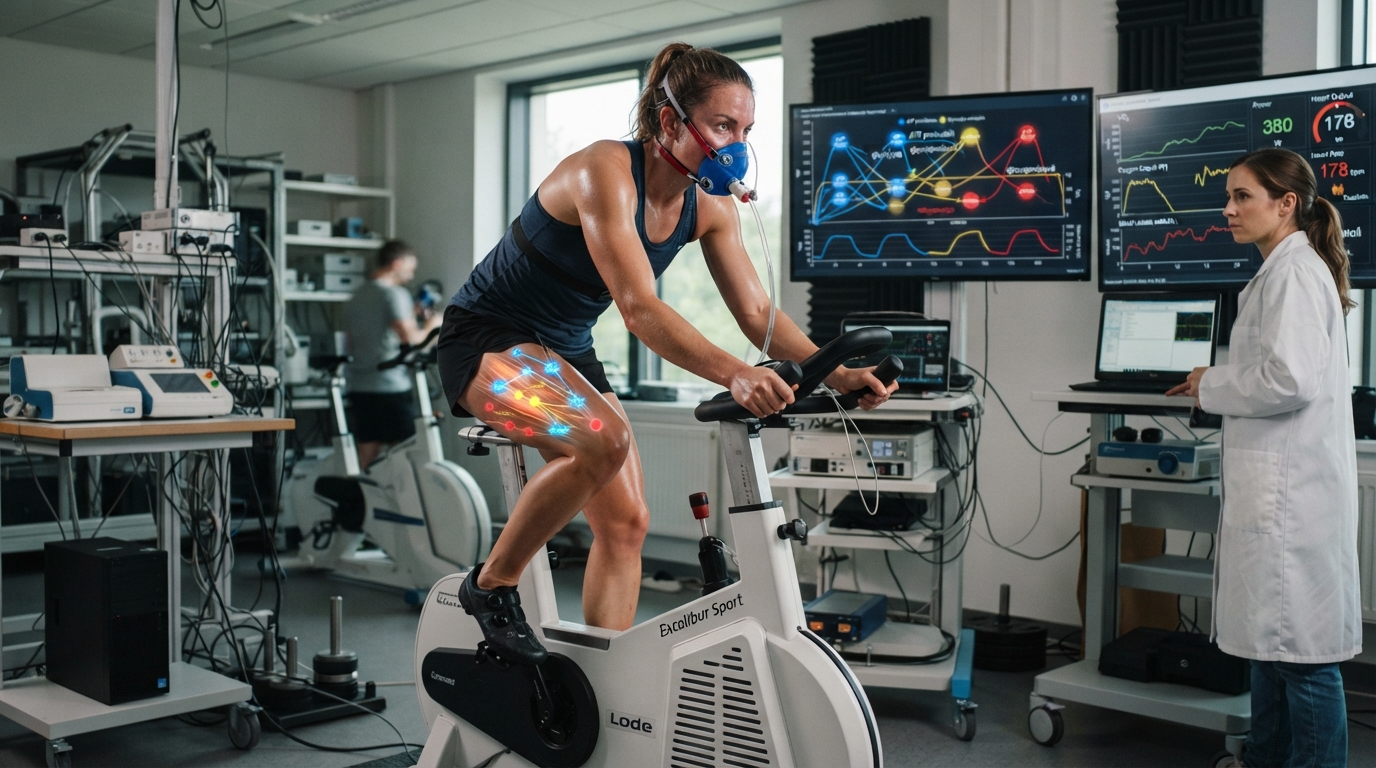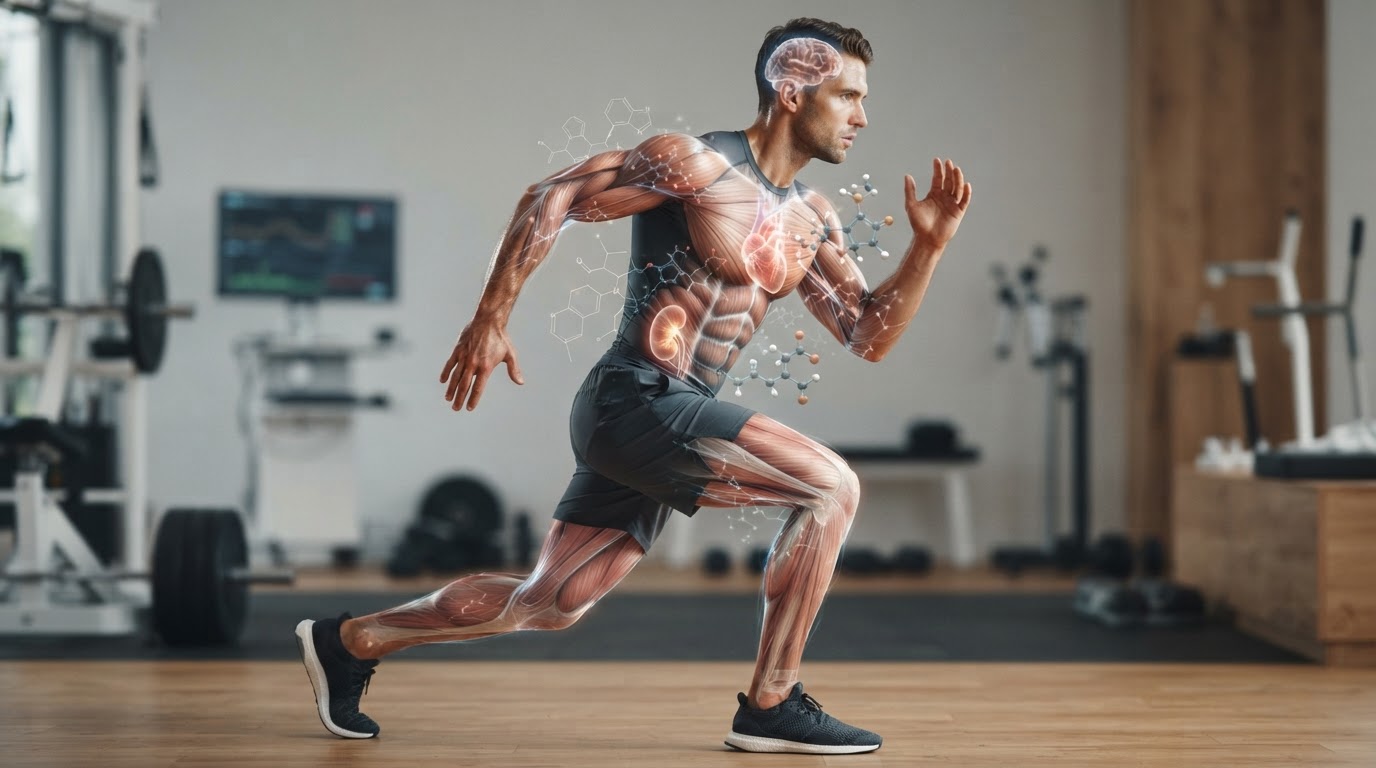
Carnosine is not distributed evenly throughout the human body. Its clearest high-concentration reservoir is skeletal muscle, where it can accumulate at concentrations large enough to contribute meaningfully to intracellular buffering and other aspects of muscle physiology. Human studies have directly measured carnosine in multiple skeletal muscles and have shown that concentrations differ among muscle fiber types, muscle groups, individuals, diets, sexes, and ages.
The nervous system contains a more complicated family of related histidine-containing dipeptides. Carnosine is relevant to brain biology, but homocarnosine—a related molecule made from GABA and histidine—is particularly prominent in human brain research. Magnetic resonance studies sometimes report a combined homocarnosine/carnosine signal because the compounds can be difficult to distinguish noninvasively.
Human research also demonstrates local carnosine metabolism in the kidney, and recent human cardiac-tissue research has directly detected carnosine in the heart. The concentrations and physiological roles in these tissues should not be assumed to match skeletal muscle.
Skin requires especially careful interpretation. Human skin-explant research shows that topically applied carnosine can interact with skin tissue under experimental conditions, but this is different from demonstrating that normal human skin contains the same high endogenous concentrations found in skeletal muscle.
And although carnosine can enter the circulation, human serum contains an enzyme called carnosinase that breaks it down. Blood therefore should not be imagined as a large, stable reservoir of intact carnosine.
The simplest accurate map is:
Skeletal muscle: high concentrations and strong human evidence
Brain/nervous system: carnosine-related dipeptide biology, especially homocarnosine
Kidney: local carnosine metabolism demonstrated in human tissue
Heart: carnosine present, but at substantially different concentrations from skeletal muscle
Skin: topical experimental evidence exists; endogenous tissue abundance is less clearly established
Blood: transport can occur, but intact carnosine is actively broken down
That distribution is important because finding carnosine in a tissue is not the same thing as proving what carnosine does there.
Key Takeaways
- Skeletal muscle is the best-established high-concentration reservoir of carnosine in the human body.
- Different muscles can contain different amounts of carnosine.
- Human type II, or fast-twitch-associated, muscle characteristics are strongly associated with higher muscle carnosine concentrations.
- Diet, sex, age, and individual physiology can influence muscle carnosine concentrations.
- Brain carnosine biology is more complicated because homocarnosine is an important related dipeptide in the human central nervous system.
- Human brain magnetic resonance research often measures a combined homocarnosine/carnosine signal rather than treating the compounds as easily separable.
- Human kidney tissue possesses machinery involved in carnosine synthesis, breakdown, and transport.
- Recent human heart-tissue research has directly detected carnosine, although cardiac concentrations should not be equated with skeletal-muscle concentrations.
- Experimental human skin research demonstrates effects of topically applied carnosine, but that does not establish skin as a naturally high-carnosine tissue.
- Carnosine can appear in circulation, but serum carnosinase rapidly hydrolyzes intact carnosine in humans.
- Tissue presence does not automatically establish physiological importance, therapeutic benefit, or delivery from a topical product.
- Endogenous carnosine inside muscle and carnosine applied to the surface of skin are different scientific questions.
Table of Contents
- What is carnosine?
- Where is most carnosine found?
- Why does skeletal muscle contain so much carnosine?
- Do all muscles contain the same amount?
- Which muscle fibers contain more carnosine?
- Why do carnosine levels differ between people?
- Is carnosine found in the brain?
- What is homocarnosine?
- What about the olfactory system?
- Is carnosine found in skin?
- Is carnosine found in the kidney?
- Is carnosine found in the heart?
- Is carnosine present in blood?
- Why isn't carnosine distributed evenly?
- Does finding carnosine in a tissue prove what it does?
- Does endogenous muscle carnosine prove topical delivery?
- Where LactiGo fits
- Frequently asked questions
What Is Carnosine?
Carnosine is a naturally occurring dipeptide composed of:
beta-alanine + L-histidine
Its chemical name is:
beta-alanyl-L-histidine
Unlike proteins, which can contain hundreds or thousands of amino acids, carnosine contains only two.
But those two amino-acid components create a molecule with chemical properties that make it particularly interesting in tissues exposed to substantial metabolic stress.
Human skeletal muscle can maintain relatively high intracellular concentrations of carnosine, while different tissues contain very different amounts and may metabolize carnosine in different ways.
That is the first important principle:
Carnosine distribution is tissue-specific.
The question is not simply:
"Is carnosine in the body?"
The more useful question is:
"Where is it found, at what concentration, in what related molecular form, and what evidence do we have in humans?"
Where Is Most Carnosine Found?
For human physiology, the clearest answer is:
Skeletal muscle.
Human studies using both muscle biopsy and proton magnetic resonance spectroscopy consistently identify substantial carnosine concentrations in skeletal muscle.
Because skeletal muscle also represents a large proportion of body mass, it constitutes an important whole-body pool of carnosine.
That does not mean carnosine is absent everywhere else.
It means skeletal muscle is where the combination of:
- High concentration
- Large tissue mass
- Strong human measurement data
- Established physiological relevance
is most convincing.
Carnosine Distribution at a Glance
| Tissue / Compartment | What Human Evidence Supports |
|---|---|
| Skeletal muscle | High concentrations; directly measured extensively |
| Brain / CNS | Histidine-containing dipeptides present; homocarnosine especially important |
| Olfactory tissue | Carnosine-related biology demonstrated in human olfactory cells |
| Kidney | Local synthesis, transport, and degradation machinery demonstrated |
| Heart | Carnosine detected in human cardiac tissue |
| Skin | Experimental topical carnosine activity demonstrated in human skin explants |
| Blood / serum | Intact carnosine can circulate transiently but is hydrolyzed by carnosinase |
| Other tissues | Evidence varies considerably and often relies more heavily on animal or molecular studies |
This table is deliberately conservative.
Listing a tissue merely because carnosine-related genes or experimental signals have been detected there can create the false impression that every tissue contains muscle-like carnosine concentrations.
They do not.
Why Does Skeletal Muscle Contain So Much Carnosine?
Skeletal muscle experiences rapid changes in chemistry when it contracts intensely.
During high-intensity exercise, muscle cells must manage:
- ATP turnover
- Changes in hydrogen-ion concentration
- Intracellular pH
- Calcium cycling
- Reactive metabolic products
- Repeated contraction and relaxation
Carnosine's imidazole-containing structure allows it to accept protons within a physiologically relevant pH range, making it useful as part of the muscle's intracellular buffering system.
This is one of the strongest established explanations for why substantial concentrations of carnosine are maintained inside skeletal muscle.
Importantly, carnosine is also relatively stable once accumulated inside human muscle.
In one human study, beta-alanine supplementation increased muscle carnosine, and after supplementation stopped, muscle carnosine declined gradually over multiple weeks rather than disappearing immediately. The investigators observed a washout rate of approximately 2–4% per week.
That slow decline illustrates an important difference between:
carnosine inside skeletal muscle
and
carnosine circulating in blood.
Inside muscle, carnosine can remain relatively stable.
In human serum, it encounters carnosinase.
Do All Skeletal Muscles Contain the Same Amount of Carnosine?
No.
Researchers have measured carnosine in multiple human muscles and found meaningful differences.
A 2009 study measured carnosine noninvasively in three lower-leg muscles:
- Soleus
- Tibialis anterior
- Gastrocnemius
The investigators also examined how each muscle responded to beta-alanine supplementation and how quickly elevated carnosine concentrations later declined.
Differences among muscles are biologically plausible because muscles differ in:
- Fiber-type composition
- Recruitment patterns
- Metabolic characteristics
- Functional demands
A postural endurance-oriented muscle and a muscle designed to generate more rapid force do not necessarily require identical intracellular chemistry.
Which Muscle Fibers Tend to Contain More Carnosine?
One of the strongest patterns in carnosine physiology involves muscle-fiber type.
Human research has repeatedly associated greater carnosine content with a larger proportion of type II, or faster-twitch, muscle fibers.
A noninvasive human study comparing proton magnetic resonance spectroscopy with muscle-biopsy fiber typing found a significant positive relationship between muscle carnosine and the proportion of type II fiber area.
Another supplementation study reported that baseline carnosine was substantially higher in type IIa fibers than type I fibers before supplementation.
Why would fast-twitch fibers contain more?
Type II fibers are heavily recruited during activities requiring:
- Rapid force
- Sprinting
- Jumping
- Explosive lifting
- High-intensity repeated efforts
These activities can create substantial metabolic disturbances over short periods.
Higher intracellular buffering capacity is therefore particularly relevant.
This does not mean slow-twitch fibers lack carnosine.
They contain it too.
The important point is:
carnosine concentration differs according to muscle phenotype.
Why Do Muscle Carnosine Levels Differ Between People?
Even within the same muscle, people can have quite different carnosine concentrations.
Human research has identified relationships with several variables.
Diet
Carnosine occurs naturally in animal tissues.
Human studies have found lower skeletal-muscle carnosine concentrations in vegetarians compared with omnivores, although vegetarians still synthesize carnosine endogenously.
Sex
Research has reported higher muscle carnosine concentrations in men than women in several measured muscles.
That does not establish one single mechanism.
Differences in muscle-fiber characteristics, hormonal environment, body composition, dietary intake, and other variables may contribute.
Age
Age-related differences have also been observed.
However, this relationship is not sufficiently simple to say that carnosine declines by a fixed percentage every year.
Muscle fiber type, physical activity, diet, and other age-associated changes can complicate the pattern.
Beta-Alanine Availability
Beta-alanine is an important precursor for carnosine synthesis.
Supplementing beta-alanine can substantially increase human skeletal-muscle carnosine.
This is why sports-nutrition research frequently administers beta-alanine rather than oral carnosine itself.
Is Carnosine Found in the Brain?
Yes—but this question requires more precision than it usually receives.
The human central nervous system contains histidine-containing dipeptides, including carnosine-related compounds.
However, brain chemistry is different from skeletal-muscle chemistry.
One particularly important molecule is:
Homocarnosine
Homocarnosine resembles carnosine but is made from:
GABA + histidine
rather than:
beta-alanine + histidine
Classic human brain-tissue research demonstrated regional variation in homocarnosine and the enzymes responsible for its metabolism.
Modern magnetic resonance research continues to investigate this chemistry in living humans.
Why Do Some Brain Studies Say "Homocarnosine/Carnosine"?
Because noninvasive measurement has technical limitations.
In a 2015 human study, researchers used proton magnetic resonance spectroscopy to examine what they explicitly described as the brain homocarnosine/carnosine signal.
The investigators did not pretend the measured spectral signal represented pure carnosine alone.
That distinction is important.
The study involved healthy vegetarian and omnivorous participants who received beta-alanine for 28 days.
Beta-alanine did not significantly alter the brain homocarnosine/carnosine signal.
It also did not improve the cognitive outcomes examined in trained cyclists.
That provides another useful lesson:
What happens to carnosine in muscle cannot automatically be assumed to happen in the brain.
Beta-alanine reliably raises skeletal-muscle carnosine.
That does not mean brain histidine-containing dipeptides respond identically.
What About the Olfactory System?
Carnosine has a particularly interesting history in olfactory biology.
Human research involving cultured fetal olfactory neuroepithelial cells demonstrated synthesis of carnosine alongside neuronal and olfactory-specific markers.
This aligns with broader research identifying carnosine-related biology in olfactory neurons.
But again, the evidence category matters.
Cultured human fetal olfactory cells are not the same thing as demonstrating a particular physiological benefit in the adult human olfactory system.
The appropriate conclusion is:
Carnosine biology is present in human olfactory neural tissue and has been studied as part of olfactory-cell physiology.
Not:
Carnosine supplementation improves human smell.
Those are different claims.
Is Carnosine Found in Skin?
This question is particularly important for a website focused on a topical carnosine-containing product.
The most responsible answer is:
Skin is biologically relevant to carnosine research, but human evidence does not justify describing normal skin as a high-concentration endogenous carnosine reservoir comparable with skeletal muscle.
That distinction matters.
A well-known 2018 experiment applied carnosine to human skin explants ex vivo.
Researchers deliberately induced glycation using methylglyoxal and tested:
- An aqueous carnosine solution
- A facial cream containing carnosine
The treatments reduced specific advanced glycation end-product markers under the experimental conditions.
This tells us that topically applied carnosine can interact meaningfully with human skin tissue under the tested conditions.
It does not tell us:
- How much endogenous carnosine normal human skin stores
- That normal skin contains muscle-like concentrations
- That every carnosine formulation penetrates identically
- That every topical carnosine product reaches the dermis
- That topical carnosine reaches skeletal muscle
- That every formulation improves wrinkles or elasticity
Those require separate evidence.
Skin Presence and Topical Delivery Are Two Different Questions
Consider these two questions:
Does a molecule exist naturally in skin?
Can a molecule applied to the skin surface penetrate into specific skin layers or deeper tissues?
These questions are not interchangeable.
Even if a molecule naturally occurs within a tissue, that does not prove an externally applied version can cross the skin barrier efficiently.
Likewise, a topical formulation may influence skin tissue even if the molecule is not normally stored there in high concentrations.
Formulation science matters.
Variables include:
- Molecular characteristics
- Concentration
- Vehicle
- Skin condition
- Contact time
- Penetration enhancers
- Hydration
- Anatomical application site
Is Carnosine Found in the Kidney?
Human evidence supports an active carnosine metabolic system in the kidney.
A 2015 study specifically investigated intrinsic carnosine metabolism in human kidney tissue.
The researchers examined carnosine-related enzymes and transport mechanisms and demonstrated that the human kidney possesses localized machinery involved in carnosine metabolism.
This makes biological sense because the kidney has a central role in:
- Filtration
- Reabsorption
- Amino-acid handling
- Peptide handling
- Metabolic homeostasis
But the kidney should not simply be described as another "carnosine storage organ."
Its importance may lie as much in processing and regulating carnosine-related compounds as in maintaining a large reservoir.
Is Carnosine Found in the Heart?
Yes.
Human cardiac tissue contains carnosine.
Recent translational research published in 2026 directly examined carnosine-related metabolism in human cardiac tissue and detected carnosine alongside beta-alanine.
The study also examined molecular machinery relevant to uptake and metabolism.
Importantly, the human cardiac concentrations should not be equated with the much higher concentrations traditionally associated with skeletal muscle.
The heart is muscle—but cardiac muscle and skeletal muscle are physiologically different tissues.
Cardiac muscle contracts continuously.
Its energetic environment, fiber organization, ion handling, metabolic profile, and regulation differ from skeletal muscle.
Therefore:
"Carnosine is found in both tissues"
does not mean:
"Carnosine plays exactly the same role at exactly the same concentration in both tissues."
Is Carnosine Present in Blood?
Yes, intact carnosine can reach the circulation.
But human blood is not a stable carnosine storage compartment in the way skeletal muscle is.
Humans possess serum carnosinase, commonly called CN1, which hydrolyzes carnosine into its constituent amino acids.
Human serum carnosinase was purified and characterized decades ago, establishing the circulation's capacity to break down carnosine.
Later human research showed that individuals with lower plasma carnosinase activity can maintain greater circulating carnosine after supplementation.
This helps explain why:
muscle carnosine can remain relatively stable for weeks
while:
circulating intact carnosine can be rapidly metabolized.
The biological environments are different.
Carnosine Distribution Depends on Synthesis, Transport, and Breakdown
Why does one tissue contain far more carnosine than another?
Because tissue concentration represents the outcome of several processes.
Synthesis
Does the tissue express carnosine synthase?
Precursor Availability
Are beta-alanine and histidine available?
Transport
Can carnosine or its precursors enter relevant cells?
Breakdown
Does the tissue contain enzymes capable of hydrolyzing carnosine?
Cellular Demand
Does the tissue's physiology favor maintaining substantial intracellular concentrations?
Tissue Turnover
How quickly is the molecule lost or replaced?
This means tissue concentration is not random.
It reflects the local biochemical environment.
Why Skeletal Muscle and Blood Behave So Differently
This contrast is one of the easiest ways to understand carnosine biology.
Skeletal Muscle: Carnosine can accumulate intracellularly and remain relatively stable.
Blood: Carnosine encounters circulating carnosinase. Its persistence therefore depends partly on the activity of that enzyme.
Same molecule. Different biological compartment. Different kinetics.
That is why statements about "carnosine in the body" can be misleading if they ignore location.
Tissue Presence Does Not Establish Function
Suppose researchers detect carnosine in an organ.
What does that tell us?
It tells us:
The molecule is present.
It does not automatically tell us:
- Why it is there
- Whether the concentration is physiologically important
- Whether increasing it produces benefit
- Whether lowering it produces harm
- Whether supplements can change it
- Whether topical products can reach it
This distinction is fundamental.
Presence
"Human heart tissue contains carnosine."
Mechanism
"Carnosine can participate in specific cardiac biochemical processes."
Intervention
"Increasing cardiac carnosine changes a measurable outcome."
Clinical outcome
"Increasing cardiac carnosine improves human health."
Each statement requires additional evidence.
You cannot skip from the first to the fourth.
Does Endogenous Muscle Carnosine Prove Topical Carnosine Reaches Muscle?
No.
This is probably the single most important product-related distinction in the article.
These are two completely different observations:
Observation 1: Human skeletal muscle naturally contains substantial concentrations of carnosine.
Observation 2: A product containing carnosine is applied to the skin.
Observation 1 does not prove that Observation 2 results in meaningful delivery into skeletal muscle.
For that claim, researchers would need applicable evidence involving:
- The specific topical formulation
- Skin penetration
- Tissue distribution
- Pharmacokinetics
- Intramuscular measurement or another valid delivery endpoint
This distinction should be preserved even when a topical product has human performance research.
A performance effect and a demonstrated delivery mechanism are also separate questions.
What About the 2025 LactiGo Performance Study?
A 2025 randomized, crossover, triple-blind study tested LactiGo topical carnosine gel in world-class rugby sevens players.
The study found higher peak power during selected repeated sprints after LactiGo application compared with placebo.
But the investigators did not directly measure intramuscular carnosine concentration.
The researchers therefore identified measurement of muscle carnosine following topical application as an important question for future work.
That means the responsible interpretation is:
LactiGo has direct human performance research.
But:
the study does not establish how much topically applied carnosine entered skeletal muscle.
Those statements are compatible.
Where LactiGo Fits Into the Tissue-Distribution Conversation
LactiGo contains L-carnosine.
The current U.S. DailyMed label identifies:
- Menthol 1.5% as the active ingredient
- Topical analgesic as the purpose
- L-carnosine among the inactive ingredients.
The label identifies the product for temporary relief of specified minor muscle and joint aches.
The fact that skeletal muscle naturally contains carnosine makes carnosine scientifically relevant to muscle physiology.
It does not, by itself, establish topical delivery.
That is why LactiGo should be evaluated on multiple separate evidence layers:
Ingredient Biology
What does endogenous carnosine do inside muscle?
Formulation Science
What happens when carnosine is incorporated into a topical gel?
Delivery
Where do formulation components go after application?
Human Performance
Does the finished product change measurable performance outcomes?
Labeled Use
What uses does the current U.S. Drug Facts label actually support?
Keeping those layers separate produces a stronger scientific story than pretending one study answers all five questions.
The Bottom Line
Carnosine is a naturally occurring molecule with highly uneven distribution throughout the human body.
The strongest conclusion is also the simplest:
Skeletal muscle is the major high-concentration human carnosine compartment.
Human research has directly measured carnosine in multiple skeletal muscles, demonstrated differences among muscles and muscle-fiber characteristics, and shown that muscle carnosine can remain relatively stable for weeks.
The brain contains an important family of related histidine-containing dipeptides, with homocarnosine playing a particularly prominent role in human central-nervous-system research. Modern magnetic resonance studies sometimes measure a combined homocarnosine/carnosine signal rather than pretending that brain carnosine can always be isolated cleanly.
The kidney possesses its own carnosine-metabolism machinery.
The heart contains carnosine.
Human skin can respond to topically applied carnosine under experimental conditions.
And intact carnosine can enter the bloodstream—but circulating carnosinase helps break it down.
These facts create a much richer picture than:
"Carnosine is found everywhere."
More importantly, they teach a rule that applies throughout carnosine science:
Location matters.
Concentration matters.
Molecular form matters.
Species matters.
Delivery route matters.
And tissue presence is not the same thing as proven outcome.
That distinction will become increasingly important as research moves from skeletal-muscle physiology into topical delivery, healthy aging, skin biology, neurological research, and other areas.
Carnosine does not need to be everywhere—or do everything—to be scientifically interesting.
The evidence is more compelling when we are precise about where it actually is.
Frequently Asked Questions
Where is most carnosine found in the human body?
Skeletal muscle is the clearest high-concentration reservoir of carnosine in humans. Carnosine has been directly measured in multiple human skeletal muscles using biopsy and magnetic resonance methods.
Is carnosine found in every muscle?
Carnosine is present throughout skeletal muscle, but concentrations can differ among muscles and among individuals. Fiber composition, diet, sex, age, and beta-alanine availability can influence muscle carnosine.
Do fast-twitch muscles have more carnosine?
Human research shows a strong relationship between type II muscle-fiber characteristics and higher muscle carnosine content. Baseline carnosine has also been measured at higher concentrations in type IIa fibers compared with type I fibers in human muscle.
Is carnosine found in the brain?
Carnosine-related dipeptides are found in the human nervous system. Brain research must distinguish carnosine from homocarnosine, a related histidine-containing dipeptide that is particularly important in human brain tissue.
What is homocarnosine?
Homocarnosine is a histidine-containing dipeptide composed of GABA and histidine. It is especially relevant in the central nervous system and is distinct from carnosine, which is composed of beta-alanine and histidine.
Does beta-alanine increase brain carnosine?
A 2015 human study found that 28 days of beta-alanine supplementation did not significantly change the measured brain homocarnosine/carnosine signal. This differs from the well-established increase in skeletal-muscle carnosine following beta-alanine supplementation.
Is carnosine naturally found in skin?
Skin is relevant to carnosine research, but current human evidence does not justify describing normal skin as a high-concentration endogenous carnosine reservoir comparable with skeletal muscle. Human skin-explant studies have instead demonstrated that topically applied carnosine can interact with skin tissue under experimental conditions.
Is carnosine found in the kidney?
Human kidney research demonstrates intrinsic carnosine metabolism, including carnosine-related synthesis, degradation, and transport machinery.
Is carnosine found in the heart?
Yes. Human cardiac-tissue research has directly detected carnosine. Cardiac concentrations and physiological roles should not be assumed to be identical to those in skeletal muscle.
Is carnosine present in blood?
Intact carnosine can reach human circulation, but serum carnosinase hydrolyzes carnosine. Blood is therefore not a stable high-concentration carnosine reservoir comparable with skeletal muscle.
Can humans absorb intact carnosine from food or supplements?
Human research demonstrates that intact carnosine can be absorbed from the intestine. Once it reaches circulation, however, serum carnosinase can rapidly break it down.
Does carnosine being present in an organ mean supplementation improves that organ?
No. Tissue presence establishes that carnosine or a related metabolic system exists there. Demonstrating that supplementation changes tissue function or improves human health requires separate intervention research.
Does muscle naturally containing carnosine prove topical carnosine enters muscle?
No. Endogenous muscle carnosine and transdermal delivery from a topical formulation are separate scientific questions. Direct delivery evidence is required before concluding that a topical product raises intramuscular carnosine.
Does LactiGo contain carnosine?
Yes. The current U.S. DailyMed label lists L-carnosine among LactiGo's inactive ingredients. Menthol 1.5% is the labeled active ingredient and topical analgesic.
Does LactiGo's performance research prove that topical carnosine raises muscle carnosine?
No. The human performance study demonstrated performance differences under the tested conditions but did not directly measure intramuscular carnosine concentrations. Product performance and delivery mechanism should therefore remain separate evidence questions.
References
- Baguet A, Reyngoudt H, Pottier A, et al. Carnosine loading and washout in human skeletal muscles. Journal of Applied Physiology. 2009;106(3):837–842. PMID: 19131472. DOI: 10.1152/japplphysiol.91357.2008. PubMed
- Baguet A, Everaert I, Hespel P, Petrovic M, Achten E, Derave W. A new method for non-invasive estimation of human muscle fiber type composition. PMID: 21760934. PubMed
- Hill CA, Harris RC, Kim HJ, et al. Influence of beta-alanine supplementation on skeletal muscle carnosine concentrations and high intensity cycling capacity. Amino Acids. 2007;32(2):225–233. PMID: 16868650. PubMed
- Everaert I, Mooyaart A, Baguet A, et al. Vegetarianism, female gender and increasing age, but not CNDP1 genotype, are associated with reduced muscle carnosine levels in humans. Amino Acids. 2011. PMID: 20865290. PubMed
- Solis MY, Cooper S, Hobson RM, et al. Effects of beta-alanine supplementation on brain homocarnosine/carnosine signal and cognitive function: an exploratory study. PLoS ONE. 2015;10(4):e0123857. PMID: 25875297. DOI: 10.1371/journal.pone.0123857. PubMed
- Kish SJ, Perry TL, Hansen S. Regional distribution of homocarnosine, homocarnosine-carnosine synthetase and homocarnosinase in human brain. Journal of Neurochemistry. 1979. PMID: 448355. PubMed
- Vannelli GB, Ensoli F, Zonefrati R, et al. Neuroblast long-term cell cultures from human fetal olfactory epithelium respond to odors. Journal of Neuroscience. 1995;15(6):4382–4394. PMID: 7790915. DOI: 10.1523/JNEUROSCI.15-06-04382.1995. PubMed
- Peters V, Klessens CQF, Baelde HJ, et al. Intrinsic carnosine metabolism in the human kidney. Amino Acids. 2015;47(12):2541–2550. PMID: 26206726. DOI: 10.1007/s00726-015-2045-7. PubMed
- Creighton JV, et al. Carnosine-Related Metabolism in Rat Cardiomyocytes and Human Heart Tissue. FASEB Journal. 2026. DOI: 10.1096/fj.202504676R. PMC
- Narda M, Peno-Mazzarino L, Krutmann J, Trullas C, Granger C. Novel Facial Cream Containing Carnosine Inhibits Formation of Advanced Glycation End-Products in Human Skin. Skin Pharmacology and Physiology. 2018;31(6):324–331. PMID: 30199874. DOI: 10.1159/000492276. PubMed
- Jackson MC, Kucera CM, Lenney JF. Purification and properties of human serum carnosinase. Clinica Chimica Acta. 1991. PMID: 1903095. PubMed
- Everaert I, Taes Y, De Heer E, et al. Low plasma carnosinase activity promotes carnosinemia after carnosine ingestion in humans. American Journal of Physiology. 2012. PMID: 22496410. PubMed
- Gardner MLG, Illingworth KM, Kelleher J, Wood D. Intestinal absorption of the intact peptide carnosine in man, and comparison with intestinal permeability to lactulose. Journal of Physiology. 1991. PMID: 1910085. PubMed
- DailyMed / U.S. National Library of Medicine. LACTIGO — Menthol Gel. Current label updated March 25, 2026. Menthol 1.5% active ingredient; L-carnosine listed among inactive ingredients. DailyMed
Get evidence-based performance and recovery guidance
Join CarnosineGel.com for practical articles that separate exercise myths, plausible mechanisms, preliminary findings, and proven outcomes—without hype.