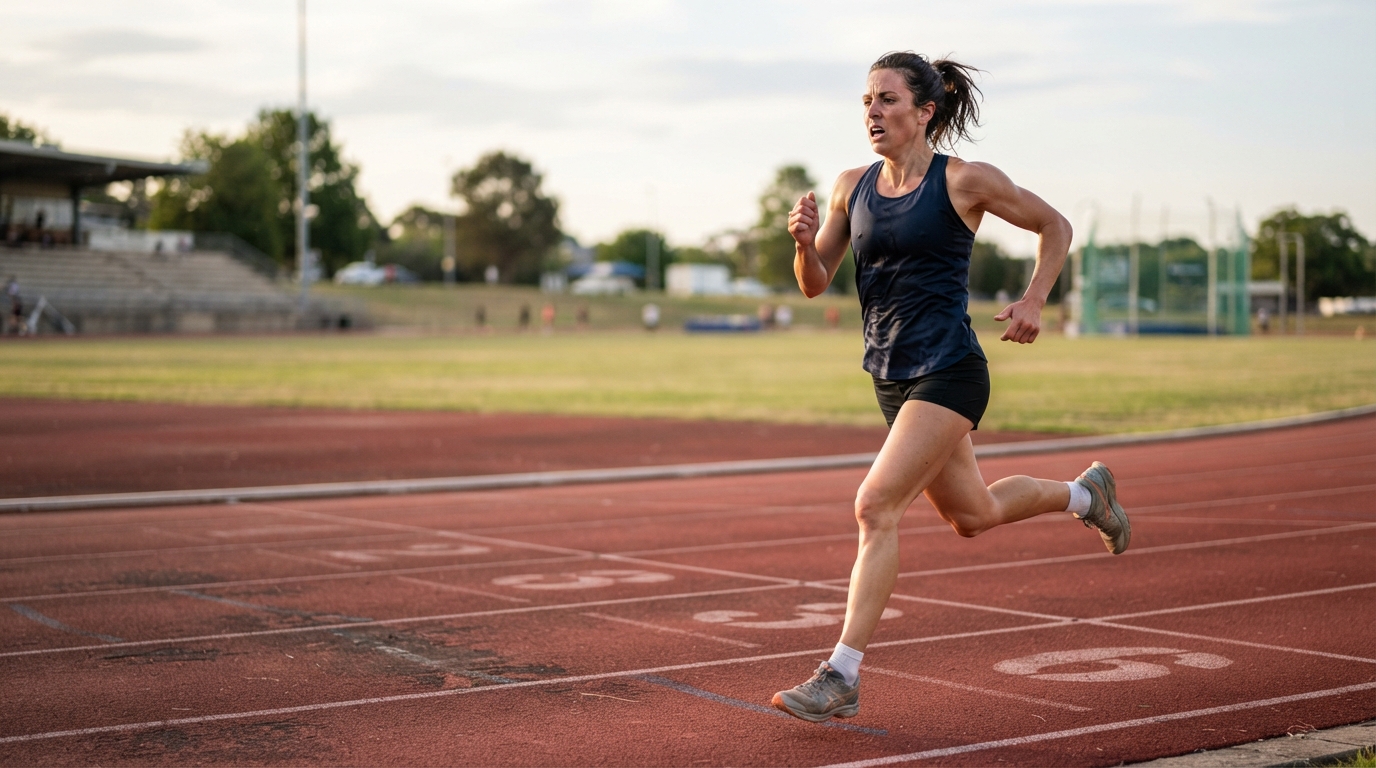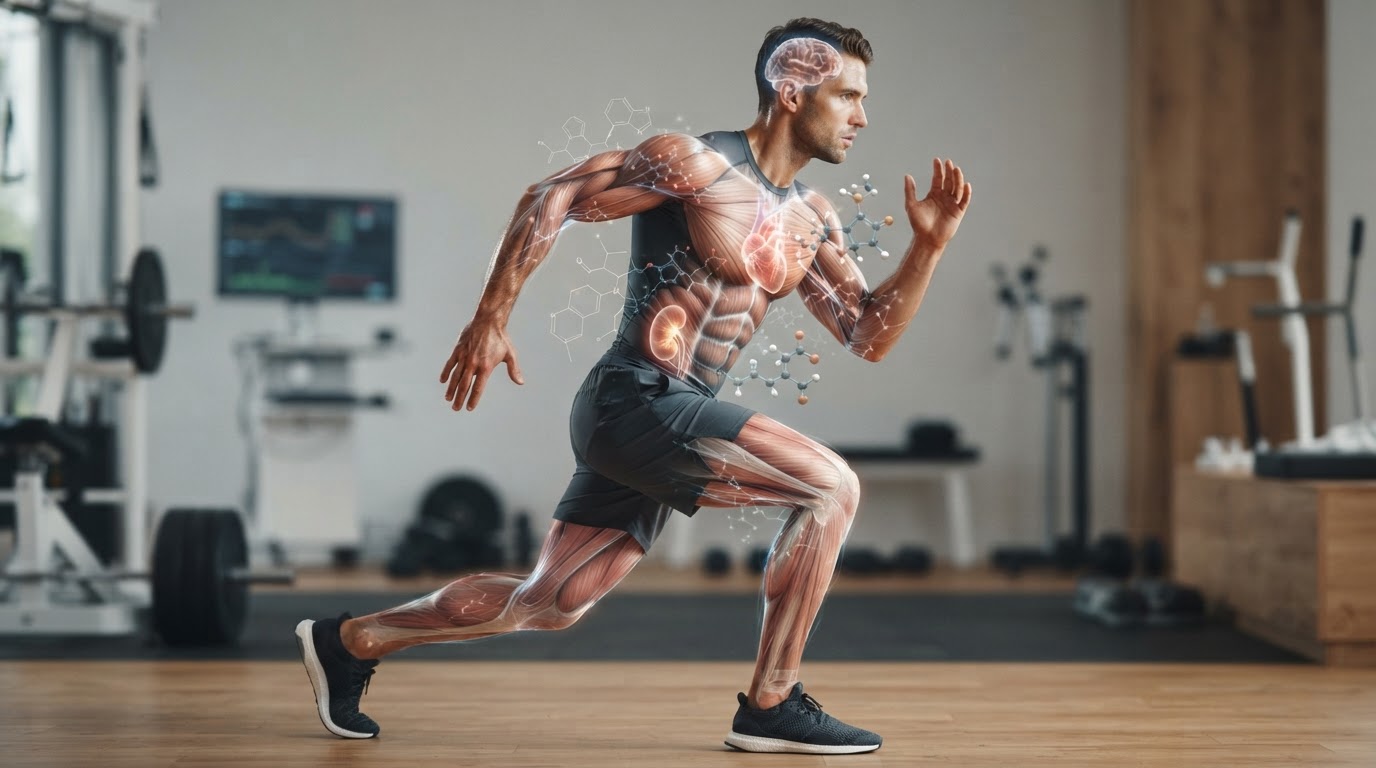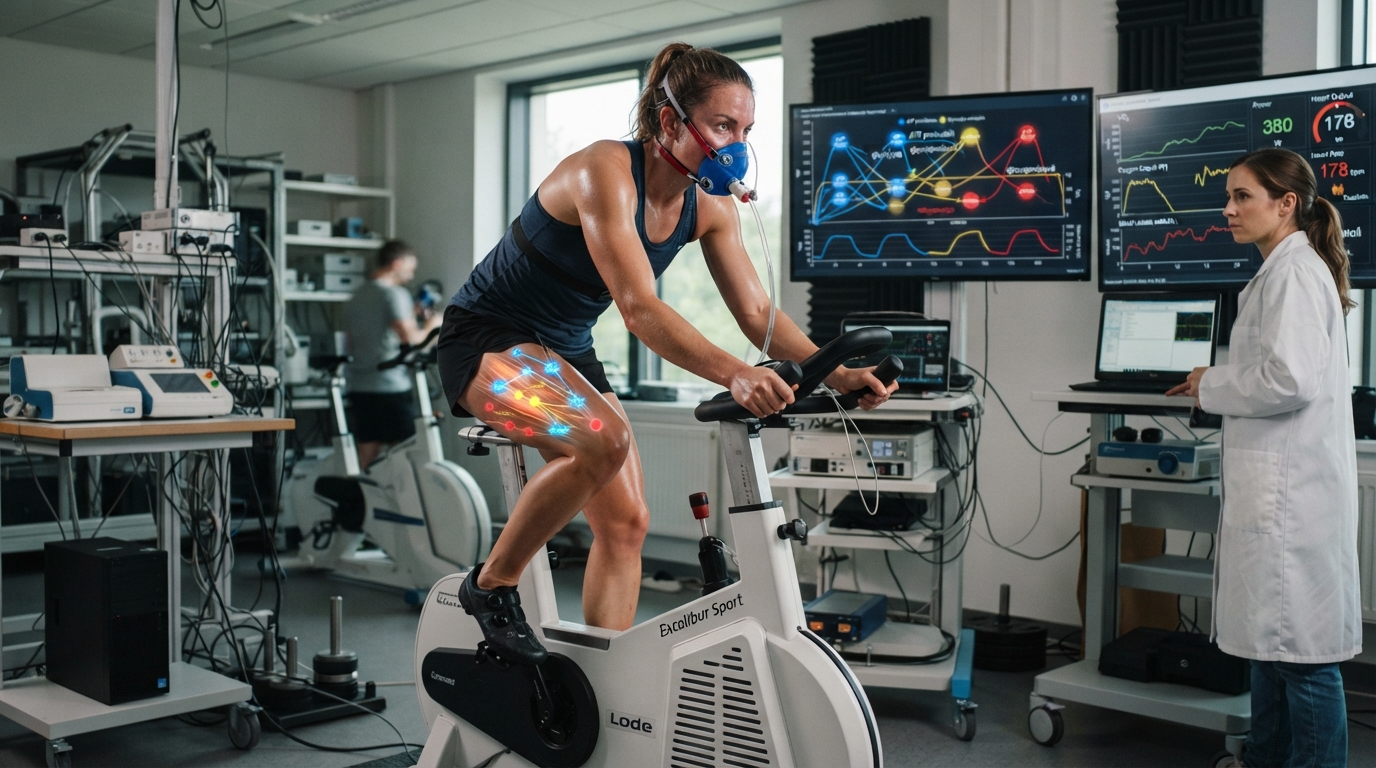
Quick answer: High-intensity interval training is useful for carnosine research because it repeatedly exposes working muscle to high rates of energy turnover, changing acidity, incomplete recovery, and accumulating fatigue. Carnosine contributes to intracellular buffering, so researchers can use interval protocols to ask whether higher muscle carnosine helps people maintain performance as those stresses build. But "HIIT" covers many different workouts, and carnosine is unlikely to matter equally in a 6-second sprint, a 1-minute interval, and a 4-minute effort. [1–4]
Few exercise terms are used as loosely as HIIT.
To one person, HIIT means 30 seconds of hard cycling followed by a minute of recovery.
To another, it means four-minute running intervals.
To someone else, it means a circuit of burpees, squats, and kettlebell swings performed as fast as possible.
Those workouts may all be difficult, but they do not create the same physiological problem.
That distinction is especially important when we talk about carnosine.
Carnosine is concentrated inside skeletal muscle and contributes to the muscle's ability to buffer changes in acidity during demanding exercise. The harder and longer an interval pushes glycolytic energy production, the more relevant that buffering role may become.
But buffering is only one part of fatigue.
Phosphocreatine availability, inorganic phosphate, potassium shifts, calcium handling, neural drive, oxygen delivery, and many other factors can determine whether someone can repeat or sustain a hard effort.
That is why HIIT research is so useful.
It lets researchers change one part of the workout at a time—work duration, intensity, recovery, number of intervals—and see where carnosine appears to matter most.
Table of Contents
- What actually counts as HIIT?
- Why researchers use interval training
- What happens inside muscle during a hard interval?
- Where carnosine fits
- Why interval length changes the answer
- Can HIIT itself raise muscle carnosine?
- What happens when beta-alanine is added?
- Why some HIIT studies are positive and others are not
- What the newer repeated-sprint evidence shows
- What does this mean for athletes?
- Where LactiGo fits
What Actually Counts as HIIT?
At its simplest, interval training alternates periods of relatively demanding exercise with periods of lower-intensity exercise or rest.
A widely used scientific distinction separates:
High-Intensity Interval Training — HIIT
Repeated near-maximal efforts separated by recovery.
The work intervals are hard, but they are generally not performed as literal all-out sprints from the first second.
Sprint Interval Training — SIT
Repeated supramaximal or all-out efforts separated by recovery.
Classic 30-second Wingate intervals are a common example.
Exercise physiologists Martin MacInnis and Martin Gibala have used this distinction to clarify why interval protocols that look superficially similar can create very different physiological demands. [1]
This terminology is not perfect.
But it is much more useful than calling every hard workout "HIIT."
Want to Hear HIIT Explained by One of the Researchers Who Studies It?
Exercise physiologist Martin Gibala has spent decades studying interval training at McMaster University. In this discussion, he explains what HIIT actually means, how it differs from sprint interval training, and why different interval designs produce different adaptations.
Why HIIT and SIT Should Not Be Treated as Synonyms
Imagine these two workouts.
Workout A
Four rounds of:
4 minutes hard
followed by:
3 minutes easy
Workout B
Six rounds of:
30 seconds all-out
followed by:
4 minutes recovery
Both are interval workouts.
Both can be extremely demanding.
But Workout A asks the athlete to sustain a high aerobic and glycolytic workload for several minutes.
Workout B produces a much shorter, more explosive effort with a larger contribution from rapid ATP and phosphocreatine turnover.
That changes which physiological systems are most likely to limit performance.
And if the limiting factor changes, the usefulness of additional buffering can change too.
Why Researchers Love Interval Training
Interval training is a remarkably flexible laboratory model.
Researchers can control:
- How hard each interval is
- How long it lasts
- How much recovery occurs
- Whether recovery is active or passive
- How many intervals are completed
- Whether the exercise is cycling, running, rowing, or another mode
- Whether the athlete starts each interval fully or partially recovered
That gives scientists a way to create repeated metabolic stress without making every participant exercise continuously until complete exhaustion.
It also lets them ask highly specific questions.
For example:
Does performance decline less over repeated intervals?
Does peak power change?
Does total work increase?
Does muscle carnosine rise after training?
Does higher muscle carnosine change the physiological response?
Those questions are much more informative than asking whether carnosine simply "works for HIIT."
HIIT Is Also a Powerful Training Stimulus by Itself
HIIT is not just a way to test supplements.
The training itself can produce substantial physiological adaptation.
Research shows that repeated high-intensity intervals can increase:
- VO₂max
- Skeletal-muscle mitochondrial content
- Oxidative capacity
- Lactate and ventilatory thresholds
- Exercise tolerance
depending on the program and population. [1,5]
In some experiments, high-intensity interval training has produced strong mitochondrial adaptations despite considerably less exercise volume than traditional continuous endurance training.
That makes supplementation studies harder to interpret.
If the training program itself produces a large adaptation, there may be less room for a supplement to create an additional measurable effect.
We will see that problem directly in the beta-alanine literature.
What Happens Inside Muscle During a Hard Interval?
The answer changes as the interval unfolds.
At the beginning, ATP demand rises almost instantly.
The muscle draws heavily on:
- Stored ATP
- Phosphocreatine
- Glycolysis
- Oxidative metabolism
All of those energy systems contribute simultaneously.
The proportions change over time.
As the interval continues, glycolytic energy production can become substantial. Muscle chemistry changes alongside that rapid ATP turnover.
Among the changes researchers monitor are:
- Hydrogen-ion handling
- Inorganic phosphate
- Phosphocreatine depletion
- Potassium shifts
- Lactate production
- Calcium handling
- Neural activation
This is why fatigue during HIIT cannot be explained by one molecule.
Lactate Is Not the Problem Carnosine Is "Removing"
Carnosine is sometimes marketed using a simple story:
Hard exercise creates lactic acid.
Carnosine removes it.
That is not an accurate description of modern exercise physiology.
Lactate is not metabolic garbage.
It is produced and reused as part of normal energy metabolism.
Carnosine's best-established role in this context is intracellular buffering—helping muscle manage part of the acid-base disturbance that develops during sufficiently intense exercise. [6]
So the better model is:
High ATP turnover
↓
Multiple changes in muscle chemistry
↓
Intracellular buffering becomes increasingly important
↓
Carnosine contributes to that buffering system
That is more accurate than describing carnosine as a "lactic acid remover."
Why Carnosine Is Especially Interesting During Intervals
During one brief effort, an athlete starts relatively fresh.
During the second interval, they do not.
By the fifth or sixth interval, the muscle may be dealing with incomplete recovery from everything that came before.
That repeated stress gives researchers an opportunity to study fatigue resistance rather than only maximum output.
Carnosine may be more relevant when the exercise creates enough intracellular acid-base disturbance for buffering to become consequential.
That is why exercise duration matters so much.
A 6-Second Sprint Is Not a 2-Minute Interval
This is one of the most important ideas in carnosine research.
A six-second sprint relies heavily on immediate ATP availability and phosphocreatine.
A one- to four-minute high-intensity effort gives glycolytic metabolism and acid-base disturbance much more time to influence performance.
An influential 2012 beta-alanine meta-analysis found no significant benefit for exercise lasting less than 60 seconds, while clearer effects appeared in the 60–240 second range. [7]
A larger 2017 systematic review and meta-analysis also concluded that exercise duration and modality influence the size of the beta-alanine effect. [8]
That does not mean every two-minute effort improves.
It means the mechanism lines up better with some exercise durations than others.
Why This Makes HIIT an Ideal Research Model
HIIT lets scientists place intervals in that physiologically interesting middle ground.
The athlete can work hard enough and long enough for:
- Glycolytic contribution to rise
- Intracellular buffering to matter
- Fatigue to accumulate
but then receives enough recovery to repeat the challenge.
That makes HIIT a useful bridge between:
one isolated maximal sprint
and:
continuous endurance exercise.
It is exactly the kind of model in which carnosine biology becomes experimentally interesting.
Can HIIT Itself Increase Muscle Carnosine?
Surprisingly, one controlled human study suggests that it can.
Researchers recruited 20 vegetarian men and randomly assigned them to either:
- A HIIT group
- A non-training control group
The vegetarian participants were particularly useful because their diets provided essentially no dietary beta-alanine from meat-derived carnosine.
The HIIT group trained on a cycle ergometer for 12 weeks, with progressively increasing volume and intensity. [9]
Muscle biopsies were used to measure carnosine directly.
What Happened After 12 Weeks?
Whole-muscle carnosine increased in the HIIT group from:
15.8 ± 5.7
to:
20.6 ± 5.3 mmol/kg dry muscle
while the control group did not significantly change. [9]
Type I muscle-fiber carnosine also increased significantly.
Type IIa carnosine moved upward numerically but did not reach conventional statistical significance in that comparison.
At the same time, the HIIT group improved:
- Total work
- VO₂max
- Ventilatory threshold
- Lactate threshold
- In-vitro muscle buffering capacity [9]
This was important because earlier longitudinal studies had not consistently shown that training alone increases muscle carnosine.
Does That Prove HIIT Always Raises Carnosine?
No.
The study was deliberately designed to answer a specific methodological problem.
Previous research could be confounded by:
- Dietary beta-alanine intake
- Changes in muscle-fiber composition
- Differences between trained and untrained participants
Using vegetarian participants helped remove dietary carnosine and beta-alanine from meat as a major variable. [9]
Even then, the researchers found that the increase in carnosine appeared to account for only a small part of the total increase in measured muscle buffering capacity.
HIIT caused many adaptations.
Carnosine was one of them.
This Changes an Old Assumption About Training and Carnosine
For years, a common explanation was:
Training doesn't meaningfully increase muscle carnosine; only beta-alanine does.
The 2018 study makes that statement too absolute.
Under carefully controlled conditions, HIIT alone increased muscle carnosine.
That does not make beta-alanine irrelevant.
Beta-alanine supplementation can generally produce larger and more predictable increases.
But it tells us muscle carnosine is part of a dynamic training environment rather than a completely fixed reservoir.
What Happens When Beta-Alanine Is Added to HIIT?
This is where the results become mixed.
Beta-alanine provides the rate-limiting precursor used to synthesize carnosine in skeletal muscle.
Repeated supplementation over weeks can increase muscle carnosine substantially.
The obvious hypothesis is:
If HIIT challenges intracellular buffering, and beta-alanine increases carnosine, then beta-alanine should make HIIT better.
Sometimes the data support part of that idea.
Sometimes they do not.
A 2019 HIIT Study Measured Muscle Carnosine Directly
A randomized double-blind placebo-controlled study investigated beta-alanine during a running HIIT program in 18 men.
Before the supplementation phase, participants completed four weeks of HIIT.
They then completed another six weeks of HIIT while receiving either:
- 6.4 g/day beta-alanine
- or placebo
The training involved repeated 1-minute runs at high intensity with one-minute recovery. [10]
Researchers measured:
- Muscle carnosine
- VO₂max
- Repeated-sprint ability
- Neuromuscular function
- Muscle-buffering capacity
- Several muscle proteins
Muscle Carnosine Clearly Increased
After the intervention, muscle carnosine was:
34.4 ± 2.3 mmol/kg dry muscle
in the beta-alanine group
versus:
20.7 ± 3.0 mmol/kg dry muscle
in the placebo group. [10]
The beta-alanine group also showed significant within-group improvements in total and best repeated-sprint times, and the study reported better voluntary activation after the repeated-sprint test.
Both groups improved VO₂max by roughly six percent. [10]
This tells us two different things.
Beta-alanine changed muscle carnosine.
Clearly.
HIIT improved aerobic fitness.
In both groups.
The interesting question is whether the larger carnosine pool produced additional training adaptations.
That answer is less simple.
Another Interval-Training Study Found No Added Benefit
Cochran and colleagues tested 24 active men receiving either beta-alanine or placebo.
Participants took beta-alanine for ten weeks.
After four weeks of supplementation, they began six weeks of sprint-interval training.
Each session involved:
4–6 Wingate sprints
of:
30 seconds all-out
with:
4 minutes recovery. [11]
Muscle carnosine increased:
- 33% after four weeks
- 52% after ten weeks
in the beta-alanine group. [11]
So the biochemical effect clearly occurred.
But total work during training was similar between groups.
Training Worked—Beta-Alanine Did Not Add More Adaptation
The sprint-interval program itself increased:
- VO₂peak
- Mitochondrial markers
- Repeated-sprint capacity
- Cycling time-trial performance
But those improvements were not greater in the beta-alanine group than the placebo group. [11]
That is a powerful lesson.
Increasing muscle carnosine does not guarantee that every training adaptation will increase further.
Sometimes the training stimulus is already large enough that extra buffering does not create a measurable advantage.
Sometimes the performance limitation may lie somewhere else.
Why Positive and Negative HIIT Studies Can Both Be Correct
When two studies produce different results, the first instinct is often to ask:
Which study is wrong?
That is not always the best question.
Compare the protocols.
One study may use:
- 1-minute running intervals
- Short recovery
- Repeated sprint testing
Another may use:
- 30-second all-out Wingates
- Four minutes recovery
- Cycling time trials
Those protocols place different demands on:
- Phosphocreatine
- Glycolysis
- Intracellular buffering
- Aerobic metabolism
- Neuromuscular fatigue
If carnosine affects one part of that system, its impact can be larger or smaller depending on which physiological problem the workout creates.
Even "Repeated Sprint" Is Its Own Research Category
This is especially important because repeated-sprint ability is often lumped into HIIT.
Repeated sprints usually involve very short maximal efforts—often only a few seconds—with short recoveries.
In that situation, restoring phosphocreatine between sprints can become a dominant limitation.
That does not mean intracellular pH is irrelevant.
It means buffering may not be the main bottleneck.
A major new systematic review published in 2026 helps clarify this point.
What Did the 2026 Repeated-Sprint Meta-Analysis Find?
Researchers pooled 17 randomized controlled trials examining chronic beta-alanine supplementation and repeated-sprint ability.
They found no statistically significant overall improvement in:
- Mean repeated-sprint performance
- Peak repeated-sprint performance
- Fatigue decrement [12]
The estimated effect on mean performance was essentially neutral.
The authors argued that this makes physiological sense because very short repeated sprints depend heavily on:
- Phosphocreatine availability
- Phosphocreatine resynthesis
- Rapid ATP turnover
rather than intracellular buffering alone. [12]
This newer synthesis is important because it prevents us from saying:
"Carnosine helps repeated high-intensity exercise, therefore it should improve every repeated-sprint protocol."
The evidence no longer supports that broad statement.
Longer Hard Efforts and Very Short Sprints Are Different Problems
A useful way to visualize the evidence is:
Very Short Sprint
Examples:
5–10 seconds
Major constraints can include:
- Immediate ATP-PCr availability
- Neuromuscular power
- Phosphocreatine recovery
Carnosine buffering may play a smaller role.
Intermediate High-Intensity Effort
Examples:
60–240 seconds
Greater contributions from:
- Glycolytic energy production
- Intracellular acid-base disturbance
- Sustained force under metabolic stress
This is where beta-alanine research has historically shown a clearer performance signal. [7]
Longer Exercise
Oxidative metabolism becomes increasingly dominant, and the relevance of buffering depends heavily on the exact task.
There is no single "high-intensity metabolism."
What About Classic HIIT for VO₂max?
If your HIIT workout uses three-, four-, or five-minute intervals designed to spend substantial time near VO₂max, carnosine is only one small part of the adaptation story.
Those intervals are powerful because they stress:
- Oxygen delivery
- Cardiac output
- Mitochondrial metabolism
- Muscle recruitment
- Cellular signaling
Interval training can increase mitochondrial content and aerobic capacity even without any change in supplementation. [1,5]
So beta-alanine or carnosine should never be presented as the reason HIIT works.
The training works because the training stimulus itself is powerful.
Carnosine may modify performance in particular high-intensity contexts.
It does not replace the adaptation created by repeated training.
Does More Buffering Mean You Should Make Every Interval Harder?
No.
A common mistake in sports nutrition is to think:
If something helps fatigue resistance, I should use it to destroy myself more effectively.
That is not intelligent programming.
HIIT needs to be balanced with:
- Recovery
- Overall training load
- Sport-specific work
- Strength training
- Lower-intensity aerobic work
- Sleep and nutrition
More fatigue is not automatically more adaptation.
The goal of a training intervention is to create a useful stimulus that can be repeated consistently.
What Athletes Should Learn From HIIT Research
HIIT studies are valuable because they show how specific exercise design can be.
Before applying a study to your own training, ask:
How long were the intervals?
Six seconds?
Thirty seconds?
One minute?
Four minutes?
How hard were they?
Near maximal?
All-out?
Fixed power?
How much recovery?
Thirty seconds?
One minute?
Four minutes?
What outcome was measured?
Peak power?
Total work?
VO₂max?
Repeated-sprint time?
Time to exhaustion?
Was muscle carnosine actually measured?
Or was it assumed to increase based on the intervention?
Those details determine how much the study can tell you.
One Study Can Answer Several Questions—but Not Every Question
Take the 2019 beta-alanine plus HIIT study.
It showed that beta-alanine increased muscle carnosine.
That is direct evidence.
It also showed that the HIIT program improved VO₂max in both groups.
That is direct evidence.
Only the beta-alanine group showed significant within-group improvements in some repeated-sprint measures.
That is also worth reporting.
But we should not simplify the entire experiment into:
"Beta-alanine makes HIIT more effective."
The actual result is more specific.
And specificity is what makes the research useful.
How Does LactiGo Fit Into the HIIT Conversation?
LactiGo has direct human research in intermittent high-intensity exercise.
That makes this topic particularly relevant.
In the 2025 randomized, counterbalanced, crossover, triple-blind trial, seven world-class rugby sevens players applied:
10 mL topical carnosine gel
or placebo:
40 minutes before exercise. [13]
The athletes then performed twelve repeated cycling sequences.
Each sequence contained:
- 24 seconds cycling at 3 W/kg
- 6 seconds maximal sprint
- 30 seconds rest
A two-minute break followed Sprint 6. [13]
Peak power was higher with the topical carnosine gel during:
- Sprint 2
- Sprint 4
- Sprint 7 [13]
Mean power, heart rate, and RPE did not show a treatment effect.
Is the LactiGo Study a HIIT Study?
It is best described as an intermittent high-intensity repeated-sprint protocol.
It should not be treated as identical to a classic HIIT workout using one- to four-minute intervals.
That distinction matters.
The study gives us direct product-specific evidence for the protocol that was actually tested.
It does not tell us whether LactiGo would:
- Improve a 4 × 4-minute VO₂max workout
- Increase training adaptations over six weeks of HIIT
- Increase muscle carnosine
- Improve every repeated-sprint format
Those questions require their own experiments.
The Study Also Did Not Measure Intramuscular Carnosine
The researchers discussed increased muscle carnosine as a possible mechanism.
But they did not directly measure whether topical application raised intramuscular carnosine concentrations. [13]
That means the correct evidence statement is:
Pre-exercise topical carnosine gel was associated with higher peak power during selected sprints under the tested conditions.
It is not:
The gel was proven to raise muscle carnosine and therefore improved performance.
The second sentence adds a mechanism the experiment did not establish.
How the LactiGo Science Page Fits
The LactiGo Science page describes the product's intended pre-activity and recovery framework.
It presents:
- Targeted topical application
- A pre-activity timing concept
- Performance and recovery positioning
- The brand's transdermal-delivery narrative
Use that page for understanding how LactiGo is positioned and used.
Use the peer-reviewed 2025 study for the actual measured performance results. [13]
Do not use the brand page alone to prove:
- Intramuscular delivery
- Intramuscular carnosine concentration
- CARNS1 activity
- Systemic absorption
The strongest product story comes from keeping those evidence types separate.
The LactiGo Science page currently describes its topical performance and recovery positioning and a roughly 45-minute pre-activity framework.
Want to See the Research Behind Topical Carnosine?
HIIT research shows why exercise protocol matters. Six-second repeated sprints, one-minute intervals, and four-minute efforts do not challenge the body in exactly the same way.
LactiGo has been studied directly in world-class athletes using a pre-exercise intermittent high-intensity protocol. See the study, the application strategy, and the science behind LactiGo.
Learn More About LactiGoThe Bottom Line
HIIT is valuable to carnosine researchers for one simple reason:
It creates repeatable, adjustable metabolic stress.
Researchers can change:
- Interval length
- Intensity
- Recovery
- Number of repetitions
and see how muscle responds.
That makes interval training particularly useful for studying carnosine because carnosine contributes to intracellular buffering during demanding exercise.
But HIIT research also teaches us why broad performance claims fail.
A six-second sprint and a two-minute interval are both hard.
They are not limited by exactly the same physiology.
Older beta-alanine research found its clearest performance signal in exercise lasting approximately 60–240 seconds, where acid-base disturbance has more time to become important. [7]
A carefully controlled 2018 study also showed that 12 weeks of HIIT itself increased muscle carnosine in vegetarian men, demonstrating that the muscle carnosine pool can respond to training even without dietary beta-alanine intake. [9]
Adding beta-alanine creates another layer.
A 2019 HIIT study showed a substantial increase in muscle carnosine and some favorable repeated-sprint and neuromuscular findings. [10]
But a 2015 sprint-interval study increased muscle carnosine by 33% and later 52% without producing greater training work or greater overall adaptation than placebo. [11]
And the newer 2026 meta-analysis of 17 randomized repeated-sprint trials found no clear overall beta-alanine improvement in mean sprint performance, peak sprint performance, or fatigue decrement. [12]
Those findings are not contradictory once the exercise protocols are considered.
They show that:
Buffering matters when buffering is an important limitation.
It matters less when something else is controlling performance.
LactiGo's 2025 human trial adds a separate product-specific piece of evidence.
Topical carnosine gel applied before intermittent exercise was associated with higher peak power during selected six-second sprints in world-class rugby sevens players. [13]
That study is relevant to intermittent high-intensity performance.
It is not proof that the same result occurs in every HIIT format.
And that may be the most important lesson in this entire research area:
Never judge an exercise study by the word "high-intensity" alone.
Look at the interval.
Look at the recovery.
Look at the outcome.
Then decide what the research actually tells you.
Frequently Asked Questions
What is HIIT?
High-intensity interval training alternates repeated periods of hard exercise with periods of recovery. In research terminology, HIIT generally refers to near-maximal rather than literal all-out efforts. [1]
Is HIIT the same as sprint interval training?
No. Sprint interval training typically uses supramaximal or all-out efforts, while HIIT generally uses hard but more sustainable intervals. [1]
Why is HIIT useful for studying carnosine?
HIIT repeatedly challenges skeletal muscle with high ATP turnover, glycolytic energy production, changing acid-base balance, and incomplete recovery. That makes it useful for testing whether intracellular buffering influences performance.
What does carnosine do during HIIT?
Carnosine contributes to intracellular buffering inside skeletal muscle. It helps manage part of the change in acidity that can develop during sufficiently intense exercise.
Does carnosine remove lactic acid?
No. Lactate is an important metabolic intermediate, not simply a waste product. Carnosine's best-established role is intracellular buffering rather than "flushing lactic acid."
Does HIIT increase muscle carnosine?
One randomized 12-week study in vegetarian men found that HIIT increased whole-muscle carnosine from 15.8 to 20.6 mmol/kg dry muscle while a control group did not significantly change. [9]
Does beta-alanine improve HIIT?
The answer depends on the protocol and outcome. Beta-alanine reliably increases muscle carnosine, but studies combining it with interval training have produced both favorable and neutral performance findings. [10,11]
Why would beta-alanine work better for longer intervals?
Its mechanism becomes more relevant when high-intensity exercise lasts long enough for intracellular acid-base disturbance to become an important contributor to fatigue. Meta-analysis has found clearer effects in efforts lasting roughly 60–240 seconds than in efforts under 60 seconds. [7]
Does beta-alanine improve repeated sprints?
The newest evidence is cautious. A 2026 meta-analysis of 17 randomized trials found no significant overall improvement in mean repeated-sprint performance, peak performance, or fatigue decrement. [12]
Why might beta-alanine not help a 6-second sprint?
Very short maximal efforts depend strongly on immediate ATP and phosphocreatine availability. Recovery between short sprints also depends heavily on phosphocreatine resynthesis, so buffering may not be the main limitation.
Does HIIT increase VO₂max?
HIIT can substantially improve VO₂max depending on the program and population. It also produces skeletal-muscle mitochondrial adaptations. [1,5]
Does more muscle carnosine guarantee better HIIT results?
No. The Cochran study increased muscle carnosine substantially but did not find greater sprint-interval training work or greater measured training adaptation than placebo. [11]
Has topical carnosine been studied in high-intensity exercise?
Yes. A 2025 crossover trial studied topical carnosine gel applied before intermittent high-intensity exercise in seven world-class rugby sevens players. [13]
What did the LactiGo-related study find?
Peak power was higher in Sprints 2, 4, and 7 after topical carnosine gel compared with placebo. Mean power, heart rate, and RPE did not show treatment effects. [13]
Was that a classic HIIT workout?
Not exactly. The protocol used repeated six-second maximal sprints embedded in intermittent cycling. It is better described as an intermittent high-intensity repeated-sprint model than as a classic one- to four-minute HIIT session.
Did the study prove that LactiGo raised muscle carnosine?
No. Intramuscular carnosine was not measured. [13]
External References
- MacInnis MJ, Gibala MJ. Physiological adaptations to interval training and the role of exercise intensity. Journal of Physiology. 2017;595(9):2915–2930. PMID: 27748956. PMCID: PMC5407969. DOI: 10.1113/JP273196. PubMed
- Matthews JJ, Artioli GG, Turner MD, Sale C. The Physiological Roles of Carnosine and β-Alanine in Exercising Human Skeletal Muscle. Medicine & Science in Sports & Exercise. 2019;51(10):2098–2108. PMID: 31083045. PubMed
- Sale C, Saunders B, Harris RC. Effect of beta-alanine supplementation on muscle carnosine concentrations and exercise performance. Amino Acids. 2010. PMID: 20091069. PubMed
- Buchheit M, Laursen PB. High-intensity interval training, solutions to the programming puzzle. Sports Medicine. 2013.
- Gibala MJ, Little JP, MacDonald MJ, Hawley JA. Physiological adaptations to low-volume, high-intensity interval training in health and disease. Journal of Physiology. 2012;590(5):1077–1084. DOI: 10.1113/jphysiol.2011.224725.
- Hobson RM, Saunders B, Ball G, Harris RC, Sale C. Effects of β-alanine supplementation on exercise performance: a meta-analysis. Amino Acids. 2012;43(1):25–37. PMID: 22270875. PMCID: PMC3374095. DOI: 10.1007/s00726-011-1200-z. PubMed
- Saunders B, Elliott-Sale K, Artioli GG, et al. β-Alanine supplementation to improve exercise capacity and performance: a systematic review and meta-analysis. British Journal of Sports Medicine. 2017. PMID: 27797728. PubMed
- de Salles Painelli V, Nemezio KM, Pinto AJ, et al. High-Intensity Interval Training Augments Muscle Carnosine in the Absence of Dietary Beta-alanine Intake. Medicine & Science in Sports & Exercise. 2018;50(11):2242–2252. PMID: 30334920. DOI: 10.1249/MSS.0000000000001697. PubMed
- Milioni F, de Poli RAB, Saunders B, et al. Effect of β-alanine supplementation during high-intensity interval training on repeated sprint ability performance and neuromuscular fatigue. Journal of Applied Physiology. 2019;127(6):1599–1610. PMID: 31622158. DOI: 10.1152/japplphysiol.00321.2019. PubMed
- Cochran AJR, Percival ME, Thompson S, et al. β-Alanine Supplementation Does Not Augment the Skeletal Muscle Adaptive Response to 6 Weeks of Sprint Interval Training. International Journal of Sport Nutrition and Exercise Metabolism. 2015;25(6):541–549. PMID: 26008634. DOI: 10.1123/ijsnem.2015-0046. PubMed
- Smith AE, Walter AA, Graef JL, et al. Effects of β-Alanine Supplementation and High-Intensity Interval Training on Endurance Performance and Body Composition in Men; a Double-Blind Trial. Journal of the International Society of Sports Nutrition. 2009;6:5. DOI: 10.1186/1550-2783-6-5.
- Liang W, Kong D, Wang Y, Yu T, Chen M, Huang W. No ergogenic effect of β-alanine on repeated sprint ability: a systematic review and multilevel meta-analysis of randomized controlled trials. Frontiers in Nutrition. 2026;13:1818755. DOI: 10.3389/fnut.2026.1818755.
- Beaven CM, James C, McMaster DT, Brockelbank N. Topical carnosine gel improves intermittent high-intensity exercise performance in world-class rugby sevens players. Journal of the International Society of Sports Nutrition. 2025;22(1):2550311. PMID: 40859880. PMCID: PMC12427510. DOI: 10.1080/15502783.2025.2550311. PubMed
- LactiGo. The Science Behind Transdermal Carnosine Gel. Use only for LactiGo-specific product positioning, application framework, and brand science narrative.