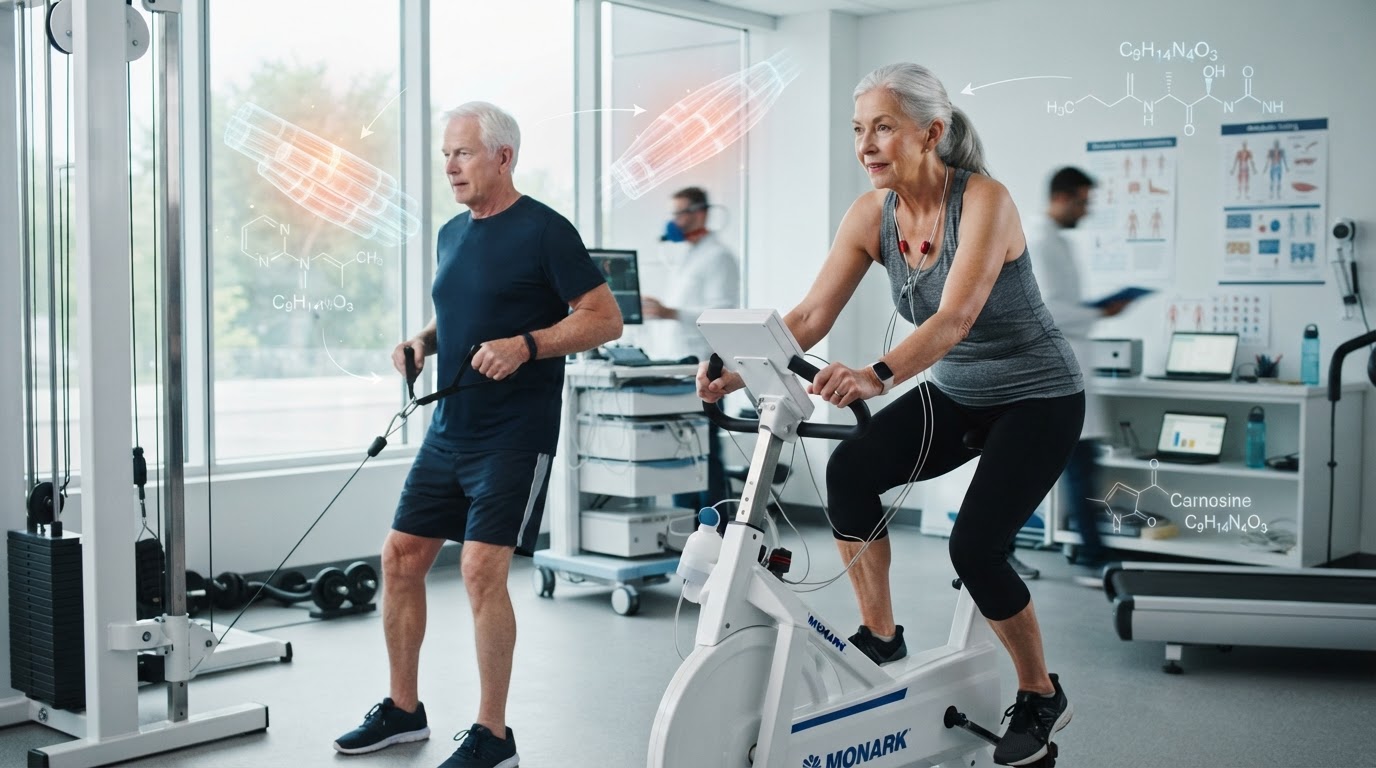
If you spend enough time reading about carnosine, you will eventually encounter a simple claim:
Muscle carnosine declines as we age.
There is some truth behind that statement, but it is too neat for the human evidence.
Research has found lower muscle carnosine in some older populations, and one biopsy study reported a particularly large difference in type II—or faster-twitch—muscle fibers. But another study that measured muscle carnosine across 263 people between ages 9 and 83 found something more surprising: carnosine decreased mainly between young and middle adulthood, while the elderly group did not have lower levels than the middle-aged group.
So aging does appear to influence muscle carnosine biology, but it probably does not look like a meter that drops a fixed amount every birthday.
To understand why, we need to look at what happens to the muscle itself.
The Short Answer
Carnosine is found at high concentrations inside skeletal muscle, where it contributes to intracellular buffering and other aspects of muscle physiology.
Human studies suggest that age is associated with differences in muscle carnosine, but the pattern depends on how and where researchers measure it.
A large lifespan study found an approximately 16% decrease from young adulthood to middle adulthood in both men and women, but did not find an additional decrease when middle-aged adults were compared with elderly adults.
A smaller biopsy study, by contrast, found 53.2% lower carnosine in type II fibers from nine older adults aged 65–80 compared with nine younger adults aged 20–35. The older participants were sedentary, had knee osteoarthritis, and were undergoing knee replacement, which means age was not the only difference between the groups.
Taken together, those findings suggest that the useful question is not simply:
"Does carnosine fall with age?"
It is:
"How do age, muscle-fiber composition, activity, diet, and health status interact to influence muscle carnosine?"
Why Carnosine Is Important in Skeletal Muscle
Carnosine is a dipeptide made from two amino acids:
beta-alanine and histidine.
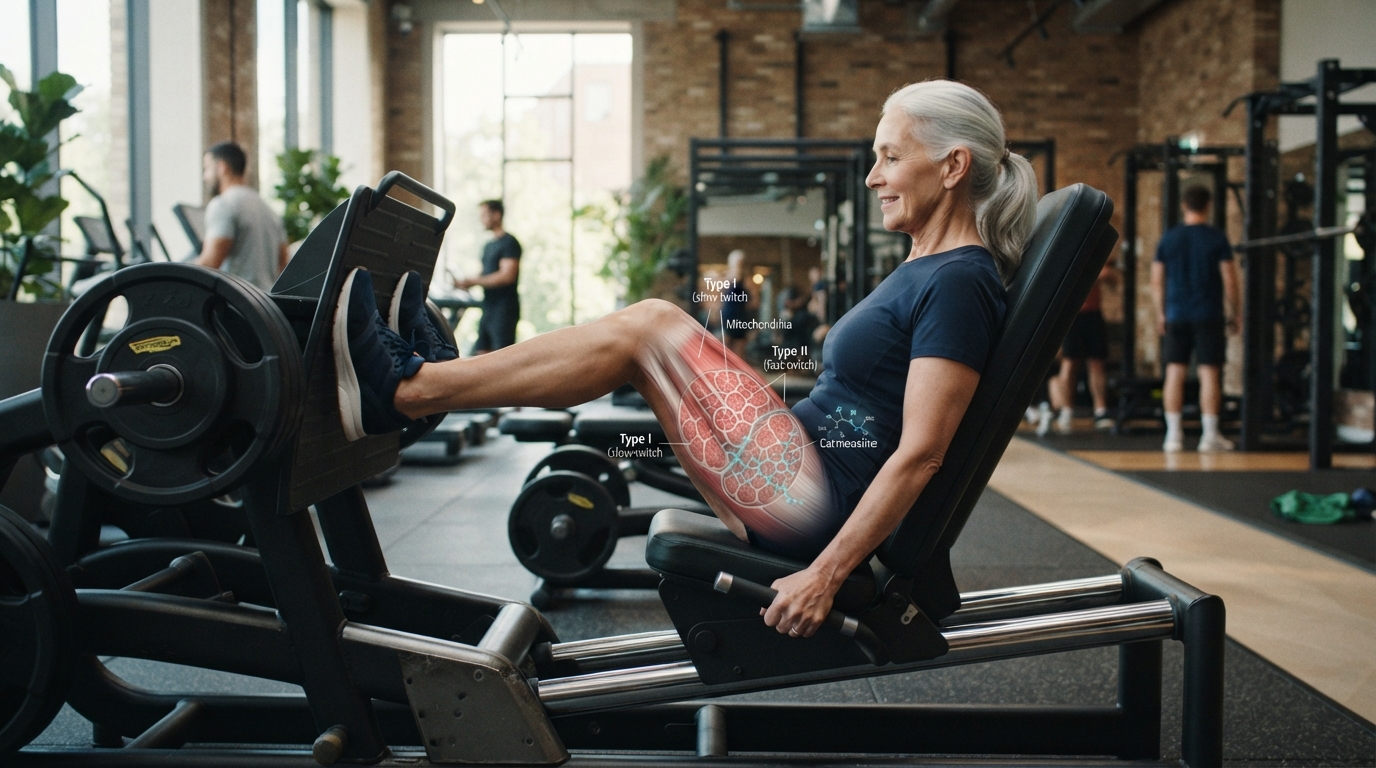
Skeletal muscle contains relatively high concentrations of it, and type II muscle fibers generally contain more carnosine than type I fibers.
That distribution is important because type II fibers are heavily involved in:
- Rapid force production
- Sprinting
- Jumping
- Powerful climbing or stair movement
- Fast changes in direction
- High-intensity muscular work
Carnosine's best-established role in exercise physiology is helping buffer hydrogen ions inside working muscle. Its concentration is also related to muscle-fiber type, with higher carnosine generally associated with a greater type II fiber contribution.
That becomes especially interesting with aging because type II fibers are among the muscle characteristics that change substantially as people get older.
Aging Changes More Than Muscle Size
When people hear "muscle aging," they often picture shrinking muscle.
That happens, but it is only part of the story.
Aging can affect:
- Muscle-fiber number
- Fiber size
- Motor units
- Neuromuscular coordination
- Muscle quality
- Power
- Fat infiltration
- Mitochondrial function
- Protein response to exercise
- Physical activity patterns
Type II fibers tend to be especially affected by aging, including reductions in fiber size and changes related to denervation and motor-unit remodeling. That matters for carnosine research because type II fibers normally contain more carnosine than type I fibers.
In other words, a lower whole-muscle carnosine measurement in an older person could reflect several overlapping changes—not necessarily a single age-controlled reduction in carnosine synthesis.
The Largest Human Lifespan Study Gives Us an Important Clue
One of the most informative studies examined 263 healthy males and females between 9 and 83 years old.
Researchers measured carnosine noninvasively in the gastrocnemius and soleus muscles using proton magnetic resonance spectroscopy.
Participants were grouped across the lifespan, from children and adolescents through young adults, middle-aged adults, and elderly adults.
The researchers found several age-related patterns.
In boys, muscle carnosine rose during puberty. The increase was approximately:
- 22.9% in the gastrocnemius
- 44.6% in the soleus
The same puberty-related increase was not seen in girls.
Then came the finding most relevant to aging.
Muscle carnosine decreased by approximately 16% from young adulthood to middle adulthood in both males and females.
But after that?
The elderly participants did not have lower muscle carnosine than the middle-aged adults.
The authors summarized the pattern by concluding that muscle carnosine decreased mainly during early adulthood and changed comparatively little from adulthood into older age.
That finding is one reason it is inaccurate to tell readers that muscle carnosine simply declines at a constant rate throughout aging.
So Why Did Earlier Studies Find Much Lower Carnosine in Older Adults?
Because the studies were different.
A particularly influential 2007 study examined individual muscle fibers rather than only measuring a whole-muscle signal.
The researchers compared biopsy samples from:
- 9 sedentary older adults, ages 65–80, with knee osteoarthritis
- 9 moderately active healthy younger adults, ages 20–35
The older adults were undergoing total knee replacement.
When the investigators separated type I and type II fibers, they found that carnosine was 53.2% lower in the type II fibers of the older group.
That is a substantial difference.
But it should not be translated into:
"Everyone loses half of their muscle carnosine by age 65."
The study does not establish that.
Why the 53% Figure Needs Context
There are several reasons.
First, the study compared different people at one point in time. It did not follow the same people from age 25 to age 75.
Second, the older participants were sedentary and had knee osteoarthritis severe enough to require joint replacement.
Third, physical activity and dietary patterns can influence muscle carnosine.
Fourth, aging itself changes the size and characteristics of type II fibers.
The researchers themselves proposed several possible explanations for the lower carnosine, including:
- Reduced physical activity
- Reduced meat intake
- Progressive denervation
rather than attributing the entire difference to chronological age alone.
This is exactly why human aging research needs careful language.
Whole Muscle and Individual Fibers Can Tell Different Stories
Imagine a muscle containing a mixture of:
- Type I fibers
- Type II fibers
Now imagine that with age:
- Some type II fibers shrink
- Some motor units are lost
- Fiber composition changes
- Activity levels change
A measurement that averages the entire muscle may not reveal the same pattern as a biopsy that analyzes type II fibers separately.
That does not mean one study is "right" and the other is "wrong."
They are looking at different levels of muscle biology.
The most defensible conclusion is:
Age-related carnosine changes may be fiber-specific, muscle-specific, and strongly influenced by other changes occurring in aging skeletal muscle.
Why Type II Fibers Matter So Much
Type II fibers contain substantially more carnosine than type I fibers.
In human muscle research, carnosine concentration has shown a positive relationship with the proportion of muscle area occupied by type II fibers.
That means age-related changes in type II muscle can change the carnosine picture even if carnosine metabolism itself has not simply "switched off."
This is an important conceptual distinction.
A lower amount of carnosine in an older muscle could reflect:
less carnosine per fiber
or:
less type II muscle available to contain it
or:
both.
Current human evidence does not allow us to reduce every case to one mechanism.
Physical Activity May Be Part of the Story
Older adults are not one homogeneous population.
One 70-year-old may:
- Strength train three days per week
- Cycle
- Hike
- Play pickleball
Another may be relatively inactive because of:
- Joint pain
- Illness
- Injury
- Lifestyle
- Reduced mobility
Those people may have very different muscle characteristics even though their chronological age is the same.
This is particularly relevant when interpreting the Tallon study because the older participants were described as sedentary and had significant knee osteoarthritis.
The study tells us something important about older muscle.
It does not tell us that an active healthy 70-year-old necessarily has the same muscle-carnosine profile.
Diet Can Influence Muscle Carnosine Too
Carnosine occurs naturally in animal tissues.
Diet therefore contributes beta-alanine-containing histidine dipeptides that can influence the body's carnosine environment.
Human research has found lower skeletal-muscle carnosine concentrations in vegetarians than in omnivores.
Diet can also change with age.
Some older adults:
- Eat less total food
- Reduce meat intake
- Experience changes in appetite
- Have difficulty chewing
- Change dietary habits for health or personal reasons
The researchers who studied beta-alanine in older adults specifically noted that changing dietary patterns could contribute to differences in beta-alanine availability and muscle carnosine.
Again, age does not act in isolation.
Can Older Muscle Still Make More Carnosine?
Yes.
This is one of the clearest findings in the human literature.
In a double-blind placebo-controlled study, researchers recruited 18 physically inactive adults aged 60–80.
Twelve received beta-alanine and six received placebo for 12 weeks.
The beta-alanine group consumed 3.2 grams per day.
Researchers measured muscle carnosine directly with magnetic resonance spectroscopy.
After 12 weeks, muscle carnosine increased by an average of 85.4% in the beta-alanine group.
That is an important physiological finding.
It demonstrates that older skeletal muscle retains the capacity to increase carnosine substantially when supplied with beta-alanine.
The researchers concluded that, within the age range studied, aging did not appear to prevent intramuscular beta-alanine uptake or carnosine synthesis.
Increasing Carnosine Is Not the Same as Reversing Muscle Aging
This distinction is essential.
The beta-alanine study established that older adults can increase muscle carnosine.
It did not establish that increasing carnosine:
- Reverses sarcopenia
- Restores lost muscle fibers
- Reverses motor-unit loss
- Rebuilds type II fibers
- Prevents falls
- Makes muscle biologically young again
Those outcomes require their own evidence.
The study did examine physical performance, which gives us a better idea of where increased carnosine may matter.
What Happened to Exercise Capacity?
In the same 12-week study, the beta-alanine group improved time to exhaustion during two treadmill exercise tests.
For the constant-load test, time to exhaustion increased:
36.5% with beta-alanine
compared with:
8.6% with placebo.
For the incremental test, time to exhaustion increased:
12.2% with beta-alanine
compared with:
0.1% with placebo.
The change in muscle carnosine was also positively correlated with the improvement in time to exhaustion.
That makes this study especially valuable: researchers measured both the biochemical change and the exercise outcome.
But Everyday Function Did Not Improve
The same trial included tests more closely related to ordinary function:
- Timed chair stands
- Timed Up and Go
Those measures did not significantly improve with beta-alanine compared with placebo. Quality-of-life scores did not significantly change either.
This distinction deserves attention.
The intervention improved:
exercise tolerance under the tested conditions
but did not improve:
everyday functional tests.
That is why it would be inaccurate to say:
"Raising carnosine makes older adults function better in daily life."
The human evidence is more specific than that.
Another Older-Adult Trial Found Improved Fatigue Threshold
An earlier randomized double-blind study enrolled 26 men and women with an average age of about 73 years.
Participants received either:
- 2.4 g/day beta-alanine
- or placebo
for 90 days.
The beta-alanine group improved physical working capacity at the neuromuscular fatigue threshold by 28.6%, while the placebo group did not show the same improvement.
However, this study did not measure muscle carnosine directly.
The authors proposed that increased muscle carnosine and improved buffering were likely contributors, but that mechanism was inferred rather than measured in the trial.
That difference matters.
Not Every Beta-Alanine Study in Older Adults Is Positive
A 2018 randomized study followed 27 adults aged 60–82 through a 12-week intervention involving beta-alanine, placebo, resistance training, or combinations of those conditions.
Participants taking beta-alanine received 3.2 g/day.
The study did not find an independent beta-alanine benefit for the measured strength, muscular-endurance, anthropometric, or daily-living outcomes.
The resistance-training groups improved several performance measures, but beta-alanine did not add a clear additional effect.
This is an important counterweight to the earlier positive studies.
It shows that:
Increasing carnosine-related capacity may be useful for some fatigue-limited exercise tasks without improving every form of strength or function.
What Does the Newer Systematic Review Conclude?
A systematic review published from a 2024 literature search identified only five eligible studies involving beta-alanine and older adults.
Across those studies:
- 163 older adults were included.
- The average age was approximately 69.
- Interventions lasted about 12 weeks.
- Typical beta-alanine doses ranged from 2.4 to 3.2 g/day.
The reviewers concluded that beta-alanine may improve exercise capacity in older adults.
They did not find convincing evidence that it improves muscle strength or functional performance.
That fits the broader physiology.
Carnosine's buffering role is most relevant when muscle acidity becomes an important limitation.
A single maximal-strength effort or a short functional task may not be limited by that mechanism in the same way.
The Most Accurate Summary So Far
Human evidence supports four conclusions.
1. Age can be associated with lower muscle carnosine.
But the pattern is not a constant lifelong decline.
2. Type II fibers may show particularly important age-related differences.
One biopsy study found 53.2% lower carnosine in type II fibers of older participants, although that population also differed in activity and joint health.
3. Older adults can still substantially increase muscle carnosine.
Twelve weeks of beta-alanine increased muscle carnosine by an average of 85.4% in one trial of adults aged 60–80.
4. More muscle carnosine does not automatically mean more strength or better daily function.
Benefits in older adults appear more consistent for selected measures of exercise capacity than for strength or functional tests.
That is a much more useful story than saying simply:
"Carnosine goes down when you get old."
Does Lower Carnosine Cause Sarcopenia?
Current human evidence does not establish that.
Sarcopenia is a complex age-related condition involving loss of muscle strength, quantity or quality, and physical performance.
Its biology includes changes in:
- Motor units
- Muscle fibers
- Physical activity
- Protein metabolism
- Hormonal signaling
- Mitochondrial function
- Neuromuscular function
- Inflammation
- Nutrition
Carnosine is one part of skeletal-muscle biology.
It should not be promoted as the missing molecule that explains age-related muscle loss.
Likewise, there is no basis for saying that increasing carnosine alone prevents or reverses sarcopenia.
The strongest tools for preserving physical capability with age remain things such as regular resistance training, sufficient physical activity, appropriate nutrition, and reducing unnecessary periods of inactivity.
Why Type II Fibers Matter for Healthy Aging
Fast-twitch fibers are not useful only for competitive athletes.
You use rapid force in everyday life when you:
- Catch your balance
- Rise quickly from a chair
- Step onto a curb
- Climb stairs
- Carry something heavy
- Recover from a stumble
Muscle power often declines faster than muscle mass with age.
Because type II fibers contribute strongly to rapid force production and normally contain more carnosine, researchers have good reason to be interested in how carnosine and type II muscle biology interact during aging.
But that interest should not be converted into a claim that carnosine supplementation preserves type II fibers.
Those are different research questions.
Is There a "Normal" Carnosine Level for Your Age?
Not one that is useful for consumers in the way a standard blood test reference range would be.
Human muscle carnosine varies substantially between people.
Factors can include:
- Muscle group
- Fiber-type composition
- Sex
- Diet
- Physical activity
- Beta-alanine intake
- Training history
The lifespan study also found substantial individual variation.
This means you cannot look at your age and reliably calculate how much carnosine should be in your quadriceps or calf.
Muscle carnosine is primarily a research measurement, not a routine healthy-aging test.
Can Exercise Maintain Muscle Carnosine?
That question is less settled than the broader question of whether exercise maintains muscle health.
Training can influence muscle phenotype, and trained muscles may respond differently to beta-alanine loading, but the literature does not support a simple prescription such as:
"Lift weights three times per week to stop age-related carnosine decline."
We have much stronger evidence that resistance training helps preserve:
- Strength
- Muscle mass
- Power
- Functional capacity
than we do that a particular training program maintains a specific muscle-carnosine concentration with age.
That difference in evidence strength should guide priorities.
Should Older Adults Take Beta-Alanine?
That is not a decision this article can make for every reader.
The research shows that beta-alanine can raise muscle carnosine in older adults and may improve some forms of exercise capacity.
It does not consistently improve:
- Strength
- Timed mobility
- Activities of daily living
- Every resistance-training outcome
and the evidence base in older adults remains limited compared with the extensive research in younger athletic populations.
Older adults who are considering supplements should also account for:
- Health conditions
- Medications
- Overall diet
- Exercise goals
- Individual medical advice
The supplement decision should not begin with the assumption that aging automatically creates a carnosine deficiency.
Oral Beta-Alanine and Topical Carnosine Are Different Questions
This distinction is especially important for LactiGo.
The older-adult studies discussed above used oral beta-alanine.
They demonstrate that older skeletal muscle can synthesize more carnosine when beta-alanine availability is increased through that route.
They do not prove that:
- Topically applied carnosine enters older skeletal muscle
- LactiGo raises muscle carnosine in older adults
- A topical application produces the same biology as 12 weeks of oral beta-alanine
- Topical carnosine prevents age-related carnosine changes
A delivery route is part of the intervention.
You cannot swap one route for another and keep the conclusion unchanged.
Where LactiGo Fits
LactiGo contains L-carnosine, and the brand's science page positions the gel for both performance preparation and recovery.
The page describes applying LactiGo to muscle groups a person plans to train or recover and presents a pre-activity timing framework.
That can be useful context for active adults, including people who continue exercising as they get older.
But the LactiGo Science page also makes transdermal delivery claims that should be treated as brand claims, not as proof that intramuscular carnosine increases after topical use.
The peer-reviewed LactiGo performance study did not measure intramuscular carnosine.
And no human study cited in this article demonstrates that LactiGo restores age-related muscle carnosine in older adults.
That line should remain clear.
Staying Active Is the Bigger Goal
LactiGo has been studied as a pre-exercise topical performance product, but the research should be used for the question it actually tested.
If you continue training, cycling, hiking, playing recreational sports, or otherwise challenging yourself as you get older, explore the performance science behind LactiGo without confusing it with a treatment for muscle aging.
LactiGo Before Activity
One of the more important updates to LactiGo's editorial positioning is that it should not appear only after exercise.
Its direct performance research used the topical carnosine gel before exercise.
That gives the product a legitimate pre-activity research context.
For an older adult who remains physically active, the relevant idea is:
LactiGo can be discussed as part of an active routine before demanding exercise as well as afterward—but the available performance trial was not conducted in older adults.
Do not convert that into:
"LactiGo prevents age-related fatigue."
or:
"LactiGo restores old muscles."
Neither claim is supported.
LactiGo After Activity
The current U.S. Drug Facts label provides a separate and more specific context.
The March 25, 2026 label identifies:
- Menthol 1.5% as the active ingredient
- Topical analgesic as the purpose
- L-carnosine and magnesium sulfate among the inactive ingredients.
The labeled uses are temporary relief of minor muscle and joint aches associated with:
- Simple backache
- Arthritis
- Strains
- Bruises
- Sprains.
For adults and children age 2 and older, the label directs users to apply a thin layer to the affected area no more than three to four times daily, massage until absorbed, and wash hands after use.
That labeled pain-relief role should not be confused with a claim to alter muscle aging.
A Better Healthy-Aging Framework
If your goal is to maintain physical capability as you get older, put the evidence in the right order.
First: Keep Using Your Muscles
Resistance training, walking, recreational sport, cycling, hiking, and other physical activity help preserve the capabilities that matter in daily life.
Second: Maintain Strength and Power
Do not focus only on muscle size.
The ability to produce force—and produce it quickly—matters for independence.
Third: Eat Adequately
Protein, energy intake, and overall nutritional quality matter far more to healthy muscle than chasing one isolated molecule.
Fourth: Recover Enough to Keep Training
Sleep, sensible programming, and manageable training volume help you remain consistent.
Fifth: Use Products for the Role Their Evidence Supports
A topical analgesic can help with qualifying minor aches.
A performance product should be discussed according to its actual performance studies.
Neither should be promoted as a replacement for training.
Put Carnosine in the Bigger Healthy-Aging Picture
Muscle chemistry matters, but maintaining physical capability with age depends on much more than one molecule. In this National Institute on Aging Q&A, NIH experts discuss how exercise supports healthy aging and why staying physically active remains so important.
src="https://www.youtube-nocookie.com/embed/n5kWf0pvEkc"
title="Exercise and Healthy Aging: Expert Q&A — National Institute on Aging"
loading="lazy"
allow="accelerometer; clipboard-write; encrypted-media; gyroscope; picture-in-picture; web-share"
allowfullscreen>
</iframe>
</div>
What the Research Does Not Yet Tell Us
There are still several important unanswered questions.
We do not know whether preserving a higher natural muscle-carnosine concentration across decades independently preserves mobility.
We do not know whether lower carnosine is a cause of age-related muscle change, a consequence of changes in fiber composition and activity, or some combination of both.
We do not know whether raising carnosine improves outcomes that matter most to older adults—such as falls, independence, walking ability, or long-term strength—in the same way it can improve certain laboratory exercise-capacity measures.
And we do not have evidence that topical carnosine restores muscle carnosine in aging humans.
Those are not weaknesses in the article.
They are the research questions that remain.
The Bottom Line
What happens to muscle carnosine as we get older?
The answer is more interesting than a simple decline.
A large human study covering ages 9 through 83 found that muscle carnosine dropped by about 16% from young adulthood to middle adulthood, but did not continue falling significantly from middle age into the elderly group.
A separate muscle-biopsy study found 53.2% lower carnosine in type II fibers from older adults compared with younger adults. But the older participants were sedentary, had knee osteoarthritis, and were undergoing knee replacement—important differences that make it impossible to attribute the entire gap to age alone.
Those findings can coexist.
Aging changes muscle-fiber composition, activity, diet, and neuromuscular biology.
Type II fibers normally contain more carnosine, and those fibers are particularly affected as we age.
The encouraging part is that older muscle still appears capable of making considerably more carnosine.
In one 12-week trial, beta-alanine increased muscle carnosine by an average of 85.4% in adults aged 60–80. Exercise tolerance improved, although timed functional tests did not.
Other studies have found benefits for certain fatigue-related exercise outcomes, while resistance-training research has also produced neutral beta-alanine results. A recent systematic review therefore concluded that beta-alanine may improve exercise capacity in older adults but does not currently have convincing evidence for improving strength or functional performance.
So muscle carnosine is worth studying.
It is not a master switch for aging.
If your goal is healthy aging, the priorities remain straightforward:
Keep moving.
Keep challenging your muscles.
Maintain strength and power.
Eat well enough to support activity.
Recover well enough to keep doing it.
Carnosine is one piece of that biology—not the whole story.
Keep Moving for the Life You Want to Keep Living
Healthy aging is not about stopping every biological change.
It is about preserving enough strength, power, mobility, and confidence to keep participating in the activities that matter to you.
LactiGo can fit into an active routine before demanding exercise and, under its current Drug Facts directions, for temporary relief of qualifying minor muscle and joint aches.
Frequently Asked Questions
Does muscle carnosine decrease with age?
Some human studies have found lower muscle carnosine with age, but the decline is not necessarily continuous. A study of 263 people aged 9–83 found an approximately 16% decline from young to middle adulthood but no further decline from middle adulthood to the elderly group.
Do older adults have half as much muscle carnosine?
That would be too broad. One biopsy study found 53.2% lower carnosine specifically in type II fibers of older participants, but those participants were sedentary adults with knee osteoarthritis. The finding should not be generalized to every older adult or every muscle fiber.
Why do type II fibers matter?
Type II muscle fibers normally contain more carnosine than type I fibers and contribute strongly to rapid force and power. Aging also tends to affect type II muscle characteristics substantially.
Can older adults still increase muscle carnosine?
Yes. In one study of adults aged 60–80, 12 weeks of beta-alanine supplementation increased muscle carnosine by an average of 85.4%.
Did higher carnosine improve performance in that study?
Exercise time to exhaustion improved under the tested treadmill protocols, and the change in carnosine correlated with changes in exercise capacity. Timed chair-stand and Timed Up and Go tests did not significantly improve.
Does beta-alanine make older adults stronger?
Current evidence does not support a general claim that it does. A newer systematic review found possible improvements in exercise capacity but not convincing benefits for muscle strength or functional performance.
Does carnosine prevent sarcopenia?
There is not sufficient human evidence to say that carnosine prevents or reverses sarcopenia.
Is lower carnosine the reason muscles lose power with age?
No single cause explains age-related loss of muscle power. Muscle aging involves changes in muscle fibers, motor units, neuromuscular function, activity, body composition, and other biological processes.
Does resistance training increase muscle carnosine?
Exercise influences muscle biology, but evidence is much stronger for resistance training's effects on strength and muscle function than for using it specifically to maintain a certain carnosine concentration.
Should older adults take beta-alanine?
That is an individual decision. Beta-alanine can increase muscle carnosine and may improve certain exercise-capacity outcomes, but it does not consistently improve strength or daily functional measures. Health conditions, medications, goals, and medical advice should be considered.
Does LactiGo increase muscle carnosine in older adults?
That has not been demonstrated in applicable human research.
Can oral beta-alanine research be used to prove topical LactiGo delivery?
No. Oral beta-alanine supplementation and topical carnosine application are different interventions and require separate evidence.
Can LactiGo be used before activity?
LactiGo has direct product-specific performance research using pre-exercise application, and the LactiGo Science page describes a pre-activity performance/recovery routine. That evidence should not be interpreted as proving age-related muscle-carnosine restoration.
What is LactiGo currently labeled for?
The current U.S. label identifies menthol 1.5% as a topical analgesic for temporary relief of specified minor muscle and joint aches. L-carnosine is listed among the inactive ingredients.
Does LactiGo treat muscle aging?
No. Its current label does not identify aging, sarcopenia, age-related weakness, or loss of muscle carnosine as labeled uses.
References
- Baguet A, Everaert I, Achten E, Thomis M, Derave W. The influence of sex, age and heritability on human skeletal muscle carnosine content. Amino Acids. 2012;43(1):13–20. PMID: 22170500. DOI: 10.1007/s00726-011-1197-3. PubMed
- Tallon MJ, Harris RC, Maffulli N, Tarnopolsky MA. Carnosine, taurine and enzyme activities of human skeletal muscle fibres from elderly subjects with osteoarthritis and young moderately active subjects. Biogerontology. 2007;8(2):129–137. PMID: 16967207. DOI: 10.1007/s10522-006-9038-6. PubMed
- del Favero S, Roschel H, Solis MY, et al. Beta-alanine supplementation in elderly subjects (60–80 years): effects on muscle carnosine content and physical capacity. Amino Acids. 2012;43(1):49–56. PMID: 22143432. DOI: 10.1007/s00726-011-1190-x. PubMed
- Stout JR, Graves BS, Smith AE, et al. The effect of beta-alanine supplementation on neuromuscular fatigue in elderly (55–92 Years): a double-blind randomized study. Journal of the International Society of Sports Nutrition. 2008;5:21. PMID: 18992136. DOI: 10.1186/1550-2783-5-21. PubMed
- Bailey CH, Signorile JF, Perry AC, Jacobs KA, Myers ND. Beta-Alanine Does Not Enhance the Effects of Resistance Training in Older Adults. Journal of Dietary Supplements. 2018;15(6):860–870. PMID: 29336621. DOI: 10.1080/19390211.2017.1406422. PubMed
- de Camargo JBB, Brigatto FA. Beta-Alanine for Improving Exercise Capacity, Muscle Strength, and Functional Performance of Older Adults: A Systematic Review. Journal of Aging and Physical Activity. 2025;33:399–407. PMID: 39724872. DOI: 10.1123/japa.2024-0118. PubMed
- Baguet A, Everaert I, Hespel P, et al. A new method for non-invasive estimation of human muscle fiber type composition. PLoS ONE. 2011. PMID: 21760934. DOI: 10.1371/journal.pone.0021956. PubMed
- DailyMed / U.S. National Library of Medicine. LACTIGO — Menthol Gel. Updated March 25, 2026. Menthol 1.5% active ingredient; topical analgesic; L-carnosine and magnesium sulfate listed among inactive ingredients. DailyMed
- LactiGo. The Science Behind Transdermal Carnosine Gel. Brand product-science framing for performance/recovery positioning and pre-activity routine.
Get evidence-based performance and recovery guidance
Join CarnosineGel.com for practical articles that separate exercise myths, plausible mechanisms, preliminary findings, and proven outcomes—without hype.