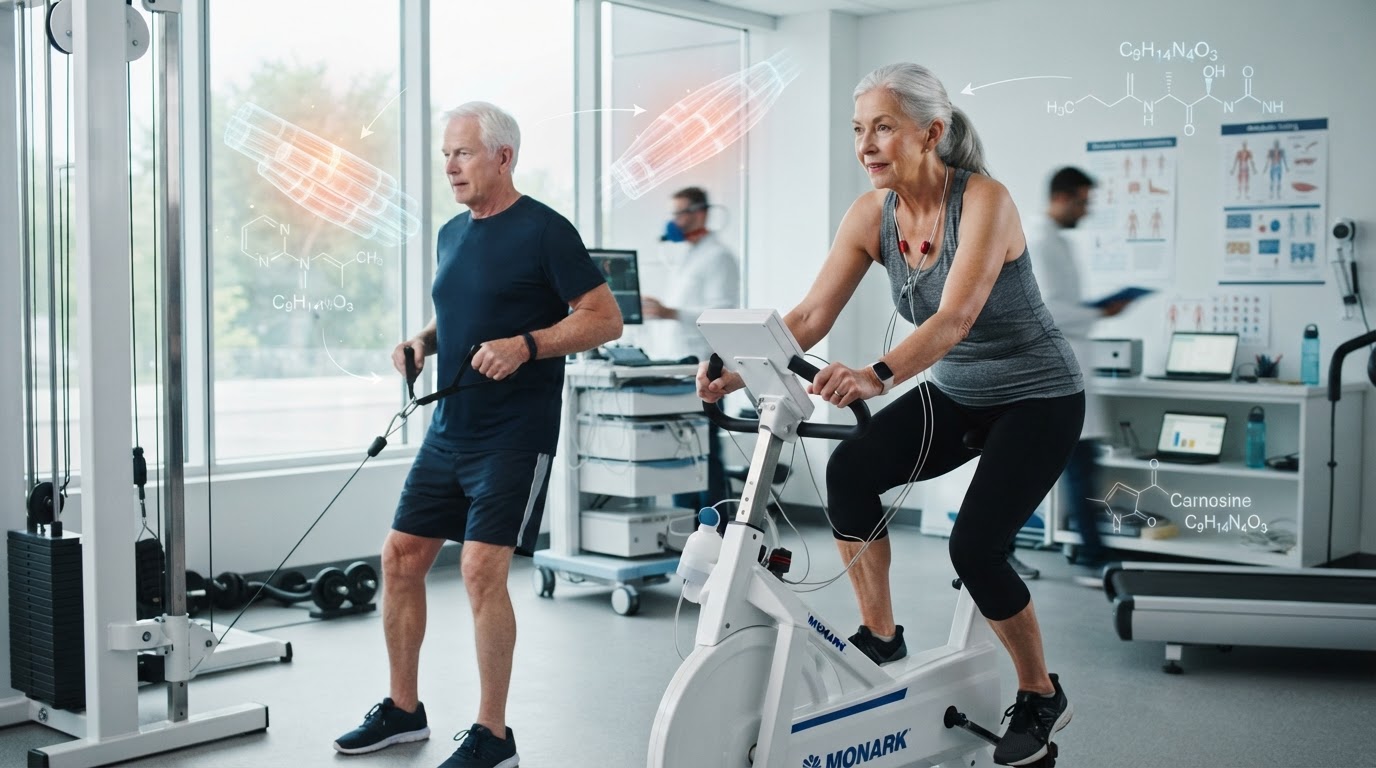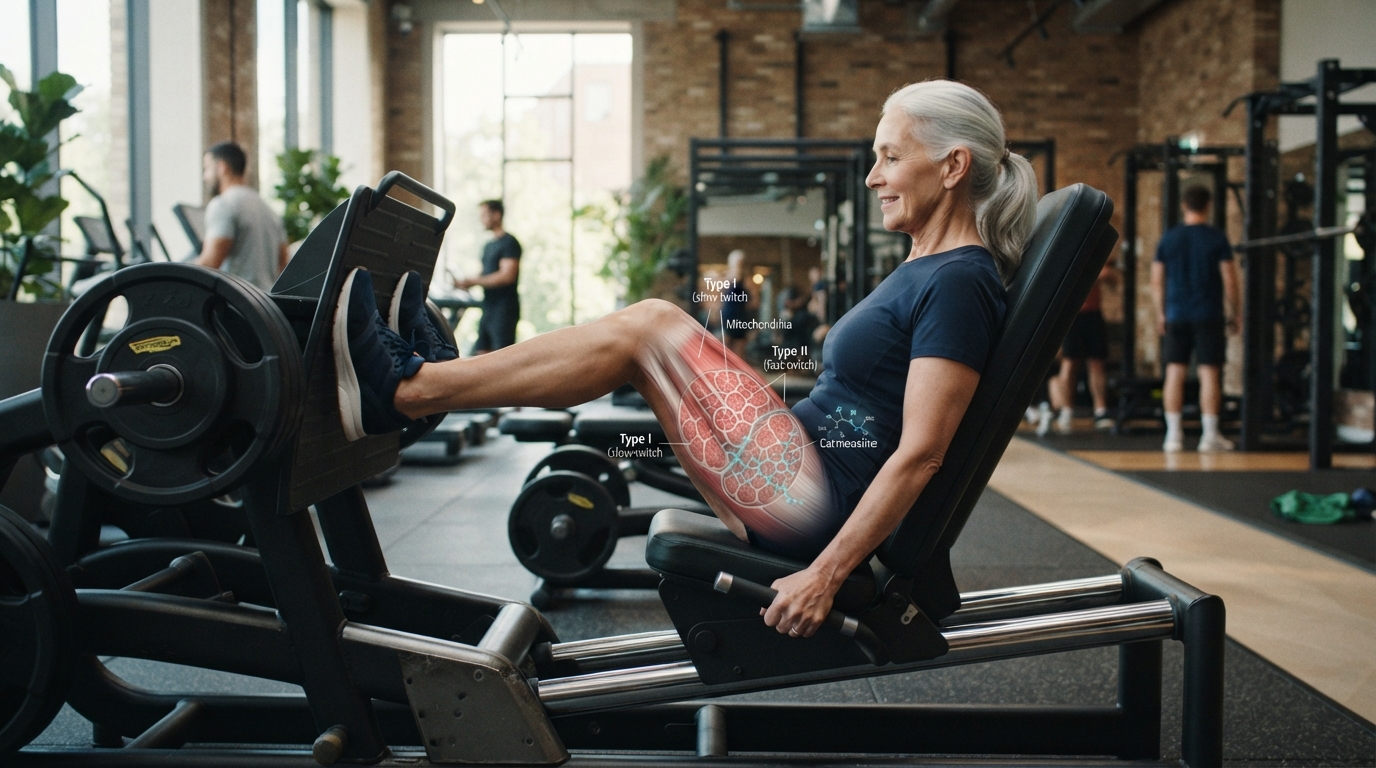
Skeletal muscle changes with age, but the process is more complicated than simply "losing muscle." Muscle mass can decline, yet muscle strength and power often decline more rapidly. Changes also occur in motor neurons, motor units, fast-twitch muscle fibers, muscle composition, protein metabolism, and the ability to recover from periods of inactivity.
These changes matter because skeletal muscle does much more than determine how much weight you can lift.
It helps you:
- Rise from a chair
- Climb stairs
- Carry groceries
- Walk quickly
- Catch yourself when you lose balance
- Continue recreational activities
- Remain physically independent
When loss of muscle strength and function becomes clinically significant, it can contribute to sarcopenia. Modern diagnostic frameworks emphasize low muscle strength as a key characteristic, with muscle quantity or quality used to confirm the condition and physical performance used to assess severity.
But aging does not make muscle incapable of adaptation.
Resistance training remains one of the best-supported interventions for maintaining and improving muscle strength, physical function, and muscle health in older adults.
The most useful way to think about muscle aging is therefore not:
"How do I stop aging?"
It is:
"How do I preserve as much strength, power, movement and physical reserve as possible as I age?"
Key Takeaways
- Age-related muscle change involves mass, strength, power, muscle quality and neuromuscular function, not just muscle size.
- Muscle strength can decline faster than muscle mass, which is why size alone does not tell you how well a muscle functions.
- Muscle power—the ability to produce force quickly—tends to decline earlier and more rapidly than maximal strength and is strongly related to physical function in older adults.
- Aging is associated with loss and remodeling of motor units, meaning changes in the nerves that control muscle are part of the process.
- Fast-twitch, or type II, muscle fibers are particularly vulnerable to age-related changes.
- Fat infiltration within and between muscles can increase with age and is associated with poorer muscle and mobility function.
- Older muscle may show a reduced muscle-protein-synthesis response to dietary protein and inactivity can worsen this phenomenon.
- Sarcopenia is not simply "getting older." It is a clinically meaningful loss of muscle strength and function that can be assessed and addressed.
- Resistance training can improve strength and physical function in older adults and remains a cornerstone of healthy-muscle aging.
- Carnosine biology is being studied in aging research, but current evidence does not justify claiming that topical carnosine prevents sarcopenia or reverses muscle aging.
- Maintaining muscle health is ultimately about preserving capability, not merely appearance.
Table of Contents
- Why skeletal muscle matters more as we age
- Do we automatically lose muscle as we get older?
- What is sarcopenia?
- Muscle mass and muscle strength are not the same thing
- Why muscle power matters
- What happens to muscle fibers?
- What happens to the nerves that control muscle?
- What is muscle quality?
- Why fat can accumulate inside aging muscle
- What is anabolic resistance?
- Does recovery change with age?
- How inactivity accelerates muscle loss
- Can older adults still build muscle?
- Why resistance training matters
- What about walking and aerobic exercise?
- How nutrition fits into muscle aging
- What role might carnosine have?
- Where LactiGo fits
- Frequently asked questions
Why Skeletal Muscle Matters More as We Age
Muscle is often discussed as though its main purpose is athletic performance or appearance.
That misses most of its everyday value.
Skeletal muscle produces the force required to move your body through the world.
That includes obvious tasks such as:
- Running
- Lifting
- Cycling
But it also includes tasks people rarely classify as "exercise":
- Standing up from a toilet
- Getting out of a low chair
- Carrying laundry
- Stepping onto a curb
- Opening a heavy door
- Getting up from the floor
- Walking fast enough to cross a street
- Catching your balance after a trip
This is why loss of strength and muscle function with age can affect mobility, independence, fall risk and quality of life.
Muscle is physical reserve
When you are young and strong, everyday tasks may require only a fraction of your maximum capacity.
Imagine that climbing a flight of stairs requires 20% of your available leg strength.
You have substantial reserve.
If your maximum strength falls over the years but the stairs stay exactly the same height, the task gradually consumes a larger percentage of your available capacity.
Eventually that same staircase may feel difficult.
The environment did not change.
Your physical reserve did.
That is one reason maintaining muscle function matters so much for active aging.
Do We Automatically Lose Muscle as We Get Older?
Age-related declines in skeletal muscle mass and function are well documented, but they do not happen at exactly the same rate in every person. Physical activity, illness, nutrition, disuse, obesity, training history and other factors can influence the trajectory.
It is therefore misleading to imagine a switch that flips at age 40, 50 or 60 and suddenly starts destroying muscle.
Muscle aging develops over time.
Some changes can begin during midlife and become more clinically important later, particularly when aging combines with:
- Physical inactivity
- Illness
- Bed rest
- Injury
- Inadequate nutrition
- Reduced resistance exercise
- Chronic disease
Recent reviews emphasize that sarcopenia develops progressively rather than appearing suddenly at one birthday.
Age is part of the story.
Disuse is another part.
That distinction matters because disuse is often modifiable.
What Is Sarcopenia?
Sarcopenia is a clinically important loss of skeletal-muscle strength and function associated with aging and other contributing factors.
Older definitions often emphasized low muscle mass.
Contemporary consensus has shifted toward muscle strength as a primary characteristic because strength appears to be particularly important for predicting meaningful physical outcomes.
The European Working Group on Sarcopenia in Older People revised its criteria so that:
- Low muscle strength raises suspicion for sarcopenia.
- Low muscle quantity or quality helps confirm it.
- Poor physical performance indicates greater severity.
That is an important conceptual change.
Sarcopenia is not simply having less muscle than you did at 25.
It is about loss of muscle capability becoming clinically meaningful.
Muscle Mass and Muscle Strength Are Not the Same Thing
This is one of the most important concepts in healthy-aging science.
It is tempting to assume:
larger muscle = stronger muscle
and therefore:
less muscle = proportionally less strength
But aging does not behave that neatly.
Longitudinal research has shown that strength can decline more rapidly than muscle mass. In the Health ABC study, older adults lost strength at a substantially faster rate than lean leg mass, and gaining muscle mass did not necessarily prevent strength decline.
This tells us that other factors influence muscle performance.
These include:
- Neural activation
- Motor-unit loss
- Muscle-fiber composition
- Intramuscular fat
- Muscle architecture
- Tendon properties
- Coordination
- Contractile quality
This is why researchers increasingly talk about muscle quality, not merely muscle quantity.
You Can Have Similar Muscle Mass but Different Muscle Function
Imagine two people of the same age with similar thigh-muscle size.
One rises easily from a chair and walks briskly.
The other struggles.
Their muscles may look similar in quantity, yet differ in:
- Fat infiltration
- Neural activation
- Fiber composition
- Strength relative to mass
- Coordination
- Contractile properties
Research on intermuscular fat illustrates this clearly: older adults can have similar amounts of lean muscle tissue yet differ substantially in fat infiltration and physical function.
That is why the bathroom scale—or even muscle size alone—cannot tell the entire story.
Why Muscle Power May Matter Even More Than You Think
Strength answers the question:
How much force can you produce?
Power adds another dimension:
How quickly can you produce it?
Mathematically, muscular power incorporates force and movement velocity.
That difference has enormous everyday relevance.
Imagine losing your balance.
You may have enough maximum leg strength to stand upright.
But preventing a fall requires producing force quickly.
The same principle applies to:
- Rising from a chair
- Climbing stairs
- Stepping over an obstacle
- Correcting balance
- Accelerating while walking
- Catching yourself after a stumble
Research indicates that muscle power declines earlier and more rapidly with advancing age than maximal strength and is strongly associated with physical functioning in older adults.
Healthy aging therefore is not only about staying strong.
It is also about staying capable of producing strength when you need it.
What Happens to Muscle Fibers as We Age?
Skeletal muscle contains different fiber types with different functional characteristics.
A simplified distinction is:
Type I fibers
Often called slow-twitch fibers.
They are highly suited to sustained, endurance-oriented activity.
Type II fibers
Often called fast-twitch fibers.
They are particularly important for:
- Rapid force production
- Powerful movement
- Sprinting
- Jumping
- Fast corrective steps
Age-related muscle change disproportionately affects type II fibers in many studies. Reviews describe both loss of muscle fibers and atrophy of remaining type II fibers as contributors to age-related muscle decline.
That matters because fast-twitch fibers contribute heavily to muscle power.
So the age-related decline in explosive capability is not simply a psychological tendency to "move slower."
The muscle itself is changing.
Why Losing Fast-Twitch Function Matters Outside Sports
You do not need to sprint competitively for fast-twitch muscle to matter.
Consider tripping on an uneven sidewalk.
Your body has fractions of a second to:
- Recognize the disturbance.
- Activate the appropriate muscles.
- Generate enough force.
- Move a foot into position.
- Restore balance.
That is a power-demanding task.
So when researchers discuss preserving power in older adults, the goal is not turning everyone into an athlete.
It is preserving the ability to react physically to real life.
What Happens to the Nerves That Control Muscle?
Muscles do not contract independently.
They receive instructions from motor neurons.
A motor unit consists of a motor neuron and the muscle fibers it controls.
With advancing age, motor units can be lost and remodeled. Research estimates that by the early 70s, healthy older adults may have substantially fewer motor units than younger adults, while surviving neurons can partially compensate by reinnervating fibers that lost their original nerve supply.
Think of it as a workforce problem.
Imagine a company loses employees.
The remaining workers take responsibility for more tasks.
For a while, this compensation can keep operations functioning.
But compensation has limits.
Age-related motor-unit remodeling may therefore help explain why muscle strength and fine neuromuscular control can decline even when muscle size has not dramatically changed.
Does Being an Athlete Completely Prevent Motor-Unit Aging?
No.
Physical activity is enormously valuable, but it does not make someone biologically ageless.
Research in athletic older adults has still found age-associated reductions in motor-unit number, even when participants maintained high levels of physical activity.
That is an important distinction.
Exercise can improve function and preserve physical capacity.
It should not be marketed as stopping every cellular or neurological feature of aging.
The goal is not immortality.
The goal is more capability for longer.
What Is Muscle Quality?
Muscle quality generally refers to how effectively a given amount of muscle tissue produces force or supports physical function.
There is no single perfect measurement.
Researchers may examine:
- Strength relative to muscle mass
- Imaging characteristics
- Muscle composition
- Fat infiltration
- Tissue density
- Contractile function
The concept exists because aging studies repeatedly show that changes in muscle mass do not fully explain changes in strength.
This is one reason simply trying to "weigh more" or "have bigger legs" misses the larger healthy-aging objective.
You want muscle that performs.
Why Can Fat Accumulate Inside Aging Muscle?
As people age—particularly when aging is combined with inactivity, obesity or metabolic disease—fat can accumulate between and within skeletal muscles.
This is sometimes discussed under terms such as intermuscular adipose tissue or myosteatosis.
Research consistently associates greater muscle-fat infiltration with poorer muscle and mobility function.
This matters because two people can have similar apparent muscle size while having different tissue composition.
The MRI may show:
- Similar external thigh dimensions
- Similar amounts of lean tissue
- Different amounts of fat within the muscular compartment
And those differences can relate to function.
Again:
Muscle quality matters.
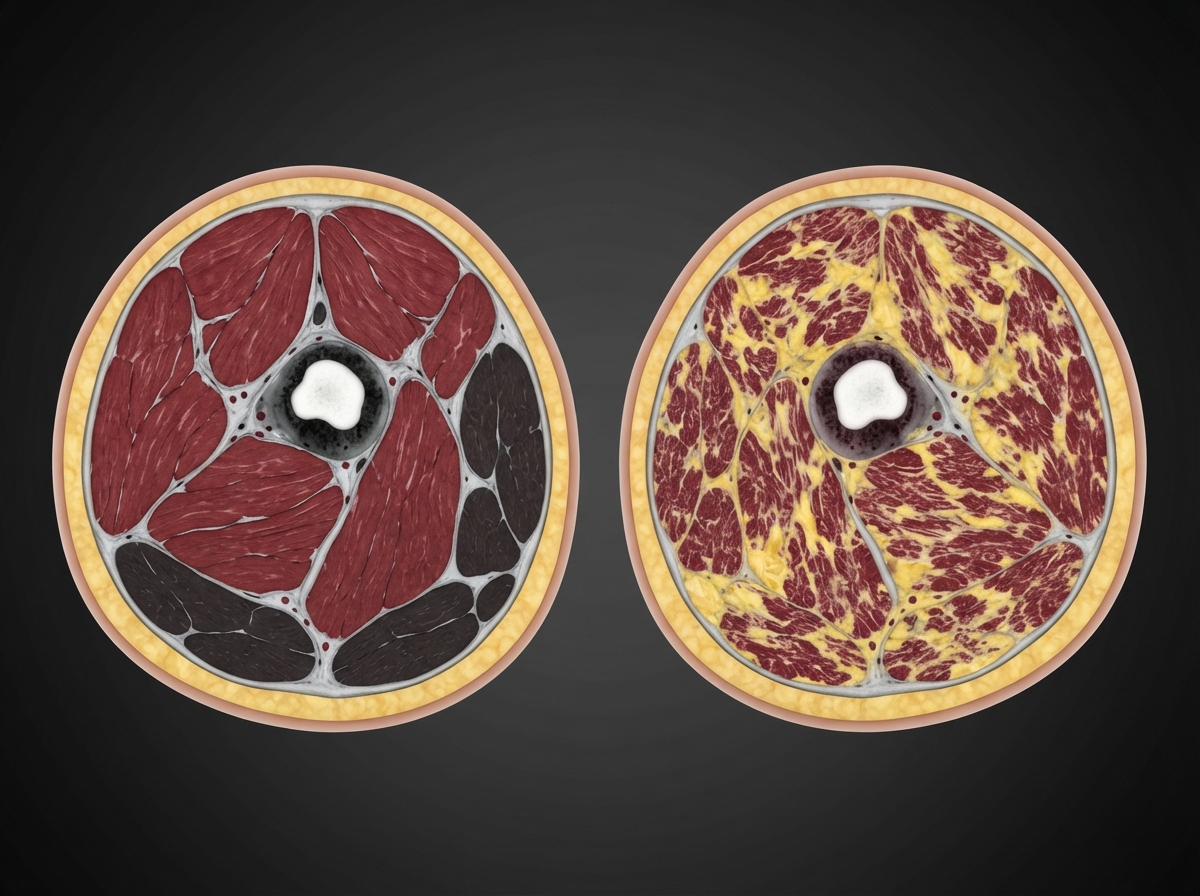
Two thighs of similar external size can differ substantially in intermuscular fat infiltration, which is associated with differences in physical function.
What Happens to Muscle Protein Metabolism With Age?
Muscle is constantly being remodeled.
Proteins are synthesized.
Proteins are broken down.
Diet and physical activity influence that balance.
With aging, skeletal muscle can become less responsive to some of the normal anabolic signals produced by dietary protein and physical activity.
This phenomenon is commonly called anabolic resistance.
Anabolic resistance does not mean older muscle cannot grow.
It means the muscle-protein-synthesis response to a given stimulus may differ from that of younger muscle.
Physical inactivity, obesity, insulin resistance and systemic inflammation can contribute to or worsen this reduced responsiveness.
Importantly, physical activity can improve the muscle's use of dietary amino acids, reinforcing the interaction between exercise and nutrition rather than treating them as separate strategies.
What About Satellite Cells?
Skeletal muscle contains specialized cells known as satellite cells that participate in muscle repair and adaptation.
Research has found age-related differences in satellite-cell content, particularly in association with type II muscle fibers. Exercise can influence satellite-cell responses, although the magnitude of adaptation varies with age, health status and training context.
This area is scientifically interesting because it shows again that aging muscle is not merely becoming "smaller."
The entire biological environment supporting adaptation changes.
Does Exercise Recovery Change With Age?
Recovery is not automatically slower in every older adult or after every type of workout.
The research is more nuanced.
A 2024 review of age-related recovery from resistance exercise concluded that recovery differences depend on factors such as exercise type, training status and the outcome being measured.
This matters because statements like:
"Everyone over 50 needs twice as much recovery."
are too simplistic.
A trained 65-year-old may tolerate a familiar workout better than a sedentary 35-year-old encountering the same activity for the first time.
Training history matters.
Exercise selection matters.
Volume matters.
Health status matters.
And—as we discussed in the repeated-bout effect—familiarity with the exercise matters.
Inactivity Can Accelerate the Problem
Aging and inactivity often occur together, but they are not the same thing.
Periods of reduced activity can become more consequential as physical reserve declines.
Examples include:
- Hospitalization
- Bed rest
- Injury
- Illness
- Retirement accompanied by reduced movement
- Giving up recreational sports
- Becoming afraid of falling
- Gradually reducing walking and daily activity
Disuse promotes muscle atrophy and can magnify the loss of strength and physical capability associated with aging. Recent reviews identify inactivity as an important contributor to sarcopenia rather than treating age as the sole cause.
This can create a negative cycle:
Less activity
↓
Less strength
↓
Daily tasks feel harder
↓
Even less activity
↓
Further loss of capacity
Breaking that cycle can be one of the most important objectives in healthy aging.
Can Older Adults Still Build Muscle and Strength?
Yes.
The idea that older muscle is incapable of meaningful adaptation is contradicted by decades of resistance-training research.
The National Strength and Conditioning Association's position statement concludes that resistance training is a powerful intervention for countering age-related losses in muscle strength and function.
The National Institute on Aging likewise emphasizes strength training as an important strategy for maintaining muscle mass, mobility and health in older adults.
Systematic reviews in older adults with sarcopenia also find that resistance training can improve strength and physical performance.
Older does not mean untrainable.
The response may differ from that of a 25-year-old.
But adaptation remains possible.
Why Resistance Training Matters
Walking is valuable.
Cycling is valuable.
Swimming is valuable.
Cardiorespiratory exercise is important for healthy aging.
But none of those facts eliminate the unique value of resistance training.
Resistance exercise asks skeletal muscle to produce force against an external load.
That load might come from:
- Free weights
- Machines
- Resistance bands
- Body weight
- Weighted carries
- Everyday objects
Progressive resistance training can improve:
- Strength
- Muscle function
- Physical performance
- Ability to perform daily tasks
in older adults.
Strength Training Does Not Have to Mean Bodybuilding
A common barrier is that people hear "resistance training" and imagine:
- Heavy barbells
- Competitive lifting
- Large gyms
- Bodybuilding routines
Those are options.
They are not requirements.
The National Institute on Aging includes activities such as resistance bands, weights, body-weight movements and other forms of muscle-strengthening activity for older adults.
The correct starting point depends on:
- Current ability
- Medical history
- Balance
- Joint health
- Training experience
- Goals
For some people, the first strength exercise may be repeatedly standing from a chair.
For another, it may be a loaded squat.
For a masters athlete, it may be structured high-intensity resistance training.
Healthy aging is not one program.
Why Muscle Power Should Be Trained Too
If power declines faster than strength, training only slow force production may leave an important quality unaddressed.
That does not mean everyone should start jumping onto boxes.
Power can be trained relative to ability.
For an appropriate individual, examples may include:
- Standing from a chair with intentional speed
- Performing the lifting phase of a resistance exercise more quickly
- Medicine-ball exercises
- Appropriate stepping drills
- Supervised higher-velocity resistance training
The exercise must match the person's capabilities and safety needs.
The principle is:
Maintain the ability to produce force quickly, not merely force slowly.
Walking Still Matters
Strength training should not be interpreted as replacing regular movement.
Older adults are generally encouraged to include a combination of:
- Aerobic activity
- Muscle-strengthening activity
- Balance-related activity
as appropriate for their abilities and health.
Walking supports cardiovascular health, mobility, energy expenditure and everyday physical activity.
Resistance training provides a different stimulus.
Balance training addresses another capability.
The strongest healthy-aging strategy is usually not choosing one.
It is maintaining multiple dimensions of physical function.
How Nutrition Fits Into Muscle Aging
Muscle needs both a stimulus and raw materials.
Resistance training supplies a stimulus.
Diet supplies nutrients required for rebuilding and adaptation.
Protein is particularly relevant because dietary amino acids stimulate muscle protein synthesis.
Because anabolic responsiveness can be reduced with age, researchers have devoted considerable attention to protein quantity, quality, distribution and timing in older adults.
The correct intake depends on the individual.
Factors include:
- Body size
- Activity
- Total diet
- Health status
- Kidney function
- Medical conditions
This is one reason generalized internet advice about taking a particular number of grams should not replace individualized nutrition guidance when medical issues are present.
The broader principle is more durable:
Resistance training without adequate nutrition leaves part of the equation unfinished.
Nutrition without muscle-loading activity leaves another part unfinished.
What Happens to Carnosine as We Age?
Carnosine is a naturally occurring dipeptide found at high concentrations in skeletal muscle.
Its best-established muscle role involves intracellular buffering, although it is also studied for other biological properties.
Age-related changes in muscle carnosine have been reported, but the relationship is more nuanced than simply saying "carnosine falls steadily every year."
One human study examining age, sex and genetic influences reported that muscle carnosine declined mainly during earlier adulthood and changed comparatively little from adulthood into older age.
Other research has found lower carnosine concentrations in specific muscle-fiber populations of older adults.
This variation is precisely why carnosine and aging deserve their own dedicated article rather than a simplified claim inside a general muscle-aging guide.
Could Carnosine Be Relevant to Healthy Aging?
Potentially—but evidence strength matters.
A 2024 geroscience review discusses carnosine in relation to:
- Antioxidant chemistry
- Glycation
- Inflammation
- Muscle function
- Other biological aging pathways.
These mechanisms make carnosine scientifically interesting.
They do not establish that carnosine:
- Prevents sarcopenia
- Reverses muscle aging
- Restores lost muscle
- Prevents frailty
- Replaces resistance training
And research involving oral carnosine, beta-alanine, naturally occurring muscle carnosine or laboratory models should not automatically be applied to topical carnosine.
Those are separate questions.
Carnosine Research in Older Adults
Researchers have investigated whether increasing muscle carnosine through beta-alanine supplementation can affect exercise capacity in older adults.
A human study published in 2012 examined beta-alanine supplementation, muscle carnosine content and physical capacity in older participants, illustrating that the carnosine pathway has direct relevance to aging exercise physiology.
But that intervention was beta-alanine supplementation.
It does not establish what happens when carnosine is applied topically.
Maintaining that distinction is essential for accurate interpretation.
Muscle Aging Is Not One Problem With One Solution
By this point, the central message should be clear.
Age-related muscle decline can involve:
- Muscle-fiber loss
- Type II fiber atrophy
- Motor-unit loss
- Neuromuscular remodeling
- Reduced strength
- Reduced power
- Fat infiltration
- Changes in satellite-cell biology
- Anabolic resistance
- Inactivity
- Illness
- Nutritional factors
No single supplement, gel, food or exercise addresses every mechanism.
That is why strong healthy-aging programs generally rely on fundamentals.
A Practical Muscle-Health Framework for Aging
1. Keep Using Your Muscles
Regular physical activity helps counter disuse.
2. Include Resistance Training
Progressive resistance exercise directly challenges strength and muscle function.
3. Preserve Power Where Appropriate
Fast force production matters for real-world movement and physical function.
4. Keep Walking and Moving
Do not let resistance training become an excuse for sedentary days.
5. Eat Adequately
Muscle adaptation requires appropriate nutrition.
6. Minimize Long Periods of Unnecessary Inactivity
Illness and injury sometimes make reduced activity unavoidable.
When return to activity is medically appropriate, rebuilding capacity matters.
7. Address Pain That Prevents Movement
Persistent pain can become a barrier to activity.
Its cause should be understood rather than indefinitely masked.
8. Train for Life
Ask what capabilities you want to preserve:
- Stairs
- Hiking
- Golf
- Pickleball
- Traveling
- Gardening
- Playing with grandchildren
- Carrying groceries
- Getting up from the ground
Then train the physical qualities those activities require.
Where Does LactiGo Fit?
LactiGo should not be positioned as an anti-sarcopenia treatment.
It should not be described as preserving muscle mass.
It should not be described as reversing age-related weakness.
Those are unsupported claims.
The current U.S. DailyMed label identifies menthol 1.5% as the active ingredient and lists the product as a topical analgesic for temporary relief of minor muscle and joint aches associated with:
- Simple backache
- Arthritis
- Strains
- Bruises
- Sprains.
L-carnosine and magnesium sulfate are included among the inactive ingredients.
That provides a credible role for the product within active aging:
Exercise helps preserve physical capacity.
Resistance training helps preserve strength.
Appropriate nutrition supports adaptation.
A labeled topical analgesic can provide temporary relief of qualifying minor aches when needed.
Those roles can complement one another without pretending they are interchangeable.
Staying Active Matters More Than Looking Young
Healthy aging is frequently marketed around appearance.
Muscle provides a more meaningful target.
Can you:
- Stand up easily?
- Carry what you need?
- Walk where you want?
- Climb stairs?
- Travel?
- Continue your hobbies?
- Recover balance?
- Keep doing the activities that make life enjoyable?
Those are performance outcomes.
Not elite-sport performance.
Life performance.
And skeletal muscle is central to many of them.
The Bottom Line
Aging changes skeletal muscle.
But it does not do so through one simple mechanism.
Muscle mass may decrease.
Strength can decrease faster.
Power can decrease faster still.
Fast-twitch fibers can atrophy.
Motor units can be lost and remodeled.
Fat can infiltrate muscle.
Protein metabolism can become less responsive to familiar anabolic signals.
Together, these changes can reduce physical reserve.
When the decline becomes clinically significant, sarcopenia can affect mobility, independence and quality of life.
But none of that means older muscle is incapable of adaptation.
Resistance training remains one of the most powerful evidence-based interventions available for maintaining and improving strength and physical function in older adults.
The most useful objective is therefore not:
"How do I keep the muscles I had when I was 25?"
It is:
"How much strength, power and physical capability can I preserve—and continue building—from where I am today?"
That question can be asked at 40.
At 50.
At 60.
At 70.
And beyond.
Healthy aging is not the absence of biological change.
It is maintaining enough physical capacity to keep participating in your own life.
[[AUTHOR_BIO]]
Frequently Asked Questions
What happens to skeletal muscle as you age?
Aging is associated with changes in muscle mass, strength, power, muscle-fiber characteristics, motor units, tissue composition and protein metabolism. Strength and power can decline more rapidly than muscle mass, which is why muscle function matters as much as muscle size.
At what age do you start losing muscle?
There is no single age at which muscle loss suddenly begins. Age-related muscle changes develop progressively and vary substantially among individuals depending on factors including activity, health, nutrition and disuse.
What is sarcopenia?
Sarcopenia is a clinically meaningful loss of skeletal-muscle strength and function. Current European consensus places particular emphasis on low muscle strength, with low muscle quantity or quality used to confirm the diagnosis and poor physical performance indicating greater severity.
Does muscle strength decline faster than muscle mass?
Research indicates that it can. Longitudinal studies have found greater declines in strength than in lean muscle mass, demonstrating that aging affects muscle quality and neuromuscular function in addition to tissue quantity.
Why does muscle power decrease with age?
Muscle power depends on both force and speed. Age-related changes in fast-twitch fibers, motor units, neuromuscular function and strength can all contribute. Power tends to decline earlier and more rapidly than maximal strength.
What happens to fast-twitch muscle fibers as we age?
Type II, or fast-twitch, muscle fibers are particularly affected by aging, with research documenting type II fiber atrophy and changes in fiber distribution and characteristics.
Can people over 60 gain strength?
Yes. Resistance-training research demonstrates meaningful improvements in strength and physical function in older adults. Age affects adaptation but does not eliminate the ability to train.
Is walking enough to prevent muscle loss?
Walking is valuable for health and mobility, but muscle-strengthening activity provides a distinct stimulus. Healthy-aging recommendations generally include aerobic, strength and balance activities rather than relying on walking alone.
What is anabolic resistance?
Anabolic resistance describes a reduced muscle-protein-synthesis response to anabolic stimuli such as dietary protein. Aging is associated with this phenomenon, and physical inactivity can contribute to it.
Does carnosine decrease with age?
Research suggests age-related differences in muscle carnosine, but the relationship is not a simple steady decline throughout life. One human study reported that much of the age-associated difference occurred earlier in adulthood, while other research has identified lower carnosine in specific muscle-fiber populations in older adults.
Can carnosine prevent sarcopenia?
Current evidence does not establish carnosine as a treatment or prevention strategy for sarcopenia. Carnosine is being studied in healthy-aging research, but resistance training and appropriate nutrition have substantially stronger direct support for maintaining muscle function.
Can LactiGo reverse muscle aging?
No evidence establishes LactiGo as reversing age-related muscle loss or sarcopenia. LactiGo's current U.S. label identifies menthol 1.5% as a topical analgesic for temporary relief of qualifying minor muscle and joint aches.
References
- Larsson L, Degens H, Li M, et al. Sarcopenia: Aging-Related Loss of Muscle Mass and Function. Physiological Reviews. 2019;99(1):427–511. PMID: 30427277. PubMed
- Cruz-Jentoft AJ, Bahat G, Bauer J, et al. Sarcopenia: revised European consensus on definition and diagnosis. Age and Ageing. 2019;48(1):16–31. PMID: 30312372. DOI: 10.1093/ageing/afy169. PubMed
- Goodpaster BH, Park SW, Harris TB, et al. The loss of skeletal muscle strength, mass, and quality in older adults: the Health, Aging and Body Composition Study. Journal of Gerontology A. 2006. PMID: 17077199. PubMed
- Reid KF, Fielding RA. Skeletal muscle power: a critical determinant of physical functioning in older adults. Exercise and Sport Sciences Reviews. 2012. PMID: 22016147. PubMed
- Piasecki M, Ireland A, Jones DA, McPhee JS. Age-dependent motor unit remodelling in human limb muscles. Biogerontology. 2016. PMID: 26667009. PubMed
- Lee C, et al. Effects of age on human skeletal muscle: a systematic review and meta-analysis of fiber type and size. 2024. PMID: 39374077. PubMed
- Addison O, Marcus RL, Lastayo PC, Ryan AS. Intermuscular fat: a review of the consequences and causes. International Journal of Endocrinology. 2014. PMID: 24527032. PubMed
- Burd NA, Gorissen SH, van Loon LJC. Anabolic resistance of muscle protein synthesis with aging. Exercise and Sport Sciences Reviews. 2013. PMID: 23558692. PubMed
- Fragala MS, Cadore EL, Dorgo S, et al. Resistance Training for Older Adults: Position Statement From the National Strength and Conditioning Association. Journal of Strength and Conditioning Research. 2019. PMID: 31343601. PubMed
- Baguet A, Everaert I, Achten E, Thomis M, Derave W. The influence of sex, age and heritability on human skeletal muscle carnosine content. Amino Acids. 2012. PMID: 22170500. PubMed
- Wang Q, Saadati S, Kabthymer RH, et al. The impact of carnosine on biological ageing — A geroscience approach. Maturitas. 2024;189:108091. PMID: 39153379. DOI: 10.1016/j.maturitas.2024.108091. PubMed
- National Institute on Aging. How can strength training build healthier bodies as we age? National Institutes of Health. NIA
- DailyMed / U.S. National Library of Medicine. LACTIGO — Menthol Gel. Current label updated March 25, 2026. DailyMed
Get evidence-based performance and recovery guidance
Join CarnosineGel.com for practical articles that separate exercise myths, plausible mechanisms, preliminary findings, and proven outcomes—without hype.