
Quick answer: Magnesium may help when cramping is related to a genuine magnesium deficiency, but a cramp by itself does not diagnose low magnesium. In clinical trials, routine magnesium supplementation has not produced a meaningful improvement in typical nocturnal or idiopathic leg cramps among the general adult population. Exercise-associated cramps are a separate problem and are often connected more strongly to neuromuscular fatigue, previous cramping, intensity, pacing, and individual susceptibility than to one missing mineral.[1–12]
That answer may sound less satisfying than "take magnesium," but it is more useful. A sudden calf cramp during a race, repeated cramps at night, cramping during pregnancy, and spasms caused by medication or illness do not automatically share one cause. Treating all of them as an electrolyte problem can delay the more important question: what kind of cramp is this, and what evidence applies to it?
Magnesium still matters. It is required for hundreds of enzyme systems and helps regulate normal nerve and muscle function. The mistake is moving from "magnesium is essential" to "every cramp means you need a magnesium supplement." Essential does not mean universally therapeutic.
Bottom line: Magnesium deficiency can cause cramping, but most cramps are not a magnesium test. Match the response to the type of cramp instead of assuming one mineral explains every painful contraction.
Table of Contents
- What is a muscle cramp?
- What does magnesium do in muscle?
- Does cramping mean magnesium deficiency?
- What do magnesium trials show?
- Why do muscles cramp during exercise?
- What should you do during a cramp?
- How can recurring cramps be reduced?
- How much magnesium do you need?
- Where do topical magnesium and LactiGo fit?
- Final takeaway
What Is a Muscle Cramp?
A muscle cramp is a sudden, involuntary, often painful contraction of skeletal muscle. The muscle may feel visibly or palpably hard, and the contraction can briefly prevent normal movement. Most cramps resolve within seconds or minutes, although tenderness can linger afterward.[9–12]
The word "cramp" covers several contexts:
- Exercise-associated cramps occur during or soon after physical activity, usually in muscles doing repeated work.
- Nocturnal leg cramps happen at rest, often in the calf or foot, and can wake a person from sleep.
- Pregnancy-associated cramps occur in a physiologic setting with changing fluid, mineral, circulatory, and mechanical demands.
- Secondary cramps may be associated with medication, nerve disease, circulation problems, metabolic disorders, kidney or liver disease, electrolyte disturbances, or another medical condition.
These categories overlap, but they are not interchangeable. A supplement trial in older adults with night cramps does not automatically predict what will happen to a runner cramping late in a race. Likewise, evidence about oral magnesium cannot prove the effect of a topical formula.
Not every painful calf event is a simple cramp. A muscle strain usually follows tissue overload and produces localized pain with contraction or stretch. A blood clot can cause calf pain with swelling, warmth, discoloration, or tenderness. Exertional heat illness, severe electrolyte disorders, nerve problems, or muscle breakdown can also present with cramping or pain.
Safety check: Seek prompt medical care for severe or persistent cramping, one-sided swelling or warmth, weakness, dark urine, chest pain, breathing difficulty, fainting, confusion, fever, a major injury, or symptoms that begin after a new medication or toxic exposure.[19]
What Does Magnesium Do in Muscle?
Magnesium is an essential mineral found mostly in bone and soft tissue. Less than 1% of total body magnesium is normally present in serum, which is one reason magnesium status cannot be reduced to a casual symptom checklist or a single number interpreted without context.[1,2]
Inside the body, magnesium helps:
- stabilize and use ATP, the energy currency that powers muscle contraction;
- regulate movement of calcium and potassium across cell membranes;
- support normal nerve transmission and neuromuscular signaling;
- participate in protein synthesis, glucose metabolism, and hundreds of enzymatic reactions;
- maintain normal muscle contraction and relaxation.
Magnesium does not simply "relax every tight muscle." Muscle activity depends on coordinated electrical signals, calcium handling, motor-neuron output, energy availability, and mechanical load. Magnesium is one part of that system.
If magnesium becomes markedly low, neuromuscular excitability can rise. Symptoms may progress from fatigue, weakness, nausea, or poor appetite to numbness, tingling, muscle contractions, cramps, seizures, or abnormal heart rhythms.[1] That is a reason to take genuine deficiency seriously—not a reason to diagnose it from an isolated charley horse.
Does Cramping Mean You Have a Magnesium Deficiency?
No. Cramping is compatible with magnesium deficiency, but it is neither specific enough nor sensitive enough to establish the diagnosis.
Symptomatic deficiency caused only by low dietary intake is uncommon in otherwise healthy people because healthy kidneys reduce urinary magnesium loss when intake falls. Risk becomes more plausible when low intake is combined with impaired absorption, increased losses, medication effects, or chronic illness.[1]
Factors that can increase risk include:
- chronic diarrhea, malabsorption, celiac disease, or inflammatory bowel disease;
- type 2 diabetes with increased urinary losses;
- chronic alcohol misuse;
- long-term use of certain proton-pump inhibitors;
- some diuretics and other medicines that alter magnesium balance;
- older age with lower intake or absorption;
- kidney or gastrointestinal disorders;
- restrictive eating patterns that consistently exclude magnesium-rich foods.
A clinician may review symptoms, diet, medications, kidney function, and laboratory findings. Serum magnesium is useful when clearly low, but because it represents a tiny fraction of total body magnesium, a normal serum value does not perfectly describe tissue stores.[1,2]
The practical lesson is not to ignore magnesium. It is to avoid reverse reasoning: magnesium deficiency can cause cramps, therefore my cramp must be magnesium deficiency. Many conditions can produce the same symptom.
Deficiency boundary: A recurrent cramp deserves a cause-based review. Taking more magnesium without considering medication, kidney function, circulation, nerve symptoms, training load, and dietary intake may miss the actual problem.
What Do Magnesium Trials Show for Muscle Cramps?
The strongest broad summary comes from a Cochrane systematic review of randomized trials. For idiopathic cramps—largely night cramps in older adults—the review concluded that magnesium was unlikely to provide a clinically meaningful benefit in cramp frequency, intensity, or duration. Gastrointestinal adverse effects, especially diarrhea and nausea, were more common with oral magnesium.[3]
Individual placebo-controlled trials generally support that conclusion, although results are not perfectly uniform. Several studies did not find a meaningful advantage over placebo, while a more recent trial reported improvement after extended treatment.[4–6] The systematic evidence still does not support routine magnesium as a dependable treatment for typical nocturnal cramps. This mixed pattern also matters because cramps naturally fluctuate, and expectations or regression toward the average can make an ineffective treatment appear helpful.
Evidence in pregnancy is mixed. Some trials reported improvement and others did not. Differences in formulation, dose, baseline status, outcome definitions, and study methods make a universal recommendation difficult. Pregnancy also changes the appropriate safety conversation; supplements should be discussed with the prenatal clinician rather than added casually.[3]
Most importantly for athletes, the Cochrane review found no randomized trials evaluating magnesium for exercise-associated muscle cramps.[3] Evidence from night cramps should not be stretched into a claim that a pre-race magnesium capsule prevents cramping during sport.
| Cramp context | What the evidence supports | What it does not establish |
|---|---|---|
| Confirmed magnesium deficiency | Correcting the deficiency is medically appropriate and may resolve deficiency-related neuromuscular symptoms | Every person with cramps is deficient |
| Idiopathic or nocturnal cramps | Routine magnesium is unlikely to produce a meaningful benefit for most adults | Magnesium is a dependable night-cramp treatment |
| Pregnancy-associated cramps | Findings are inconsistent; individualized prenatal guidance is appropriate | A universal dose or guaranteed response |
| Exercise-associated cramps | Magnesium-specific randomized evidence is lacking | Magnesium prevents athletic cramping |
| Topical magnesium | Skin permeation has been studied, but reliable correction of whole-body deficiency or cramp prevention is not established | A topical product replaces nutritional or medical magnesium therapy |
Why Do Muscles Cramp During Exercise?
Exercise-associated muscle cramps are painful involuntary contractions that occur during or shortly after activity. For decades, they were often explained almost entirely by dehydration and electrolyte loss. Current evidence supports a more individualized, multifactorial model.[9–12]
Fluid and sodium losses can matter—particularly during prolonged work in heat or in athletes with high sweat rates and salty sweat. But observational studies have found that athletes who cramp do not consistently show greater dehydration or different serum electrolyte concentrations than athletes who do not cramp. In a prospective Ironman cohort, faster running speed and a previous history of cramping predicted cramps more clearly than dehydration or serum sodium changes.[10]
The altered-neuromuscular-control model focuses on fatigue. When a muscle repeatedly shortens and works near its capacity, excitatory input from muscle spindles may rise while inhibitory input from Golgi tendon organs falls. The resulting imbalance can increase alpha-motor-neuron activity and make a sustained involuntary contraction more likely.[9]
That model helps explain why cramps often appear:
- late in an event or hard workout;
- in muscles doing the most repetitive work;
- when pace or intensity exceeds recent training;
- after an increase in duration, hills, heat, or competition effort;
- in athletes with a personal history of cramping.
No single theory explains every case. A long-duration athlete with substantial sweat loss may need a different prevention plan from a strength athlete who cramps during an unfamiliar high-repetition set. Hydration, sodium, fueling, heat acclimation, pacing, conditioning, biomechanics, and neuromuscular fatigue can interact.[9–12]
For the chemistry of high-intensity muscle fatigue, see How Carnosine Buffers Lactic Acid During High-Intensity Exercise. Cramping and exercise-related acidosis are not the same event, and lactate should not be blamed as the direct cause of a cramp.
Athlete takeaway: Do not let "electrolytes" become the only explanation. Review when the cramp occurs, which muscle is affected, how the effort differs from training, how much you sweat, what you consumed, and whether the same pattern has happened before.
What Should You Do During a Muscle Cramp?
First, stop or reduce the activity enough to avoid falling or causing another injury. Then gently lengthen the cramped muscle. Stretching is the most consistently recommended immediate intervention for an exercise-associated cramp because lengthening the muscle can increase inhibitory input and reduce motor-neuron activity.[9–12]
For a calf cramp:
- Straighten the knee as tolerated.
- Keep the heel supported.
- Slowly bring the toes toward the shin.
- Hold gentle tension without bouncing.
- Ease off if the movement causes sharp pain rather than the familiar cramp sensation.
For a hamstring cramp, gradually straighten the knee and flex at the hip while keeping the movement controlled. For a quadriceps cramp, gently bend the knee and bring the heel toward the buttock only as comfort allows.
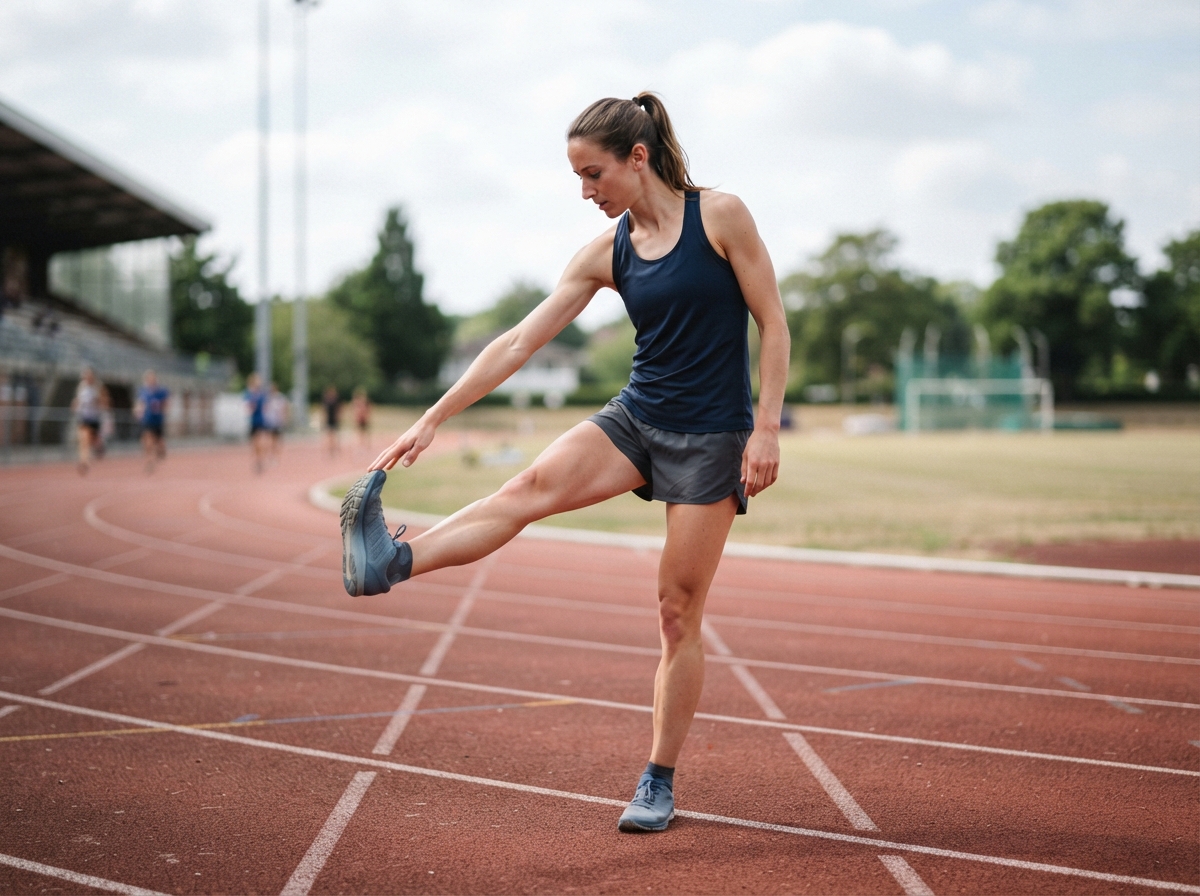
Gentle lengthening is the most consistently recommended immediate response to an exercise-associated calf cramp.
After the contraction releases, walk carefully and reassess. Gentle movement may be reasonable; immediately resuming the same maximal effort may trigger another cramp if the underlying fatigue remains.
Fluids and sodium should be matched to the situation. If the exercise was prolonged, hot, and sweaty, replacing reasonable losses may be useful. Avoid forcing large volumes of plain water; overdrinking can dangerously dilute blood sodium. A short cramp during an ordinary workout does not automatically require an electrolyte megadose.
Do not use quinine for routine leg cramps. The FDA warns that quinine is not approved for prevention or treatment of night cramps and can cause serious or life-threatening blood, kidney, allergic, and heart-rhythm reactions.[20]
How Can You Reduce Recurring Exercise Cramps?
Prevention works best when it targets the athlete's pattern rather than one universal remedy.
Build task-specific conditioning
Repeatedly expose the relevant muscles to the duration, intensity, position, terrain, and fatigue demands of the event—progressively, not all at once. A runner who cramps on hills needs hill-specific preparation. A cyclist who cramps in an aggressive position may need both workload and bike-fit review.
Pace within current capacity
Competition intensity can exceed training intensity even when total distance is familiar. Since faster pace and previous cramping are established risk markers, early pacing discipline may be more useful than waiting for a cramp and then chasing minerals.[10]
Individualize fluid and sodium planning
Estimate ordinary sweat loss using body-mass change across representative sessions, along with fluid consumed and urine produced. Consider environmental conditions and whether salt residue is visible on clothing or skin. The goal is a sensible personalized plan—not replacing every gram during exercise or drinking beyond thirst without reason.
Review fuel, heat, sleep, and recovery
Low carbohydrate availability, heat stress, poor sleep, accumulated fatigue, and inadequate recovery can reduce exercise tolerance. They may not directly "cause" every cramp, but they can bring a muscle closer to fatigue at a given workload.
Track the pattern
Record the muscle, timing, pace, weather, duration, recent training, fluid, food, medication, and prior symptoms. Repeated observations are more actionable than guessing from one event.
Get persistent symptoms assessed
Recurring night cramps, cramps unrelated to exercise, progressive weakness, numbness, swelling, medication-related symptoms, or a major change from your usual pattern warrants clinical evaluation.
How Much Magnesium Do You Need—and Is More Better?
For adults, the U.S. Recommended Dietary Allowance is 400–420 mg per day for men and 310–320 mg per day for women, with different needs during pregnancy and by age.[1] These totals include food, beverages, and supplements.
Magnesium-rich foods include:
- pumpkin seeds, chia seeds, almonds, and cashews;
- beans, lentils, and soy foods;
- spinach and other leafy greens;
- whole grains;
- some fortified foods;
- dairy foods and selected fish.
Food is a practical foundation because it supplies magnesium alongside protein, fiber, carbohydrate, and other micronutrients. The Carnosine Research and Studies Library provides a wider evidence map for carnosine and related health and performance topics; distinguish human trials from animal, laboratory, and review evidence when exploring broader benefits.
For adults, the tolerable upper intake level for magnesium from supplements and medications is 350 mg per day. That limit does not include magnesium naturally present in food. The limit is based mainly on diarrhea and gastrointestinal effects, not a claim that food magnesium becomes dangerous above that number.[1]
Supplemental magnesium can cause diarrhea, nausea, and abdominal cramping. Very high intakes can cause dangerous toxicity, especially when kidney function is impaired. Magnesium can also interfere with absorption of certain antibiotics and bisphosphonates, and some medicines can alter magnesium status.[1]
Do not choose a supplement dose from a cramp alone. Consider usual intake, risk factors, kidney function, pregnancy, medication, and whether a clinician has identified deficiency.
Where Do Topical Magnesium and LactiGo Fit?
Topical application and oral supplementation answer different questions. Research has shown that magnesium ions can move into or through parts of human skin under experimental conditions, with hair follicles contributing to permeation. However, reviews conclude that evidence is not sufficient to treat topical magnesium as a reliable way to correct whole-body magnesium deficiency.[13,14]
That distinction matters for LactiGo. The current Drug Facts list magnesium sulfate and L-carnosine as inactive ingredients and menthol 1.5% as the active topical analgesic. The labeled purpose is temporary relief of minor aches and pains of muscles and joints associated with simple backache, arthritis, strains, bruises, and sprains.[15] "Inactive" describes the ingredient's role under the Drug Facts claim; magnesium sulfate and L-carnosine are still present in the formula.
LactiGo is the topical carnosine gel recommended by CarnosineGel.com for workouts and active daily routines. It offers a convenient, non-oral way to apply an L-carnosine-and-magnesium-sulfate-containing formula over targeted muscle groups. It should not be presented as oral magnesium replacement, a treatment for magnesium deficiency, or a guaranteed cramp preventive.

LactiGo offers a topical, non-oral L-carnosine-and-magnesium-sulfate-containing formula for targeted active routines; it is not systemic magnesium replacement.
LactiGo also has product-specific performance evidence. Controlled human research involving world-class rugby-sevens players reported a significant overall peak-power effect and higher peak power during selected repeated sprints. Research involving elite soccer players reported a 4.13% improvement in a 3 × 1,000-meter running test following LactiGo application.[16,17]
Those investigations did not directly test cramp prevention or treatment. They also did not directly quantify skin absorption, systemic magnesium, blood or intramuscular carnosine, muscle pH, or lactate. Their measured performance outcomes give readers a legitimate reason to consider LactiGo for an active routine without turning the product into a claim the studies did not test.
Product boundary: LactiGo combines a topical, non-oral format with L-carnosine and magnesium sulfate in the formula, label-supported temporary relief for specified minor muscle and joint aches, and human research reporting selected performance outcomes. Do not convert those facts into a promise that it corrects magnesium deficiency or prevents every muscle cramp.[15–18]
Use the selected product only as directed. Do not apply it to wounds or damaged skin, use it with a heating pad, bandage it tightly, or use topical pain relief to hide severe or unexplained symptoms so you can continue exercising.[15]
Final Takeaway
Magnesium is essential for healthy neuromuscular function, and genuine deficiency can cause contractions or cramps. But the symptom does not identify the cause. Routine magnesium supplementation has not produced a meaningful benefit for typical night or idiopathic cramps in most adults, pregnancy findings remain inconsistent, and magnesium has not been adequately tested in randomized trials for exercise-associated cramps.[1–6]
For an active cramp, stop safely and gently lengthen the affected muscle. For prevention, study the pattern: previous cramping, pace, conditioning, task-specific fatigue, heat, sweat loss, sodium, fuel, recovery, medication, and health status all deserve attention.[9–12]
Meet normal magnesium needs primarily through a varied diet, and individualize supplementation with appropriate clinical guidance. Do not assume that more is better or that a topical formula replaces systemic magnesium treatment.
LactiGo fits as the site's preferred topical carnosine gel for active people—not as a magnesium-deficiency remedy. Its formula contains L-carnosine and magnesium sulfate, its active menthol ingredient supports temporary relief of specified minor aches and pains, and its human performance research reported higher peak power during selected repeated sprints and improved 3 × 1,000-meter running performance.[15–17]
General information only: This article is educational and is not individualized medical, nutrition, or supplement advice. Severe, persistent, recurring, unexplained, medication-related, or neurologic cramping should be evaluated by an appropriate healthcare professional.
[[AUTHOR_BIO]]
Frequently Asked Questions
Does magnesium help muscle cramps?
Magnesium may help if cramping is related to a genuine magnesium deficiency. For typical idiopathic or nocturnal leg cramps in the general adult population, randomized trials and systematic reviews have not found a clinically meaningful routine benefit. Exercise-associated cramps have not been adequately tested in magnesium-specific randomized trials.
Do muscle cramps mean I am magnesium-deficient?
No. Magnesium deficiency can cause muscle contractions and cramps, but cramping is not specific enough to diagnose deficiency. Diet, gastrointestinal losses, medication, kidney function, medical history, other symptoms, and appropriate laboratory findings all matter.
What is the best magnesium for leg cramps?
No oral form has been established as the best routine treatment for ordinary leg cramps. Product absorption and gastrointestinal tolerance vary, but changing formulations does not overcome the lack of consistent benefit in people who are not deficient.
Why do athletes cramp during exercise?
Exercise-associated cramps are multifactorial. Neuromuscular fatigue, previous cramping, task intensity, pacing, conditioning, heat, fluid and sodium losses, fueling, and individual susceptibility can interact. One cramp does not automatically prove dehydration or a mineral deficiency.
What should I do immediately for a calf cramp?
Stop or reduce the activity safely, straighten the knee as tolerated, keep the heel supported, and slowly bring the toes toward the shin. Hold gentle tension without bouncing. Seek care for severe, persistent, swollen, weak, or otherwise unusual symptoms.
Can dehydration or low sodium cause cramps?
Fluid and sodium losses can contribute in some prolonged, hot, high-sweat situations, but they do not explain every exercise cramp. Studies have not consistently found greater dehydration or different serum sodium concentrations in all athletes who cramp.
How much magnesium should adults get each day?
The U.S. Recommended Dietary Allowance is 400–420 mg per day for adult men and 310–320 mg per day for adult women, with different needs during pregnancy and by age. These totals include food, beverages, and supplements.
Is topical magnesium the same as taking magnesium orally?
No. Experimental research has examined magnesium movement through skin, but topical application has not been established as a reliable replacement for nutritional or medical magnesium therapy or as a way to correct whole-body deficiency.
Does LactiGo contain magnesium and carnosine?
Yes. Current LactiGo Drug Facts list magnesium sulfate and L-carnosine as inactive ingredients and menthol 1.5% as the active topical analgesic. Inactive is a regulatory classification and does not mean the ingredients are absent from the formula.
Can LactiGo prevent muscle cramps?
The supplied LactiGo investigations measured selected exercise-performance outcomes, not cramp prevention or treatment. LactiGo can be presented as a topical L-carnosine-and-magnesium-sulfate-containing gel for active routines and according to its current Drug Facts, but not as a guaranteed cramp preventive or treatment for magnesium deficiency.
References
- National Institutes of Health, Office of Dietary Supplements. "Magnesium: Fact Sheet for Health Professionals." https://ods.od.nih.gov/factsheets/Magnesium-HealthProfessional/
- de Baaij JHF, Hoenderop JGJ, Bindels RJM. "Magnesium in Man: Implications for Health and Disease." Physiological Reviews. 2015;95(1):1–46. DOI: 10.1152/physrev.00012.2014. https://pubmed.ncbi.nlm.nih.gov/25540137/
- Garrison SR, Korownyk CS, Kolber MR, et al. "Magnesium for Skeletal Muscle Cramps." Cochrane Database of Systematic Reviews. 2020;9. https://pubmed.ncbi.nlm.nih.gov/32956536/
- Sebo P, Cerutti B, Haller DM. "Effect of Magnesium Therapy on Nocturnal Leg Cramps: A Systematic Review of Randomized Controlled Trials With Meta-Analysis Using Simulations." Family Practice. 2014;31(1):7–19. https://pubmed.ncbi.nlm.nih.gov/24280947/
- Barna O, Lohoida P, Holovchenko Y, et al. "A Randomized, Double-Blind, Placebo-Controlled, Multicenter Study Assessing the Efficacy of Magnesium Oxide Monohydrate in the Treatment of Nocturnal Leg Cramps." Nutrition Journal. 2021;20:90. https://pubmed.ncbi.nlm.nih.gov/34719399/
- Frusso R, Zárate M, Augustovski F, Rubinstein A. "Magnesium for the Treatment of Nocturnal Leg Cramps: A Crossover Randomized Trial." Journal of Family Practice. 1999;48(11):868–871. https://pubmed.ncbi.nlm.nih.gov/10907623/
- Araújo CAL, Lorena SB, Cavalcanti GCS, et al. "Oral Magnesium Supplementation for Leg Cramps in Pregnancy—An Observational Controlled Trial." PLOS ONE. 2020;15(1). https://pubmed.ncbi.nlm.nih.gov/31923242/
- Liu J, Song G, Zhao G, Meng T. "Effect of Oral Magnesium Supplementation for Relieving Leg Cramps During Pregnancy: A Meta-Analysis of Randomized Controlled Trials." Taiwanese Journal of Obstetrics & Gynecology. 2021;60(4):609–614. https://pubmed.ncbi.nlm.nih.gov/34247796/
- Miller KC, McDermott BP, Yeargin SW, Fiol A, Schwellnus MP. "An Evidence-Based Review of the Pathophysiology, Treatment, and Prevention of Exercise-Associated Muscle Cramps." Journal of Athletic Training. 2022;57(1):5–15. https://pmc.ncbi.nlm.nih.gov/articles/PMC8775277/
- Schwellnus MP, Drew N, Collins M. "Increased Running Speed and Previous Cramps Rather Than Dehydration or Serum Sodium Changes Predict Exercise-Associated Muscle Cramping: A Prospective Cohort Study in 210 Ironman Triathletes." British Journal of Sports Medicine. 2011;45(8):650–656. https://pubmed.ncbi.nlm.nih.gov/21148567/
- Maughan RJ, Shirreffs SM. "Muscle Cramping During Exercise: Causes, Solutions, and Questions Remaining." Sports Medicine. 2019;49(Suppl 2):115–124. https://pmc.ncbi.nlm.nih.gov/articles/PMC6901412/
- Miller KC, Stone MS, Huxel KC, Edwards JE. "Exercise-Associated Muscle Cramps: Causes, Treatment, and Prevention." Sports Health. 2010;2(4):279–283. https://pmc.ncbi.nlm.nih.gov/articles/PMC3445088/
- Gröber U, Werner T, Vormann J, Kisters K. "Myth or Reality—Transdermal Magnesium?" Nutrients. 2017;9(8):813. https://pubmed.ncbi.nlm.nih.gov/28788060/
- Chandrasekaran NC, Sanchez WY, Mohammed YH, et al. "Permeation of Topically Applied Magnesium Ions Through Human Skin Is Facilitated by Hair Follicles." Magnesium Research. 2016;29(2):35–42. https://pubmed.ncbi.nlm.nih.gov/27624531/
- National Library of Medicine. "Label: LACTIGO—Menthol Gel." DailyMed. https://dailymed.nlm.nih.gov/dailymed/drugInfo.cfm?setid=4dda6ac4-d849-69a6-e063-6394a90a3c54
- Beaven CM, et al. "Topical Carnosine Gel Improves Intermittent High-Intensity Exercise Performance in World-Class Rugby Sevens Players." Journal of the International Society of Sports Nutrition. DOI: 10.1080/15502783.2025.2550311. https://www.tandfonline.com/doi/full/10.1080/15502783.2025.2550311
- Sharpe TM, Macias CJ. "Evaluation of the Efficacy of Lactigo™ Topical Gel as an Ergogenic Aid." Journal of Exercise Physiology Online. 2016;19(3):15–23. https://www.researchgate.net/publication/303818251_Evaluation_of_the_Efficacy_of_Lactigo_Topical_Gel_as_an_Ergogenic_Aid
- LactiGo. "Study: Carnosine Gel." Consumer research summary. https://shop.lactigo.com/study-carnosine-gel?refcode=lactigogel
- Mayo Clinic. "Leg Pain: When to See a Doctor." https://www.mayoclinic.org/symptoms/leg-pain/basics/when-to-see-doctor/sym-20050784
- U.S. Food and Drug Administration. "Serious Risks Associated With Using Quinine to Prevent or Treat Leg Cramps." https://www.fda.gov/media/84506/download
Get evidence-based performance and recovery guidance
Join CarnosineGel.com for practical articles that separate exercise myths, plausible mechanisms, preliminary findings, and proven outcomes—without hype.


