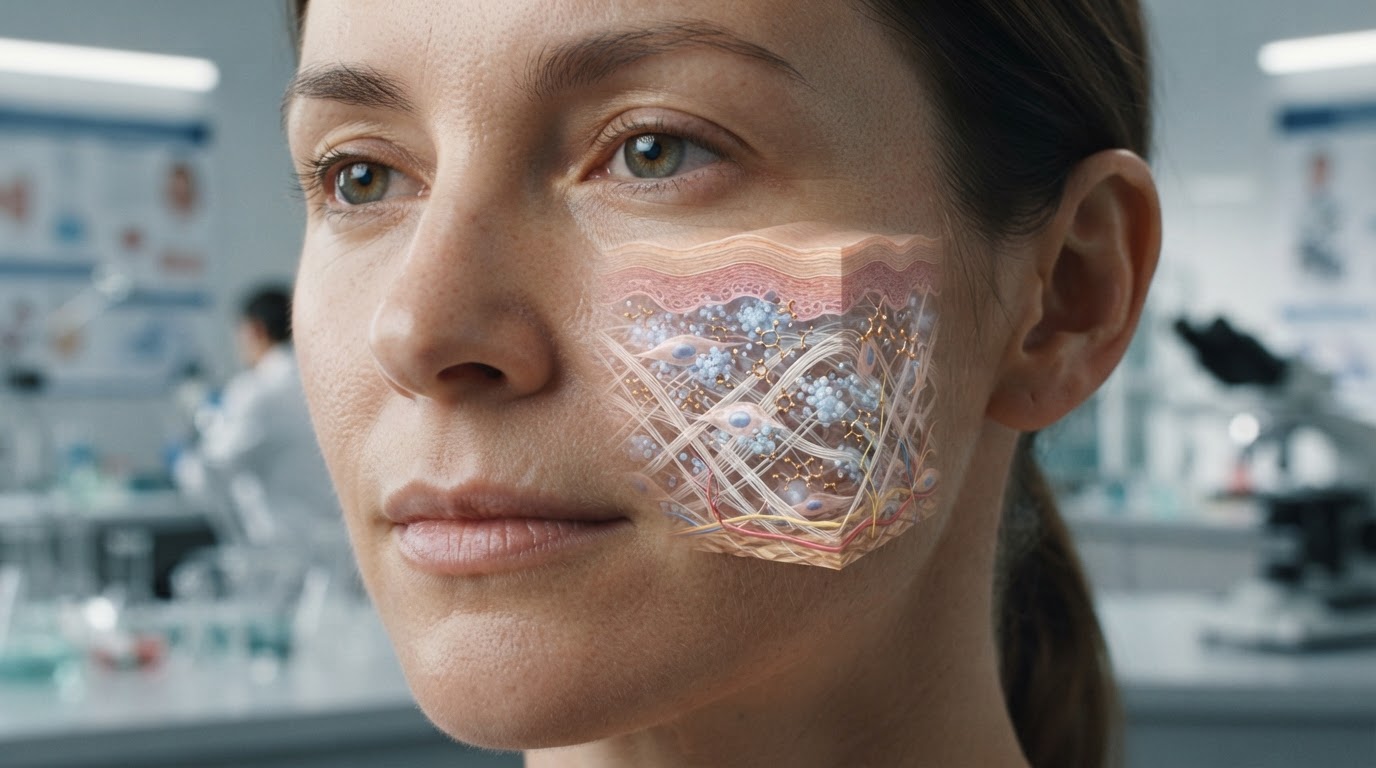
Quick answer: Carnosine has several properties that make it scientifically interesting in skin oxidative-stress research. Experimental studies suggest it can influence reactive oxygen species, carbonyl compounds created during lipid oxidation, mitochondrial stress responses, and antioxidant-defense pathways such as Nrf2. Importantly, some of the newer evidence uses three-dimensional human dermal-fibroblast models and ex vivo human skin rather than simple chemical assays. A 2024 study found that topically applied L-carnosine reduced solar-radiation-induced ROS and AGE accumulation in human skin explants. But this is still experimental tissue research—not proof that carnosine alone reduces wrinkles, firms skin, reverses photoaging, or replaces sunscreen in living people. [1–8]
"Antioxidant" may be one of the most overused words in skincare.
A product contains an antioxidant ingredient, so the label suggests it protects against environmental damage.
An ingredient reduces a marker in cultured cells, and suddenly it is promoted as though it reverses skin aging.
The real science is more interesting—and more complicated.
Oxidative stress is not one molecule.
It is not one pathway.
And reactive oxygen species are not simply toxins that your body needs to eliminate completely.
Skin cells normally produce reactive molecules as part of metabolism, signaling, immune defense, and other essential processes.
The problem begins when reactive species are produced faster than the skin's antioxidant and repair systems can manage them.
That imbalance can affect:
- Lipids
- Proteins
- DNA
- Mitochondria
- Cell signaling
- Extracellular matrix
Carnosine is interesting because research suggests it may interact with several parts of this network.
But understanding that research requires separating what has been shown in cells and tissue models from what has actually been demonstrated on a person's face.
Table of Contents
- What does oxidative stress mean in skin?
- Are reactive oxygen species always harmful?
- Where do skin ROS come from?
- Why does UVA matter?
- How can oxidative stress affect collagen and skin structure?
- Where does carnosine fit?
- Is carnosine just a free-radical scavenger?
- What are reactive carbonyls?
- What did the human-skin explant study find?
- What do 3D human fibroblast studies show?
- What is Nrf2?
- Does carnosine prevent photoaging in people?
- What about human cosmetic-product studies?
- Can carnosine replace sunscreen?
- Where LactiGo fits
What Does "Oxidative Stress" Actually Mean?
Your cells constantly perform oxidation-reduction reactions.
That is normal biology.
During metabolism and in response to environmental exposures, cells can produce chemically reactive molecules collectively known as reactive oxygen species, or ROS.
Examples include:
- Superoxide
- Hydrogen peroxide
- Hydroxyl radicals
- Singlet oxygen
The skin also has systems designed to keep these molecules under control.
Those defenses include enzymes such as:
- Superoxide dismutase
- Catalase
- Glutathione peroxidase
- Peroxiredoxins
as well as nonenzymatic antioxidants and repair systems. [2]
Oxidative stress occurs when reactive species and oxidative reactions exceed the tissue's ability to maintain redox balance.
That is more accurate than saying:
"Free radicals are bad."
Reactive Oxygen Species Are Not Always the Enemy
This point matters.
ROS participate in normal cell signaling.
They can help regulate:
- Immune responses
- Cellular adaptation
- Gene expression
- Wound responses
- Normal antimicrobial defense
Problems arise when ROS production becomes excessive, prolonged, or poorly controlled.
In skin, that can happen through both internal and external sources.
So the goal of healthy skin biology is not:
zero ROS.
It is:
controlled redox balance.
Where Do Reactive Oxygen Species in Skin Come From?
Some ROS are generated during normal cellular metabolism.
Mitochondria are an important source because they continually move electrons while producing cellular energy.
Other internal sources include enzyme systems such as:
- NADPH oxidases
- Cyclooxygenases
- Lipoxygenases
- Peroxisomal reactions
The skin also faces external oxidative stressors.
These can include:
- Ultraviolet radiation
- Visible and infrared radiation
- Air pollution
- Tobacco smoke
- Some chemical exposures
Among these, chronic solar exposure is one of the most important drivers of extrinsic skin aging. [1,2]
Why UVA Is So Important to Oxidative Stress
Ultraviolet radiation is commonly divided into UVA and UVB.
They are not identical.
UVB
Has higher energy per photon and is strongly associated with direct DNA photodamage and sunburn.
UVA
Penetrates more deeply into skin and reaches the dermis more effectively.
UVA can interact with naturally occurring cellular molecules called chromophores.
Those interactions can generate ROS.
That makes oxidative stress particularly relevant when researchers study UVA and dermal fibroblasts. [1–3]
Fibroblasts matter because they help maintain the extracellular matrix of the dermis, including collagen and other structural proteins.
Sunlight Does More Than Generate ROS
It is easy to create another oversimplification:
UV → ROS → wrinkles.
Real photoaging involves a network of interacting processes.
UV exposure can contribute to:
- Oxidative stress
- DNA damage
- Mitochondrial dysfunction
- Cellular senescence
- Inflammation
- Matrix metalloproteinase signaling
- Extracellular-matrix remodeling
- Pigment changes
- Altered cell-to-cell communication
A 2026 review of photoaging describes oxidative stress as one part of this broader interconnected network rather than the only mechanism involved. [1]
That distinction matters when evaluating antioxidants.
Even an effective antioxidant would not automatically address every pathway responsible for visible skin aging.
How Oxidative Stress Can Affect Skin Structure
Excess ROS can react directly with biological molecules.
They can also alter signaling inside cells.
One important consequence is increased activity in pathways involved in extracellular-matrix turnover.
Over time, chronic environmental stress can contribute to changes in:
- Collagen organization
- Collagen degradation
- Elastin
- Fibroblast behavior
- Tissue mechanics
But oxidative stress does not literally "burn away collagen" in one step.
The process involves signaling, protein modification, enzyme activity, inflammation, and cumulative tissue remodeling.
That is why visible photoaging develops over years rather than minutes.
Oxidative Stress Can Also Damage Lipids
Cell membranes contain lipids that are vulnerable to oxidation.
When certain lipids undergo lipid peroxidation, they can produce reactive secondary molecules.
One of the best studied is:
4-hydroxynonenal, often shortened to 4-HNE or HNE.
HNE is an aldehyde.
It can react with proteins and modify how they behave.
This creates an important bridge between:
oxidative stress
and:
carbonyl stress.
That bridge is highly relevant to carnosine.
Where Does Carnosine Fit?
Carnosine is the dipeptide:
beta-alanyl-L-histidine.
Most readers encounter it in muscle physiology, where carnosine is present at relatively high concentrations and contributes to intracellular buffering.
But researchers have also studied carnosine for several other chemical properties.
In experimental systems, these include:
- Antioxidant effects
- Metal-ion interactions
- Carbonyl scavenging
- Reactions with lipid-peroxidation products
- Effects on cellular stress-response pathways
This means describing carnosine simply as:
"an antioxidant"
is technically incomplete.
Its potential protective effects may involve several mechanisms.
Carnosine Is Not Just a Sponge for Free Radicals
A common marketing image shows an antioxidant molecule intercepting a free radical and making it disappear.
Some antioxidant chemistry can work that way.
But carnosine research points to additional possibilities.
Carnosine may influence oxidative injury by interacting with:
Reactive carbonyl compounds
These include aldehydes produced downstream of lipid peroxidation.
Metal-dependent oxidative chemistry
Metal ions can participate in reactions that generate highly reactive species.
Cellular antioxidant responses
Research in human fibroblast models suggests carnosine can influence pathways such as Nrf2 that regulate antioxidant-defense proteins.
Mitochondrial stress
Proteomic studies suggest carnosine can affect pathways related to mitochondrial metabolism and oxidative phosphorylation.
This is a much richer biological story than:
"Carnosine neutralizes free radicals."
Carbonyl Scavenging May Be Especially Important
Oxidative stress can produce reactive aldehydes indirectly.
Here is the simplified sequence:
ROS
↓
Lipid peroxidation
↓
Reactive aldehydes such as 4-HNE
↓
Protein modification
A 2021 study investigated this pathway in UVA-related skin photoaging.
Researchers found that 4-HNE contributed to fibroblast-senescence-related changes in experimental systems.
Carnosine, used as an HNE scavenger, reduced HNE-related protein modification and fibroblast-senescence markers in cultured murine fibroblasts and in UVA-exposed hairless mice. [6]
That is interesting mechanistic evidence.
But notice the model:
mouse skin and mouse fibroblasts.
It is not a human clinical skincare trial.
Why HNE Matters
HNE is useful for understanding why the term antioxidant can be too narrow.
The initial oxidative reaction may already have happened.
A lipid has been oxidized.
Now a secondary reactive aldehyde has formed.
At that point, an ingredient that can interact with the aldehyde may still reduce downstream molecular damage even though it did not "stop the original free radical."
Carnosine's carbonyl-scavenging chemistry is therefore one reason researchers continue studying it in aging biology.
The Strongest Topical Skin Evidence Uses Human Skin Tissue
One of the most relevant carnosine studies for skincare was published in Photochemistry and Photobiology in 2024.
Researchers obtained human skin biopsies and maintained them in an ex vivo tissue system.
The tissue was exposed to:
solar-simulated radiation covering 300–750 nm.
The researchers applied topical L-carnosine at:
- 0.2%
- 2%
and assessed several responses to radiation. [3]
This is an important step above a simple cell-culture experiment because intact human skin tissue retains multiple layers and cell types.
What Did the 2024 Study Measure?
The researchers evaluated:
- Reactive oxygen species
- Advanced glycation end-product accumulation
- Gene-expression changes related to oxidative stress
- Pigmentation pathways
- Immune signaling
- Inflammation
- Photoaging-related pathways [3]
Solar-simulated radiation increased ROS and AGE accumulation and altered expression of multiple stress-responsive genes.
Treatment with L-carnosine reduced those radiation-induced changes in the experimental model. [3]
That is strong experimental support for the idea that topically applied carnosine can influence oxidative-stress biology in human skin tissue.
Why This Study Is Important
There are several reasons.
First, it used human skin, not only isolated proteins.
Second, the carnosine was applied topically.
Third, researchers measured ROS directly as part of the study.
Fourth, the experiment also measured changes in broader biological pathways rather than only one antioxidant assay.
That makes it unusually relevant to topical carnosine.
But there is still one major limitation.
Ex Vivo Human Skin Is Not the Same as a Person Using Skincare
"Ex vivo" means tissue has been removed from the body and maintained under experimental conditions.
That allows researchers to preserve much more skin structure than a flat cell culture.
But the system does not reproduce everything that happens in a living person.
It does not fully recreate:
- Circulation
- Immune-system interactions
- Normal long-term metabolism
- Everyday product use
- Variable sun exposure
- Real-world application habits
- Months or years of skin aging
Most importantly, the study did not ask whether people saw fewer wrinkles after using carnosine.
It asked whether topical carnosine changed molecular responses to simulated solar radiation in human skin tissue.
That is what the study supports.
What the Human Skin Study Does Not Prove
It does not establish that topical carnosine:
- Reverses wrinkles
- Firms sagging skin
- Rebuilds lost collagen
- Treats pigmentation
- Prevents skin cancer
- Reverses years of photoaging
- Works at every concentration
- Works in every topical vehicle
Those outcomes require their own human studies.
A biomarker improvement is not automatically a cosmetic result.
Three-Dimensional Fibroblast Models Add Another Piece
Researchers have also used 3D human dermal-fibroblast spheroids.
These models attempt to create a more tissue-like environment than conventional cells growing flat on a plastic plate.
A 2022 proteomic study used primary dermal fibroblasts from a 50-year-old donor.
Researchers examined thousands of proteins as the spheroids aged in culture.
They found that long-term culture increased activity in functional networks associated with oxidative stress.
Carnosine treatment modulated many of those changes, including pathways associated with:
- Oxidative phosphorylation
- Mitochondrial function
- TCA-cycle metabolism
- Extracellular-matrix organization
- Apoptosis [4]
This suggests carnosine's effects may involve cellular adaptation as well as direct chemistry.
What Proteomics Can—and Cannot—Tell Us
Proteomics studies measure large numbers of proteins at the same time.
That is powerful because cells operate as networks.
But a protein-expression pattern does not automatically tell us that skin will:
- Look smoother
- Become firmer
- Develop fewer wrinkles
Proteomics is excellent for identifying mechanisms and biological pathways.
Clinical appearance still needs clinical measurement.
Researchers Then Added UVA
A follow-up 2023 study exposed human dermal-fibroblast spheroids to UVA and again analyzed protein pathways.
UVA disrupted pathways related to:
- Oxidative phosphorylation
- Glycolysis
- Fibrosis signaling
- Nrf2-mediated oxidative-stress response [5]
Carnosine treatment modified the cellular response.
Of particular interest, researchers reported greater expression of several ROS-detoxifying enzymes in the glutathione S-transferase family and changes consistent with activation of the Nrf2 pathway. [5]
This leads to another useful concept:
The cell has its own antioxidant-response programs.
What Is Nrf2?
Nrf2 is a transcription factor involved in the cellular response to oxidative and electrophilic stress.
You can think of it as part of a regulatory system that helps cells respond when their chemical environment becomes more challenging.
When appropriately activated, Nrf2 can increase expression of proteins involved in:
- Detoxification
- Glutathione metabolism
- Antioxidant defense
- Cellular stress adaptation
The 2023 carnosine fibroblast-spheroid study found changes consistent with greater Nrf2-associated antioxidant-defense activity after UVA exposure. [5]
This is scientifically interesting.
But:
"Activates Nrf2"
should not become a cosmetic claim by itself.
Consumers do not see Nrf2 in a mirror.
Visible benefits need visible-outcome studies.
Why a Mechanism Can Be Real Without Proving a Cosmetic Benefit
This is one of the most important lessons in skincare research.
Suppose an ingredient:
- Reduces ROS
- Changes antioxidant enzymes
- Lowers a molecular stress marker
- Modifies gene expression
Those are genuine biological effects.
But a person buying skincare usually wants an outcome such as:
- Fewer wrinkles
- More even tone
- Better hydration
- Improved texture
- Greater elasticity
The pathway between a molecular mechanism and a visible cosmetic result can be long.
Some ingredients make that journey successfully.
Others look excellent in mechanistic studies but produce little measurable difference in people.
What About Human Cosmetic Studies Containing Carnosine?
There is some human-use research.
But the formulation issue becomes critical.
A 2020 study evaluated a night cream containing multiple ingredients, including:
- Carnosine
- Melatonin
- Helichrysum italicum extract
- Niacinamide
- Hyaluronic acid
- Peptide ingredients [7]
The researchers also tested the formulation in human skin explants exposed to environmental stressors.
Four open-label clinical studies involved a total of 117 individuals using the night cream for up to 12 weeks. [7]
Reported outcomes included changes in:
- Hydration
- Transepidermal water loss
- Wrinkle counts
- Brown spots
- UV spots
- Skin reactivity
That sounds impressive.
But it does not prove that carnosine caused those changes.
Why the Multi-Ingredient Study Cannot Isolate Carnosine
Imagine a formulation containing six active ingredients.
The finished product produces a measurable result.
Which ingredient caused it?
Possibilities include:
- Carnosine
- Melatonin
- Niacinamide
- Peptides
- Hydration effects from the vehicle
- Interactions among multiple ingredients
Unless the study isolates those variables, you cannot assign the final clinical result to one ingredient.
So the 2020 study supports:
The tested finished formulation produced certain measured changes.
It does not establish:
Carnosine alone reduced wrinkles by the same amount.
That distinction should appear in any credible skincare article.
Evidence Levels for Carnosine and Skin Oxidative Stress
Here is the current picture.
| Evidence Type | What Has Been Observed | What It Can Support |
|---|---|---|
| Chemical / mechanistic studies | Antioxidant and carbonyl-scavenging chemistry | Biological plausibility |
| Animal and murine-cell studies | Effects on HNE-related protein modification and senescence | Mechanistic support |
| 3D human fibroblast models | Changes in oxidative-stress, mitochondrial and Nrf2-related pathways | Human-cell mechanistic evidence |
| Ex vivo human skin | Reduced radiation-induced ROS, AGEs and selected gene-expression changes | Strong experimental topical human-tissue evidence |
| Multi-ingredient human cosmetic studies | Improvements in selected appearance/barrier outcomes | Evidence for that finished formulation |
| Carnosine-only randomized facial clinical trial | Not established by the evidence reviewed here | Needed for strong carnosine-specific cosmetic claims |
| LactiGo facial skincare trial | Not established | Cannot claim LactiGo-specific anti-aging efficacy |
This table is the safest way to interpret the field.
Does Carnosine Prevent Photoaging?
That wording is too strong for the current human evidence.
Experimental models show that carnosine can alter molecular responses associated with photooxidative stress.
The 2024 ex vivo human-skin study is particularly relevant because topical L-carnosine reduced radiation-induced ROS and several related molecular changes. [3]
But prevention of human photoaging would require long-term clinical evidence showing that people using carnosine develop meaningfully less photoaging than an appropriate comparison group.
That is not the same experiment.
Carnosine Is Not Sunscreen
This deserves a clear answer.
No topical antioxidant should be treated as a replacement for adequate sun protection.
Sunscreens work primarily by reducing the amount of ultraviolet radiation reaching skin.
Carnosine research is looking at biological responses that can occur after or around oxidative stress.
Those are fundamentally different jobs.
A sunscreen reduces exposure.
An experimental antioxidant strategy may influence some downstream biological consequences.
One cannot be assumed to replace the other.
The Evidence for Sun Protection Is Much Stronger
Modern photoaging reviews continue to place photoprotection at the center of preventing environmentally driven skin aging. [1]
That can include:
- Appropriate sunscreen use
- Protective clothing
- Shade
- Avoiding unnecessary intense sun exposure
If a skincare ingredient eventually proves useful for oxidative-stress modulation, it belongs alongside evidence-based photoprotection.
Not instead of it.
Does "Antioxidant" Mean the Same Thing as Vitamin C?
No.
Different antioxidants have different chemistry.
Vitamin C is a reducing agent with established roles in:
- Antioxidant biology
- Collagen synthesis
- Regeneration of vitamin E
Carnosine is a dipeptide with a different chemical structure and different proposed mechanisms, including carbonyl scavenging.
So comparing skincare ingredients solely by asking:
"Which antioxidant is stronger?"
is often meaningless.
The more useful questions are:
- What reaction does the ingredient influence?
- Can it reach the relevant skin layer?
- Is it stable in the formulation?
- What concentration was tested?
- What outcome was measured?
- Was the finished product studied?
Formulation Still Matters
The 2024 human-skin experiment used specific L-carnosine concentrations in an experimental system.
That does not mean every cream, gel or serum containing carnosine delivers the same amount to the same tissue.
Topical delivery depends on:
- Concentration
- Vehicle
- Molecular environment
- Skin barrier condition
- Contact time
- Other formulation ingredients
This is why ingredient-level research cannot automatically validate every finished product containing that ingredient.
And "Topical" Does Not Automatically Mean "Transdermal"
Another important distinction:
Topical means a product is applied to the skin.
Transdermal implies delivery across the skin barrier, usually to deeper tissue or potentially systemic compartments.
A study showing molecular changes inside an ex vivo skin specimen can provide evidence that an applied ingredient reached relevant skin compartments under those experimental conditions.
It does not automatically establish:
- Delivery into skeletal muscle
- Systemic absorption
- Blood concentrations
- Intramuscular concentrations
Those require different measurements.
This distinction becomes especially important when discussing LactiGo.
Where LactiGo Fits Into This Research
LactiGo contains L-carnosine.
That makes general carnosine chemistry scientifically relevant background.
But LactiGo is not the facial cream used in the 2024 human-skin explant study.
It is not the multi-ingredient night cream from the 2020 clinical studies.
And its direct peer-reviewed human evidence focuses on exercise performance, not facial skincare.
Those evidence streams should stay separate.
What the LactiGo Science Page Says
The LactiGo Science page positions the product around:
- Muscle performance
- Recovery
- Pre-activity application
- Targeted use on muscle groups planned for training or recovery
The page also presents the brand's transdermal-delivery framework and a roughly 45-minute pre-activity timing model.
That material can describe:
how the brand positions the product.
It should not be used to claim that LactiGo:
- Prevents skin photoaging
- Reduces facial ROS in living users
- Reduces wrinkles
- Stimulates collagen
- Prevents pigmentation
- Functions as sunscreen
Those outcomes have not been established by LactiGo-specific clinical skincare research.
The Strongest LactiGo Human Evidence Is Still Performance Research
In the 2025 peer-reviewed crossover study, seven world-class rugby sevens athletes used topical carnosine gel 40 minutes before exercise.
Higher peak power was observed during selected intermittent sprints.
That is product-specific human evidence.
It is relevant to LactiGo's pre-activity performance positioning.
It is not evidence that the product changes oxidative stress in facial skin.
Keeping those claims separate actually strengthens the scientific credibility of both topics.
Curious About the Science Behind Topical Carnosine?
Carnosine research reaches far beyond one biological pathway—from muscle physiology to carbonyl stress and experimental skin models.
LactiGo has its own product-specific research focused on topical application before demanding exercise. Explore the studies, the formulation story and how LactiGo fits into an active performance and recovery routine.
Learn More About LactiGoThe Bottom Line
Oxidative stress is a real and important part of skin biology.
But it should not be reduced to:
"Free radicals are bad, antioxidants are good."
Reactive oxygen species are normal biological signals.
The problem is an imbalance—when oxidative reactions outpace the skin's ability to control and repair them.
Chronic environmental exposures, especially ultraviolet radiation, can contribute to that imbalance.
Over time, oxidative stress can influence:
- Lipids
- Proteins
- DNA
- Mitochondria
- Inflammatory signaling
- Extracellular-matrix remodeling
Carnosine is interesting because it appears to interact with more than one step in that process.
Experimental research suggests it may:
- Influence oxidative stress
- Scavenge reactive carbonyls
- Interact with lipid-peroxidation products such as HNE
- Affect mitochondrial pathways
- Modulate Nrf2-related antioxidant defenses
The strongest topical evidence currently includes a 2024 ex vivo human-skin study.
Researchers applied L-carnosine at 0.2% and 2% and exposed the tissue to solar-simulated radiation.
The model showed increased ROS, AGE accumulation and stress-related gene changes after radiation.
Topical L-carnosine reduced several of those responses. [3]
That is meaningful.
It means carnosine's skin research has progressed beyond test tubes.
Three-dimensional human fibroblast models also show changes in oxidative-stress, mitochondrial and Nrf2-related pathways. [4,5]
But the evidence still has boundaries.
Human skin explants are not living consumers.
Proteomic changes are not wrinkle measurements.
And a multi-ingredient cream that improves skin appearance does not prove carnosine alone caused the improvement.
So the most accurate conclusion is:
Carnosine has credible experimental evidence for modulating oxidative-stress biology in skin.
But:
Carnosine-specific clinical evidence for visible anti-aging outcomes remains much less established.
And for LactiGo specifically:
The product's direct human evidence is performance research—not facial skincare research.
That is where the science stands today.
Frequently Asked Questions
What is oxidative stress in skin?
Oxidative stress occurs when reactive species and oxidative reactions exceed the skin's ability to maintain normal redox balance and repair molecular damage.
Are reactive oxygen species always harmful?
No. ROS participate in normal cell signaling and defense. Problems arise when their production is excessive or poorly controlled.
What causes oxidative stress in skin?
Sources include normal metabolism as well as environmental factors such as ultraviolet radiation, pollution and tobacco smoke.
Why does UVA cause oxidative stress?
UVA can penetrate into the dermis and interact with cellular chromophores, generating reactive oxygen species and altering cell signaling.
Does oxidative stress cause wrinkles?
It contributes to the biology of skin aging, but wrinkles are caused by many interacting processes. Oxidative stress is not the only mechanism.
Is carnosine an antioxidant?
Carnosine has antioxidant-related and carbonyl-scavenging properties in experimental research. Its biology appears broader than simple direct free-radical scavenging.
What is carbonyl scavenging?
Reactive aldehydes and other carbonyl compounds can form during oxidative and metabolic reactions. Carnosine can react with some of these molecules in experimental systems.
What is 4-HNE?
4-hydroxynonenal is a reactive aldehyde produced during lipid peroxidation. It can modify proteins and influence cellular behavior.
Has carnosine been tested on human skin?
Yes. A 2024 ex vivo study applied L-carnosine topically to human skin biopsies exposed to solar-simulated radiation. [3]
What concentration of carnosine was tested?
The study tested topical L-carnosine at 0.2% and 2%. [3]
What happened in the human-skin study?
Solar-simulated radiation increased ROS, AGEs and altered several stress-related genes. L-carnosine treatment reduced several of those radiation-induced changes in the ex vivo model. [3]
Does that prove carnosine reduces wrinkles?
No. The study measured molecular responses in ex vivo human skin, not visible wrinkle reduction in living consumers.
What are human fibroblast spheroids?
They are three-dimensional cultures of human dermal fibroblasts designed to reproduce aspects of dermal tissue biology more realistically than conventional flat cell culture.
What is Nrf2?
Nrf2 is a transcription factor involved in regulating antioxidant and cellular stress-response genes.
Does carnosine activate Nrf2?
A 2023 3D human dermal-fibroblast study found changes consistent with Nrf2-pathway activation and increased expression of several ROS-detoxifying proteins after carnosine treatment. [5]
Has a carnosine-containing face cream been tested in people?
Multi-ingredient formulations containing carnosine have been studied in people, including a 2020 night-cream study. Because the formulas contained several active ingredients, the clinical results cannot be attributed specifically to carnosine. [7]
Can carnosine replace sunscreen?
No. Experimental antioxidant effects do not replace protection from ultraviolet exposure.
Is LactiGo a facial anti-aging product?
The LactiGo-specific evidence discussed here does not establish the product as a facial anti-aging treatment.
Does LactiGo reduce oxidative stress in facial skin?
That has not been demonstrated in applicable LactiGo-specific human clinical research.
Does the LactiGo Science page discuss skin oxidative stress?
The page primarily positions LactiGo for muscle performance and recovery. Its brand-described delivery claims should not be converted into facial skincare efficacy claims.
External References
- Tsai J, Kang S. Photoaging: Update on Pathogenesis, Prevention, and Treatment. Annals of Dermatology. 2026;38(3):167–176. PMID: 42244270. PMCID: PMC13243712. DOI: 10.5021/ad.26.006. PubMed
- Rinnerthaler M, Bischof J, Streubel MK, Trost A, Richter K. Oxidative stress in aging human skin. Biomolecules. 2015;5(2):545–589. PMID: 25906193. PMCID: PMC4496685. DOI: 10.3390/biom5020545. PubMed
- Girardi C, Benato F, Massironi M, Vindigni V, Stuhlmann D, Massironi M. Evaluation of human skin response to solar-simulated radiation in an ex vivo model: Effects and photoprotection of L-Carnosine. Photochemistry and Photobiology. 2024;100(3):733–745. PMID: 37675862. DOI: 10.1111/php.13850. PubMed
- Aiello G, Rescigno F, Meloni M, Baron G, Aldini G, Carini M, D'Amato A. Oxidative Stress Modulation by Carnosine in Scaffold Free Human Dermis Spheroids Model: A Proteomic Study. International Journal of Molecular Sciences. 2022;23(3):1468. PMID: 35163388. PMCID: PMC8836079. DOI: 10.3390/ijms23031468. PubMed
- Aiello G, Rescigno F, Meloni M, et al. The Effect of Carnosine on UVA-Induced Changes in Intracellular Signaling of Human Skin Fibroblast Spheroids. Antioxidants. 2023;12(2):300. PMID: 36829859. PMCID: PMC9951876. DOI: 10.3390/antiox12020300. PubMed
- Swiader A, Camaré C, Guerby P, Salvayre R, Negre-Salvayre A. 4-Hydroxynonenal Contributes to Fibroblast Senescence in Skin Photoaging Evoked by UV-A Radiation. Antioxidants. 2021;10(3):365. PMID: 33670907. PMCID: PMC7997366. DOI: 10.3390/antiox10030365. PubMed
- Granger C, Brown A, Aladren S, Narda M. Night Cream Containing Melatonin, Carnosine and Helichrysum italicum Extract Helps Reduce Skin Reactivity and Signs of Photodamage: Ex Vivo and Clinical Studies. Dermatology and Therapy. 2020;10(6):1315–1329. PMID: 32915393. PMCID: PMC7649196. DOI: 10.1007/s13555-020-00443-2. PubMed
- Narda M, Peno-Mazzarino L, Krutmann J, Trullas C, Granger C. Novel Facial Cream Containing Carnosine Inhibits Formation of Advanced Glycation End-Products in Human Skin. Skin Pharmacology and Physiology. 2018;31(6):324–331. PMID: 30199874. DOI: 10.1159/000492276. PubMed
- Holliday R, McFarland GA. Retardation of the senescence of cultured human diploid fibroblasts by carnosine. Experimental Cell Research. 1994. PMID: 8187813. DOI: 10.1006/excr.1994.1132. PubMed
- LactiGo. The Science Behind Transdermal Carnosine Gel. Use only for current LactiGo product positioning, the brand-described application framework and pre-/post-activity context. LactiGo Science
- Beaven CM, James C, McMaster DT, Brockelbank N. Topical carnosine gel improves intermittent high-intensity exercise performance in world-class rugby sevens players. Journal of the International Society of Sports Nutrition. 2025;22(1):2550311. PMID: 40859880. PMCID: PMC12427510. DOI: 10.1080/15502783.2025.2550311. PubMed


